


 Posts











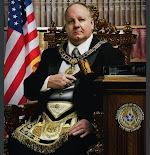














Published way downtown on Reade Street during the years following the Great War was Masonic Review: An International Monthly Magazine (at 35¢ per copy or $4/year). Its coverage was not purely Masonic-related; general news and opinion gave a broad view of the times. Its November 1921 issue unsurprisingly devotes much space to the Thanksgiving holiday that landed on the 24th of that month. Dr. Ethel Grace Wood is the author of an essay in these pages titled “The Origin of Thanksgiving.” First, an editor’s note:
Dr. Wood’s Latest Narrative
To the Masonic heart, the history of the early life of our Republic is most dear. From the versatile pen of Dr. Ethel G. Wood we have obtained her latest historic work, “The Origin of Thanksgiving,” for our many appreciative readers. Miss Wood is as brave in journalism as a writer as was General New on the field of battle as a soldier. Her writings need no words of praise from the editorial management of this journal. May her narrative kindle anew the true spirit of patriotism in the heart of every reader, and may the blessings of Deity rest upon her timely efforts.
The Origin of Thanksgiving
(Born in the Cabin of the Mayflower)
By Ethel Grace Wood, A.B., D.C., Ph.C.
 |
| Ethel Grace Wood |
We are living in a wonderful age. To be thankful means much in this time of vanity and fiction. No man since Christ should be so dear to the heart of the liberty-loving person as Martin Luther. All Christian sects outside the Church of Rome owe their liberty to Luther. Thus do we trace (as Americans) our “Thanksgiving Day” celebration to Luther. The Early German Lutherans of New York, Maine, and Pennsylvania fully appreciate the New England day of “thanksgiving and prayer.” Today the entire nation holds it in solemn reverence.
The men of Plymouth loved the name of Luther. They were appreciative of his invaluable services to the human race. Without Paul, there would have been no Luther. Without Luther there would have been no American Republic.
It matters a great deal as to what people may belive as to shaping the destinies of a nation. The reader will come with the writer as he turns back nearly three hundred years, and looks into the faces of the men of Plymouth. They tell us these men were bigoted. All men are to some extent. They brought but little from the Old World, but they left much to the New World’s posterity.
To the rational thinker and the lover of the American past, there is no public holiday dearer than the old New England Thanksgiving. From the first written constitution in the world, written in the cabin of the Mayflower, Saturday, November 11, 1620, as she swung at her anchor in Provincetown Harbor, we quote these immortal words: “In the name of God, amen! We whose names are underwritten do covenant and combine ourselves for the general good of the colony.”
It was the writer of that document and his Christian compeers whose lives and deeds are not only worthy of emulation, but whose names will live as guiding lights in Anglo-Saxon civilization long after the bones of the writer of this article will have crumbled back to mother-earth.
When the pious old Governor, William Bradford, issued the first Thanksgiving proclamation to our Pilgrim fathers on November 19, 1621, there was very little ceremony attending the act. He simply announced that as they had just gathered abundant harvests of grain, and the cold weather had sent plenty of game to their forests, December 13-16, 1621, would be observed throughout the Plymouth colony as a time of Thanksgiving, and he accordingly appointed four men to “go fowling, that they might after a more social manner rejoice together.”
The meeting was a unique one. The white man of Europe and the red man met to honor their Maker. This was not an elaborate proclamation in comparison with many that have followed. But, during the many decades that have passed since then, formality has been added to formality in giving this document to the public, until in all probability few American citizens realize what high ceremonies attend the issuance of the proclamation of today. It seems a very simple matter to send out the few words contained in the short newspaper paragraph early in November, announcing the same well-known fact that has been regularly announced each year since 1863, that the last Thursday in November is set aside as a day of public thanksgiving and a general holiday. Those who study for the first time the elaborate details of this proclamation fixing Thanksgiving day, as it has come to be known, are surprised to learn of the yearly ceremony of required before applying the great seal and making the copies that are to be sent to the different governors of the states and territories.
This making of the Thanksgiving day proclamation is a serious duty for the President. The Chief Executive, who would say anything new or would say an old thing in a new way, finds before him a task that must require much cudgeling of the brain, inasmuch as the same subject has been written upon annually for years and years, and all the reasons for giving thanks seem to be enumerated and fitting words made use of. We are told it is customary with him to write this proclamation with his own hand, and to put into it as much of the spirit of the day as possible.
President Harrison used to take a pencil and a pad of paper and write out the proclamation in full. Then he would turn it over to one of the executive clerks to be copied. He preferred to use his pencil rather than to dictate, but most of the Presidents who have followed him prefer to take advantage of the services of a stenographer, and if the mere dictation of the proclamation was all required it would not take long to announce the annual celebration.
It takes an order from the President of the United States to procure an impression of the great seal of the State. Collectors of seals and autographs frequently write to the Secretary of State for copies of the seal of the State. The same formal reply is sent to all of them: that, under the law, no impression of the seal can go out of the department unless it is affixed to official papers. The President of the United States could give authority to a collector to obtain an impression of the seal, but no President has ever done so. The law of 1789 says that the seal shall not be affixed to any instrument except a commission “without a special warrant of the President therefor.”
The President, therefore, when he sends a Thanksgiving proclamation to the State Department for the seal, sends with it a copy of the following printed form, duly filled out and signed:
“I hereby authorize and direct the Secretary of State to cause the seal of the United States to be affixed to, dated this day and signed by me, and for so doing this shall be his warrant.”
When the Secretary of State receives this order he unlocks the rosewood case, puts a scalloped circle of paper in the press, and with a light turn of the heavy steel ball above brings the seal down upon the paper and leaves its impress there. Then the stamped piece of paper is fastened to the proclamation and it is ready to go to all the world. It is necessary for its custodian to be very conscientious in the exercise of his duties, and he not infrequently has controversies with people who are in a hurry for public documents and who do not understand why the State Department has not authority under the general law to affix the great seal to any document bearing the President’s signature.
When the proclamation has been completed by the addition of the seal, clerks of the State Department are set to work making copies for transmission to the governors of the states and territories. These copies are not made on typewriters, nor with manifolding paper, nor on the hectograph, nor by any other process of duplication. The State Department uses the typewriter for some purposes, but not for official correspondence. All of the copies of the proclamation are written out on the long sheets of blue paper which are used for official correspondence. Each governor who receives a copy of the President’s proclamation will make a proclamation of his own. But in the meantime the proclamation of the President has been made public, and the people of the country know what day has been chosen for Thanksgiving.
The days appointed by the Continental Congress during the Revolutionary War were:
Thursday, July 20, 1775
Friday, May 17, 1776
Wednesday, December 11, 1776
Wednesday, April 22, 1778
Thursday, May 6, 1779
Wednesday, April 6, 1780
Thursday, May 3, 1781
Thursday, April 5, 1782
General Washington issued a proclamation for a general thanksgiving by the Continental Army on Thursday, December 18, 1777, and again at Valley Forge on May 7, 1778. In the Army of the Revolution, the Masonic lodges celebrated this early American holiday.
From the journal of Lieut. Col. Henry Dearborn, of the Continental Army, and under the date of December 18, 1777, we read:
“This is the Thanksgiving Day through the whole continent of America, but God knows we have been without flour or bread, and are living on a high, uncultivated hill, in huts and tents, and lying on the cold ground. Upon the whole, I think all we have to be thankful for is that we are alive and not in the grave with many of our friends. We had for Thanksgiving breakfast some exceedingly poor beef which has been boiled and now warmed in an old short-handled frying pan, in which we were obliged to eat it, having no other warmer. I dined and supped with Gene Sullivan today and so ended Thanksgiving.”
The reader will remember that this was the day George Washington’s army went into winter quarters at Valley Forge.
The first Thanksgiving day proclamation ever issued by a President was signed by George Washington in 1789. The original is said to be in the possession of Rev. J.W. Wellman, who inherited it from his grandfather, William Ripley, of Cornish, New Hampshire. This proclamation was issued by request of both houses of Congress through their joint committee. The text of the proclamation, following the preamble, is:
Now, therefore, I do recommend and assign Thursday, the 26th day of November next, to be devoted by the people of these States to the service of that great and glorious Being who is the beneficent author of all the good that was, that is, that will be. That we may then unite in rendering unto Him our sincere and humble thanks for His kind care and protection of the people of this country previous to their becoming a nation; for the signal and manifold mercies and the favorable inter-positions of His providence in the course and conclusion of the late war; for the great degree of tranquillity, union, and plenty which we have since enjoyed; for the peaceable and rational manner in which we have been enabled to establish constitutions of government for our safety and happiness, and particularly the national one now lately instituted; for the civil and religious liberty with which we are blessed and the means we have of acquiring and diffusing useful knowledge, and in general for all the great favors which He hath been pleased to confer upon us. And also that we may then unite in most humble offering our prayers and supplications to the great Lord and Ruler of nations and beseech Him to pardon our national and other transgressions; to enable us all, whether in public or private stations, to perform our several duties properly and punctually; to render our National Government a blessing to the people, by constantly being a government of wise, just and constitutional laws, directly and faithfully executed and obeyed; to protect and guide all sovereigns and nations, especially such as have kindness to us, and to bless them with good government, peace and concord; to promote the knowledge and practice of true religion and virtue and the increase of science among them and us, and generally to grant unto all mankind such a degree of temporal prosperity as He alone knows to be best.
Given under my hand at the City of New York, the 3d day of October, in the year of our Lord, one thousand seven hundred and eighty-nine.
GEORGE WASHINGTON.
Thus it will be seen that we are only following the good example set for us by the father of our country in this custom. May the youth of the Republic never fail to respect the deeds of the men who gave to Anglo-Saxon manhood Thanksgiving Day. It should be a duty of every citizen to preserve the day to unborn generations.
It is with marked pride and pleasure that a young American authoress gives this narrative to the reading public, that posterity may be reminded to keep alive the first New World holiday.
 |
| Meetings in New York City, as listed in the pages of Masonic Review in November 1921. |
Happy Thanksgiving to you! Since becoming a Freemason, I have viewed it as the “Masonic holiday,” thanks in large measure to the phrasing in some of the prayers used in many lodges that emanated, as I learned only recently, from a historic clergyman and Grand Chaplain in Massachusetts.


No comments:
Post a Comment