



Showing posts with label Benjamin Franklin. Show all posts

Monday, July 20, 2026

‘Benjamin Franklin’s The Morals of Chess’

    
Lady Howe Checkmating Benjamin Franklin, by Edward Harrison May, oil-on-canvas, 1867. It depicts an actual meeting. Franklin met Lady Howe, sister of British Admiral Howe, in 1774 as a ruse to cover his negotiations with Lord Howe to avoid the Revolution in British North America. The painting is the collection of Yale University Art Gallery in New Haven.

Every day is a chess day, but today is International Chess Day. It was July 20, 1924 when the International Chess Federation was organized in Paris, and, under FIDE’s auspices, this date has been celebrated by chess players since 1966.

What has chess to do with Freemasonry? Superficially, there is the checkered square. More thoughtfully however, if we read Benjamin Franklin’s essay about the game, we find his understanding of chess dovetails effortlessly with aspects of Masonic theory.

Magpie file photo
Remnants of Albert Pike’s chess set on display in the House of the Temple. The pieces predate the standardization of the Staunton design.

The following was written in 1732, not long after Franklin’s admission into the fraternity at Philadelphia, but wasn’t published until 1786 for some reason.


The Morals of Chess
by Benjamin Franklin

Playing at Chess is the most ancient and universal game known among men, for its original is beyond the memory of history, and it has, for numberless ages, been the amusement of all the civilized nations of Asia, the Persians, the Indians, and the Chinese. Europe has had it above 1,000 years; the Spaniards have spread it over their part of America, and it begins lately to make its appearance in these northern states. It is so interesting in itself as not to need the view of gain to induce engaging in it; and thence it is never played for money. Those, therefore, who have leisure for such diversions, cannot find one that is more innocent; and the following piece, written with a view to correct (among a few young friends) some little improprieties in the practice of it, shows at the same time that it may, in its effects on the mind, be not merely innocent, but advantageous, to the vanquished as well as to the victor.

The game of Chess is not merely an idle amusement. Several very valuable qualities of the mind, useful in the course of human life, are to be acquired or strengthened by it, so as to become habits, ready on all occasions. For life is a kind of chess, in which we have often points to gain, and competitors or adversaries to contend with, and in which there is a vast variety of good and ill events, that are, in some degree, the effects of prudence or the want of it.

By playing at chess, then, we may learn:

1. Foresight, which looks a little into futurity, and considers the consequences that may attend an action: for it is continually occurring to the player, “If I move this piece, what will be the advantages of my new situation? What use can my adversary make of it to annoy me? What other moves can I make to support it, and to defend myself from his attacks?”

2. Circumspection, which surveys the whole chess-board, or scene of action, the relations of the several pieces and situations, the dangers they are respectively exposed to, the several possibilities of their aiding each other, the probabilities that the opponent may make this or that move, and attack this or the other piece; and what different means can be used to avoid his stroke, or turn its consequences against him.

3. Caution, not to make our moves too hastily. This habit is best acquired by observing strictly the laws of the game, such as, “If you touch a piece, you must move it somewhere; if you set it down, you must let it stand.” And it is therefore best that these rules should be observed, as the game thereby becomes more the image of human life, and particularly of war; in which, if you have incautiously put yourself into a bad and dangerous position, you cannot obtain your enemy’s leave to withdraw your troops, and place them more securely; but you must abide all the consequences of your rashness.

And lastly, we learn by chess the habit of not being discouraged by present bad appearances in the state of our affairs, the habit of hoping for a favorable change, and that of persevering in the search of resources. The game is so full of events, there is such a variety of turns in it, the fortune of it is so subject to sudden vicissitudes, and one so frequently, after long contemplation, discovers the means of extricating one’s self from a supposed insurmountable difficulty, that one is encouraged to continue the contest to the last, in hopes of victory by our own skill, or, at least, of giving a stalemate, by the negligence of our adversary. And whoever considers, what in chess he often sees instances of, that particular pieces of success are apt to produce presumption, and its consequent, inattention, by which more is afterwards lost than was gained by the preceding advantage; while misfortunes produce more care and attention, by which the loss may be recovered, will learn not to be too much discouraged by the present success of his adversary, nor to despair of final good fortune, upon every little check he receives in the pursuit of it.

That we may, therefore, be induced more frequently to choose this beneficial amusement, in preference to others which are not attended with the same advantages, every circumstance, that may encrease the pleasure of it, should be regarded; and every action or word that is unfair, disrespectful, or that in any way may give uneasiness, should be avoided, as contrary to the immediate intention of both the players, which is, to pass the time agreeably. 

Therefore, 1st. If it is agreed to play according to the strict rules, then those rules are to be exactly observed by both parties; and should not be insisted on for one side, while deviated from by the other, for this is not equitable.

2. If it is agreed not to observe the rules exactly, but one party demands indulgences, he should then be as willing to allow them to the other.

3. No false move should ever be made to extricate yourself out of a difficulty, or to gain an advantage. There can be no pleasure in playing with a person once detected in such unfair practice.

4. If your adversary is long in playing, you ought not to hurry him, or express any uneasiness at his delay. You should not sing, nor whistle, nor look at your watch, nor take up a book to read, nor make a tapping with your feet on the floor, or with your fingers on the table, nor do any thing that may disturb his attention. For all these things displease. And they do not show your skill in playing, but your craftiness or your rudeness.

5. You ought not to endeavor to amuse and deceive your adversary, by pretending to have made bad moves, and saying you have now lost the game, in order to make him secure and careless, and inattentive to your schemes; for this is fraud, and deceit, not skill in the game.

6. You must not, when you have gained a victory, use any triumphing or insulting expression, nor show too much pleasure, but endeavor to console your adversary, and make him less dissatisfied with himself by every kind and civil expression, that may be used with truth, such as: You understand the game better than I, but you are a little inattentive; or, You play too fast; or, You had the best of the game, but something happened to divert your thoughts, and that turned it in my favor.”

7. If you are a spectator, while others play, observe the most perfect silence. For if you give advice, you offend both parties; him, against whom you give it, because it may cause the loss of his game; him, in whose favor you give it; because, though it be good, and he follows it, he loses the pleasure he might have had, if you had permitted him to think till it occurred to himself. Even after a move or moves, you must not, by replacing the pieces, show how it might have been played better, for that displeases, and may occasion disputes or doubts about their true situation. All talking to the players, lessens or diverts their attention, and is therefore unpleasing, nor should you give the least hint to either party, by any kind of noise or motion. If you do, you are unworthy to be a spectator. If you have a mind to exercise or show your judgment, do it in playing your own game when you have an opportunity, not in criticizing or meddling with, or counseling, the play of others.

Lastly. If the game is not to be played rigorously, according to the rules above mentioned, then moderate your desire of victory over your adversary, and be pleased with one over yourself. Snatch not eagerly at every advantage offered by his unskilfulness or inattention; but point out to him kindly that by such a move he places or leaves a piece in danger and unsupported; that by another he will put his king in a dangerous situation, &c. By this generous civility (so opposite to the unfairness above forbidden) you may indeed happen to lose the game to your opponent, but you will win what is better, his esteem, his respect, and his affection; together with the silent approbation and good will of impartial spectators.
     

Wednesday, June 22, 2022

‘For the Freemason who has everything’


What to give the Brother Mason who has everything? How about a reproduction lodge membership patent signed by none other than Benjamin Franklin? Or perhaps your lodge would want to display it? Or your Masonic museum?


Franklin added his autograph in 1785 in his capacity as Venerable Master of La Loge des Neuf Soeurs in Paris. Speaking of museums, those 
“Nine Sisters” are the Muses of Greek mythology.

The original membership patent was presented to Bro. Claude-Jacques Notte, an artist. Sorry to say I’ve never heard of him, nor does there seem to be any biographical information on the web, but he must have been plugged into the arts and sciences world of Enlightenment Paris that characterized La Loge des Neuf Soeurs. He seems to be remembered for a portrait of John Paul Jones.

Accompanying the reproduction document is an explanatory booklet penned by Pierre Mollier—a Brother Mason we do know, by reputation if not personally. He is a Masonic scholar and author whose latest book, Masonic Myths and Legends, was published this spring by Westphalia Press. He is the director of the Grand Orient of France’s Museum of Freemasonry in Paris. (Remember Neuf Soeurs was a G.O. lodge.)

It goes without saying, but I’ll say it regardless: I’m only sharing news of this commerce, and I have no connection to the seller or to any transaction.
     

Monday, March 28, 2022

‘Ben Franklin gets the Burns treatment’


Benjamin Franklin, revered Freemason, Founding Father, inventor, natural philosopher, statesman, entrepreneur, and more, is the subject of a two-part biography by filmmaker Ken Burns. It can be seen starting next Monday on PBS television and streaming.

I am doubtful the film will say anything about Franklin’s Masonic association. He was a busy man who milked the utmost from his eighty-four years in this world, whereas Burns’ story runs four hours.

Ken Burns, in his forty-one years of producing documentaries, has touched the periphery of Masonic history many times. Some of his previous biographies (Lewis & Clark, Mark Twain, The Roosevelts) honed in on famous Masons, and many of his histories bump into the works of others (The Statue of Liberty, The National Parks). Then, of course, his epic anthropological films (Jazz, Baseball, Country Music) unavoidably discuss the lives and deeds of a number of Masons.

It was on that basis that I once emailed him about twenty years ago to pitch the idea of a film on Freemasonry. Granted, it’s a huge subject, but it encompasses story elements that figure into his documentaries. From the giants of history astride the globe, to folks you might know living their lives on Main Street—with race relations and women’s inclusion in the mix—human progress is encapsulated in the Masonic story. There is a bottomless inventory of archives and artifacts, material culture and ephemera, art and music to drive Burns’ use of photographs and movie reels that supplement his interviews, narration, and cinematography.

I never did hear back.
     

Saturday, November 27, 2021

‘Masonic tale of two cities and freedom of the press’


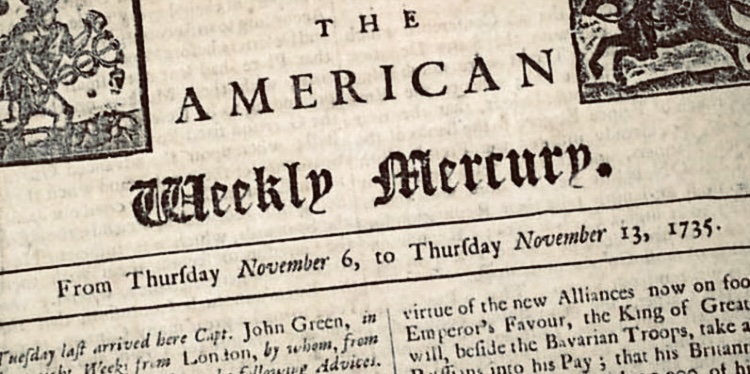
The latest article from the Worshipful Master of The American Lodge of Research was published yesterday. Click here to read an amazing account of Freemasons in Colonial America entwined with freedom of the press and sketchy government officials. Completely fascinating.
     

Saturday, May 30, 2020

‘Masonic Temple’s The Bond bronze vandalized’

   
Photo credit: Daryll Slimmer

Artist James West’s bronze statue titled The Bond, depicting Franklin and Washington, installed outside the Masonic Temple in Philadelphia, has been vandalized. Brethren of University Lodge 51 removed the paint.

“For happily the Government of the United States, which gives to bigotry no sanction, to persecution no assistance, requires only that they who live under its protection should demean themselves as good…”

George Washington


“Only a virtuous people are capable of freedom. As nations become more corrupt and vicious, they have more need of masters.”

Benjamin Franklin
     

Tuesday, April 21, 2020

‘The Nine Lives of Benjamin Franklin’

     
Profs & Pints Online will present “The Nine Lives of Benjamin Franklin” with Richard Bell, associate professor of history at the University of Maryland, on Wednesday night, and $12 will get you in. That’s 7 p.m. Reserve here. From the publicity:


Benjamin Franklin’s genius is a puzzle. Born the tenth and youngest son of a decidedly humble family of puritan candle-makers, his rise to the front ranks of science, engineering, and invention was as unexpected as it was meteoric. Despite having only two years of formal schooling, he would end up receiving honorary degrees from Harvard, Yale, Oxford, and St. Andrews, as well as the 18th century equivalent of a Nobel Prize for physics.

Like his hero Isaac Newton, Franklin was driven by a perpetual dissatisfaction with the world as he knew it. He optimized, tinkered, and improved. Hardly the tortured genius, he took a schoolboy’s pleasure in everything he made. Experimenting was a constant source of beauty, pleasure, and amusement for him, even when things went wrong (which they did all the time).

In this talk, Professor Richard Bell will examine many of Franklin’s ideas to make life simpler, cheaper, and easier for himself and everyone else. It turns out that those ideas encompassed not only natural science and engineering—the kite experiments and the bifocals for which he is justly remembered—but also all sorts of public works, civic improvements, political innovation, and fresh new business ideas. His experimenter’s instinct, his relentless drive to build a better world one small piece at a time, even encompassed innovations in medical device design, in music, in cookery, and in ventriloquism.

Dr. Bell, a hilarious and engaging speaker who ranks as a Profs and Pints crowd favorite, will discuss what lessons—and great intellectual habits—we all can learn by examining Benjamin Franklin’s life. Tickets are $12. Live, interactive talk broadcast via Crowdcast technology. A recorded version of the talk and Q&A will remain available at the ticket link.
     

Tuesday, June 6, 2017

‘Tuesday morning news’

     
Magpie coverage of the stellar lecture on Plato’s Divided Line at the School of Practical Philosophy Saturday night is still to come, but in the meantime I just want to throw out some news briefs from the past few days.

First up, let’s all congratulate Adam Kendall on his election to membership in Quatuor Coronati Lodge 2076! Amazing! (This isn’t the Correspondence Circle. This is the actual lodge—“the premiere lodge of Masonic research in the world,” etc., etc.)

I bet he doesn’t even read The Magpie Mason anymore, but that’s okay. Once you attain such exalted heights, everything changes. So I am told.


Courtesy @davisshaver
‘The Bond’


On Saturday, the Grand Lodge of Pennsylvania unveiled a pair of bronze statues of George Washington and Benjamin Franklin on the sidewalk outside its headquarters Masonic Temple in Philadelphia. Named “The Bond,” they depict Washington showing his Masonic apron, that he received as a gift from Lafayette, to Franklin. The actual apron is exhibited inside the building, in the museum. The statues themselves are a gift from Shekinah-Fernwood Lodge 246, which meets in the Temple. They are the creation of James West. Check out his most impressive website here.


Courtesy Ashmolean Museum

Sunday night I wrote a short essay on the early history of Freemasonry that might be published somewhere, and I included not only the inevitable mention of Elias Ashmole and his initiation into the fraternity in 1646, but also mentioned his bequest that created Oxford University’s museum of art and archaeology, the Ashmolean. And just by coincidence, today is the anniversary of its opening day in 1683. It is the first university museum. Happy anniversary!


I have been writing here about Henry David Thoreau several times of late in this bicentennial year of his birth. Last Friday, the Morgan Library and Museum—a stunning place to visit—opened its exhibition “This Ever New Self: Thoreau and His Journal.” This collection of unpublished writings dwarfs his published work in volume, and gives far more insight into Thoreau the man. More than 100 items have been assembled for this exhibit. It will close September 10. Click here.


Next week, on Thursday the 15th, the Spiridon Arkouzis Lecture Series in Masonic Studies will continue with Iván Boluarte being hosted by the Tenth Manhattan District to present “Pre-Columbian Builders.” Seven o’clock at Masonic Hall in 1530. Photo ID to enter the building, etc.


And finally, and returning to the School of Practical Philosophy (12 East 79th Street), it is having a book sale, and some recordings have been added to the inventory on sale. From the publicity:


Courtesy School of Practical Philosophy

JUST ADDED: Select recorded-lecture titles on sale at a 20 percent discount in our wonderful Get Ready for Summer Sale.

Plan ahead and stock up to make your summer an enlightening and enjoyable break. Consider books and CDs as treasured gifts to pass on to friends and family.

During this event, a large portion of our inventory is sale priced at a 20 percent discount and recorded lectures have just been added. Subject areas included: scripture, philosophy, history, language, government, literature, and economics.

Discounted titles will be sold as long as inventory remains, but we suggest you make your choices early since availability may be limited.

Note: Items cannot be put on hold or reserved by anyone for purchase. Sale applies only to the Bookstore in our New York City location.
     

Saturday, April 29, 2017

‘Assorted Saturday stuff’

     
Here are a few things worth reading, if you’re not outdoors enjoying this beautiful spring day.

Courtesy GLNY
Ms. Catherine Walker, curator of the Chancellor Robert R. Livingston Masonic Library of the Grand Lodge of New York, has a featured page on Grand Lodge’s website where artifacts and other treasures are highlighted. A few days ago, she shared the Benjamin Franklin Miniature Gold-and-Ivory Trowel.

Read all about it here.


Yesterday was the fiftieth anniversary of the U.S. government’s decision to provide the Temple of Dendur to the Metropolitan Museum of Art. A gift from Egypt to the United States, this sandstone temple is on display in the Sackler Wing, just outside the Egyptian Art room. (Actually, Sackler is closed at the moment, but will reopen May 4.)

It was built in the first century BCE, about 900 years after KST, and it features architecture, décor, and other characteristics that would interest a Freemason. Go check it out, and you can read more here.

Courtesy The Met


And speaking of ancient Egypt, what do you suppose is the world’s oldest language?

Archaeologist Douglas Petrovich says it’s Hebrew.

In his first book, The World’s Oldest Alphabet: Hebrew as the Language of the Proto-Consonantal Script, Dr. Petrovich shows Israelites in Egypt took 22 ancient Egyptian hieroglyphs to create the Hebrew alphabet more than 3,800 years ago.


RW Bill Maurer, a historian of some renown in Masonic and local circles, posted on his Facebook page several days ago something cool he found in the February 1786 edition of The Country magazine, namely a list of “New Masonic Toasts.” (Even Shawn Eyer was impressed!) They are:

1. May universal Masonry be the only universal Monarchy, and reign triumphant in the hearts of the worthy.
2. May the Members of Administration be all Masons, that they may act on the square with the people, and keep the tones within compass.
3. May nothing but the charms of beauty bring down the perpendicular uprightness of a Mason.
4. May the tongue of every Mason be the key of his heart; may it ever hang in just equilibrium, and never be suffered to lie to injure a brother.
5. May every Mason’s heart have the ardency of charcoal and the freedom of chalk, but not the coldness or hardness of marble when the distresses of a brother claim assistance.
6. The square in conduct, the level in condition, the plumb-line in rectitude, and the compost in prudence, to all Masons.
7. The glorious memory of the three Grand Masters, and may every Mason imitate the wisdom of the first, the friendship of the second, and the fidelity and skill of the third.
8. The splendor of the East, the repose of the South, and the solidity of the West, to every regular Lodge of free and accepted Masons.
9. May the fragrance of a good report, like a sprig of cassia, bloom over the head of every departed brother.
10. Our Sisters — May they have as much reason to admire our wisdom, as the Queen of Sheba did that of our Grand Master Solomon.
11. May we be entered apprentices to beauty, and fellow crafts in love, but still masters of our passions.
12. May wisdom contrive our happiness, strength support our virtuous resolutions, and beauty adorn our beds.
13. May the rays of celestial light pierce through the veil of ignorance, and perseverance remove the key-stone that covers truth.
14. May the Royal Arch cover every honest Mason’s heart, and the glory of the first temple overshadow all, who act up to the true principles of Masonry.


And, in closing, while I’m definitely thankful for you reading The Magpie Mason, there is great wisdom in digital detox. Read “Are You a Digital Hoarder?” from headspace.
     

Wednesday, January 18, 2017

‘13 points within Ben Franklin Circles’

     
On this date in 1706 was born Benjamin Franklin in Boston. Philosopher, statesman, scientist, inventor, business innovator, publisher, post master, Masonic grand master, and so much more, Franklin was a colossus who very much remains with us in the 21st century.


In fact, if your Masonic lodge or your dearest friends or your general social life lacks a practical approach to philosophy—that is, a proper application of good ideas toward improving your attitude and behavior—then a new movement aiming to “transform your world” might be for you. Launched about a year ago, the Ben Franklin Circles are local groups that unite the intellectually curious who wish to make positive changes in their individual lives and in the world around them. Franklin is the namesake because the participants in these groups are united in discussion of Franklin’s “13 Virtues” for the noble purpose of self-improvement.


Ben Franklin Circles comprise a free-standing organization, and if this kind of socialization appeals to you, I recommend either joining an existing circle or organizing a new one, particularly for Freemasons. If your lodge is vexed in trying to retain those new Masons who are not content with the frivolous antics and service club missions that have taken the place of Freemasonry in so many lodges, then this concept can help. Or even if your lodge knows its business (e.g. an Observant lodge) but could benefit from a new way of approaching Masonic Light, look into this.

In The Autobiography of Benjamin Franklin, published posthumously in 1791, Franklin defined his 13 Virtues. His list began in his thinking at age 20 as a system of moral building he actually tracked in a journal, keeping daily record of whether he applied the virtues to his personal conduct. (Didn’t we all do that kind of thing at age 20?) His 13 Virtues are:


  • Temperance. Eat not to dullness; drink not to elevation.
  • Silence. Speak not but what may benefit others or yourself; avoid trifling conversation.
  • Order. Let all your things have their places; let each part of your business have its time.
  • Resolution. Resolve to perform what you ought; perform without fail what you resolve.
  • Frugality. Make no expense but to do good to others or yourself; i.e., waste nothing.
  • Industry. Lose no time; be always employ’d in something useful; cut off all unnecessary actions.
  • Sincerity. Use no hurtful deceit; think innocently and justly, and, if you speak, speak accordingly.
  • Justice. Wrong none by doing injuries, or omitting the benefits that are your duty.
  • Moderation. Avoid extremes; forbear resenting injuries so much as you think they deserve.
  • Cleanliness. Tolerate no uncleanliness in body, cloaths, or habitation.
  • Tranquility. Be not disturbed at trifles, or at accidents common or unavoidable.
  • Chastity. Rarely use venery but for health or offspring, never to dullness, weakness, or the injury of your own or anothers peace or reputation.
  • Humility. Imitate Jesus and Socrates.


Freemasons should have no difficulty recognizing these 13 concepts from their internal work. One also might see a connection to the Rules of Civility that George Washington would internalize during his youth.

In Ben Franklin Circles, these are your topics of discussion. It’s not like Freemasonry, where merely memorizing and reciting Enlightenment prose is the goal (without reinforcement to aid in the comprehension of what’s being said); in the Circles, these giant ideas form a basis for fixing flaws in character within, with the added goal of putting that refined character to work in repairing the world without. It’s a very Masonic way of thinking that your lodge could claim for its own by forming a new Circle.
     

Friday, June 1, 2012

‘Anderson’s Constitutions’


Title page of first edition of Benjamin Franklin’s 1734 reprint
of Anderson’s Constitutions. This copy is among the special
collections of the University of Pennsylvania in Philadelphia.


The Second Masonic District Book Club’s June meeting will be devoted to a discussion of Anderson’s Constitutions.

Monday, June 25
7:15 p.m.
99 South Maple Avenue
Ridgewood, New Jersey

All Master Masons are welcome. Click here to download the club’s recommended copy of the document, an electronic version of Benjamin Franklin’s 1734 reprint of the 1723 English original. If you didn’t know, Franklin’s reprint was the first Masonic book published in the New World. The patron of printers in America made a verbatim copy at a time when only the earliest of Masonic lodges in the American colonies were extant. Tun Tavern in Philadelphia, Green Dragon in Boston, and Solomon’s Lodge in Georgia each, in its own way has claim to be the oldest lodge in America, but there weren’t many more here in the early 1730s. It also should be noted that Franklin became Grand Master of Pennsylvania (Moderns) the year he printed the Constitutions, on Saint John Baptist Day.

I am looking forward to this discussion. Anderson’s Constitutions may be the most important but most misunderstood text in Masonic letters. We today look upon its First Charge, that “Concerning God and Religion,” allowing our modern eyes to misinterpret how it codified religious tolerance among the various Christian factions of 1720s London as something universal, a taste of the multiculturalism that indulges 21st century sensibilities. Its terminology (e.g. “stupid atheist” and “irreligious libertine”) is not as clear and blunt as we today assume. There is much room for discussion right there.

The second most famous aspect of the document is its lengthy “history” of Freemasonry. Needless to say it is a legendary history tracing the transmission of Masonry, or Geometry, from Biblical patriarchs and prophets to ancient Egypt, Greece, and Rome; to the Saxons, Danes, and Normans; to Plantagenets, Tudors and Stuarts; to the Duke of Montagu – “the most noble Prince” and the Grand Master of Masons.

You neo-Templars out there would be wise to notice the absence of any mention of the Crusades and Knights Templar, or any other marauding army that killed so many infidels in the name of the Prince of Peace. The thinking of Masonic origins, at least at the official level of that time, had not yet heard the myth of Templar beginnings of Freemasonry.

But there will be time to talk about it all June 25. Hope to see you there.
    

Friday, October 23, 2009

‘On this date in 1741’

This edition of The Magpie Mason is another crosspost with our friends at American Creation, the blogosphere’s premier site of thoughtful debate of historical facts and legends concerning the Founding of the United States.


Long before Freemasonry in Boston became – or allegedly became – a base of revolution in New England, the Craft consisted of Masons contentedly loyal to the Crown and its colonial governors. Remember, these are Masons descending from the Premier Grand Lodge (the “Moderns”), which cultivated close relationships with England’s nobility.

Bro. Jonathan Belcher (1682-1757) was made a Mason in London in 1704, and within a year had returned to Boston (he graduated Harvard in 1699) to live and pursue work as a merchant, making him the first known Speculative Mason in the Americas. (In 1682, a Scottish Mason named John Skene had emigrated to what is now Burlington, New Jersey, but he is remembered as an Operative Mason.) Belcher was from a prominent family, was successful in business, and was appointed by George II as governor of Massachusetts and New Hampshire in 1730, a position he held until 1741.


Which brings us to this date in 1741.

While there are clues pointing to Masonic activity in Boston c.1720, the first known Masonic lodge in Boston was named, appropriately enough, First Lodge, and was set to labor on August 31, 1733 at the Royal Exchange Tavern on King Street. It remains at labor today under the name St. John’s Lodge, and it is the oldest lodge continuously at labor in North America. (It is distinguished from Tun Tavern Lodge in Philadelphia in that it possessed a charter from the proper authorities in London, whereas the Tun Tavern brethren (Benjamin Franklin, et al.) were operating a few years earlier, but as “according to the Old Customs,” meaning without a charter or warrant.)

Governor Belcher was a member of First Lodge; I cannot find a date of his acception into the lodge, but his name appears on the lodge’s membership rolls dated 1736. As noted, Belcher exited the governor’s office in 1741. He later would become governor of the Jerseys, today’s State of New Jersey, settling, like Skene, in Burlington, and would establish Princeton University. Belcher Lodge No. 180 was chartered by the Grand Lodge of New Jersey in 1904. He was succeeded as Royal Governor by William Shirley (1694-1771) who was not a Freemason.

Which brings us to this date in 1741!

Of course the separation of Bro. Belcher from First Lodge did not go unnoticed by the brethren. The lodge records dated September 23, 1741 state (spelling hereby modernized):

Our Right Worshipful Master recommended to the Brethren that it was his opinion some particular order should be observed in toasting the health of our Right Worshipful Brother, the Honorable Mr. Belcher, and that a committee might be appointed as soon as possible to wait upon him, with acknowledgements from the Lodge of his past favors, and to return our thanks, etc.

Voted, that next after the Grand Master, the late Governor of this Province, is to be toasted in the following manner, viz: To our Right Worshipful Brother, the Honorable Mr. Belcher, Late Governor of New England with.... (There follows a shorthand description of a certain thrice hailed battery with which Masons are familiar.)

Voted, that our Right Worshipful Bro. [Thomas] Oxnard, Deputy Grand Master, [and] Brothers Phillips, Row, Price, Hallowell, Forbes, McDaniel, and Pelham, be a committee to form a speech, and wait upon the Honorable Mr. Belcher on behalf of this Society, and to make report of their proceeding the next Lodge.


The lodge records dated September 25, 1741 state (again with spelling hereby modernized):

On Friday, September 25, 1741, the Committee appointed by this Lodge waited upon the Honorable Mr. Belcher, etc., and made the following speech:

Thrice Worthy Brother,

We, being a Committee by the Mother Lodge of New England held in Boston to wait on You, take this opportunity to acknowledge the many favors You have always shown (when in power) to Masonry in general, but in a more especial manner to the brethren of this Lodge, of which we shall ever retain a most grateful remembrance.

As we have had your protection when in the most exalted station here, so we think it is incumbent on us to make this acknowledgement, having no other means to testify our gratitude but this; and to wish for Your future health and prosperity which is the sincere desire of us, and those in whose behalf we appear, and permit us to assure You we shall ever remain

Honored Sir
Your most affectionate Brethren
and humble servants.

Peter Pelham, Secretary
on behalf of the Committee.


First Lodge’s records go on to show Governor Belcher’s answer (with spelling again hereby modernized):

Worthy Brothers,

I take very kindly this mark of your respect. It is now thirty-seven years since I was admitted into the Ancient and Honorable Society of Free and Accepted Masons, to whom I have been a faithful Brother and well wisher to the Art of Masonry.

I shall ever maintain a strict friendship for the whole Fraternity, and always glad when it may fall in my power to do them any services.

J. Belcher.


This reply was printed in the Boston Gazette of September 28, 1741.

Bro. Belcher has descendants who are active in New Jersey Freemasonry today.

Which brings us to this date in 1741!

First Lodge met on Friday, October 23, 1741, and the minutes of this meeting show how a new address had been drafted for the new governor. (With spelling again hereby modernized):

May it please your Excellency,

We being a Committee appointed by the Ancient and Honorable Society of Free and Accepted Masons of the Mother Lodge of America held in Boston, presume to wait upon you with the utmost sincerity, to congratulate your advancement to the Government of this Province, and to assure your Excellency that our desire is that your Administration may be successful and easy.

We have had hitherto the honor of His Majesty’s Governor being one of our ancient Society, who was ever a well wisher and faithful Brother to the Royal Art of Masonry.

And as it has been the custom for men in the most exalted station to have had the door of our Society’s Constitutions always opened to them (when desired) we think it our duty to acquaint your Excellency with that custom, and assure you, that we shall cheerfully attend your Excellency’s pleasure therein, and as we are conscious that our Society are loyal and faithful Subjects to His Majesty, so we may reasonably hope for your Excellency’s favor and protection, which is the request of

Your Excellency’s
most obedient humble servants.
Peter Pelham, Secretary
on behalf of the Society.


Governor Shirley replied to the lodge. The lodge records show:

I Return the ancient and honorable Society my Thanks for their Address, and Invitation of me to the Mother Lodge of Free and Accepted Masons in America. And they may rest assur’d that their Loyalty and Fidelity to his Majesty will always recommend the Society to my Favour and Protection.

W. Shirley.


This reply was printed in the Boston Gazette of November 3, 1741.

▲▼ ▲▼ ▲▼ ▲▼ ▲▼ ▲▼ ▲▼ ▲▼ ▲▼ ▲▼ ▲▼ ▲▼ ▲▼ ▲▼


The Freemasonry of the Colonial era was a very complicated institution. The lodges existing in America at this particular time were spin-offs of the Grand Lodge of England founded June 24, 1717. As noted above in the Philadelphia instance, where Masons did not possess a lodge charter (or warrant) from that authority in London, they met anyway, as was done in the British Isles prior to 1717. However, in 1751 a second grand lodge was formed in England, and its membership was open to a wider segment of English society, including not only the elites of nobility, academia, and the military, but also successful professionals, artisans, and merchants. These were the so-called “Ancient Masons,” a nickname they gave themselves to describe their adherence to the rituals and laws of Masonry as they existed before 1717, when those Masons they dubbed the “Moderns” arose and made themselves known to the public.

By the time of the American Revolution, both of the English grand lodges were in competition throughout the colonies (indeed around the globe). The Ancients, with their more inclusive membership, grew larger and, in America, became recognized with the patriot cause, where the Moderns were firmly allied with the Tories/Loyalists. As the War of Independence ebbed and flowed throughout the colonies, lodges met in accord with the political fortunes of the moment. When British forces took New York City in 1776, Masonic lodges of Patriot sympathies ceased meeting, and lodges of “Moderns” flourished. Conversely, upon the British evacuation of New York, the Modern Masons were supplanted by Ancients. Arguably the most dramatic example of this rift arose upon the death of Benjamin Franklin in 1790. Ten thousand citizens paid their respects to this Founding Father, who was elected Grand Master of Masons of Pennsylvania on June 24, 1734. But the Freemasons of Pennsylvania declined to give Bro. Franklin any Masonic funerary rites. You see, the Grand Lodge of Pennsylvania by the time of Franklin’s death had become Ancient Masonry. Alas, Benjamin Franklin was of Moderns stock.

The point of all this is to demonstrate that Freemasonry has a long history of courting the favor of civil government, and that the common association of Freemasonry with revolution (American or otherwise) is not as simple as some claim. Masonry’s professed obedience to civil authority is not cynicism, but is a desire to enjoy the freedom of association necessary for Masons to meet in their lodges. Some historians trace this to 1425, when Henry VI (age three!) and Parliament enacted the Statutes of Laborers. These post-Plague laws regulated both the wages to be paid laborers and merchants and, in the case of Masons in particular, their ability to meet together. Excerpted:

“First, whereas by the yearly Congregations and Confederacies made by Masons in their general Chapiters assembled, the good Course and Effect of the Statutes of Laborers be openly violated and broken, in Subversion of the Law, and to the Great Damage of all the Commons; our said Lord the King willing in this Case to provide a Remedy, by the Advice and Assent foresaid, and at the special Request of said Commons, hath ordained and established that such Chapiters and Congregations shall not be hereafter holden; and if any such be made, they that cause such Chapiters and Congregations to be assembled and holden, if they thereof be convicted, shall be judged for Felons; and that all other Masons that come to such Chapiters and Congregations, be punished by Imprisonment of their Bodies, and make Fine and Ransome at the King’s Will.”


I, for one, would not want to see the inside of a 15th century English “gaol.” This statute was repealed during the reign of Elizabeth I, but its legacy lived on as late as 1723, when the Rev. James Anderson authored Freemasonry’s first Book of Constitutions, which admonishes Masons:

“A Mason is a peaceable Subject to the Civil Powers, wherever he resides or works, and is never to be concern’d in Plots and Conspiracies against the Peace and Welfare of the Nation, nor to behave himself undutifully to inferior Magistrates....”


Submitted for your approval.