Showing posts with label symbols. Show all posts

Saturday, August 22, 2026

‘Masonic Wisdom Cards for our daily meditations’

    
Lewis Masonic
Masonic Wisdom Cards. Click here.

From the fertile minds of Jonti Marks and Bridie Blaze, via Lewis Masonic, comes Masonic Wisdom Cards: A Deck for Daily Reflection. Think of them as working tools for daily meditations on Masonic thought.

This is not a tarot deck. While the cards are seventy-eight in number, they depict handmade images of symbols we know from the Craft lodge, plus several from the Mark and Royal Arch degrees. As Lewis Masonic Managing Director Martin Faulks recently phrased it on social media: “When I was made an Entered Apprentice, I was given three working tools to contemplate—and I remember being quietly disappointed that I couldn’t take them home with me.” I think we all suffered that awkward moment in the First Degree, but this package should make amends.

Lewis Masonic

I should note for my fellow Americans, almost all of the symbols in this deck are known to you, but there are a few that derive from other systems. The chisel is known to American Masons who have advanced to the Mark Degree but, in Craft rituals emanating from English and Scottish lodges, it is employed during the EA°, ergo its presence here. Likewise, the skirret and the pencil are taken up throughout the British Isles during the Third Degree. We also find the lewis, the wand, the key, and others, but allow these to inspire you to learn more about the rituals and symbols of our brethren across the Atlantic. (Frankly, the dormer window is a new one on me. I should have joined the Dormer Study Circle!)

From beyond the Craft, we encounter the keystone, the triple tau, the arch, the ark, and more. These also may be foreign to American Masons, but perhaps those cards may be motivational for pursuing further Light in the Royal Arch chapter. But enough disclaimers. What about the deck?

Reverse of the cards.
The backs of all cards are identical, displaying the deck’s title surrounded by six symbols, all amid a starry-decked canopy. The cards, from No. 1 Boaz to 78 Keystone, feature various shades of blues and greens. All very subdued, without distracting bright colors, which allows the user to focus on the symbols inside their ovoid frames. Those symbols—and remember they are hand drawn—are clear, but artistic; sober, but enchanting; animated, but calming. A balance is achieved that will facilitate the moments of contemplation that hopefully will conjure deeper understandings of Freemasonry’s symbols and epiphanize real life applications.

We are not alone in deciphering the symbols. Another tarot-like aspect is the inclusion with the deck of a key—a small booklet—penned by Jonti Marks who gives us his interpretations. None of us would have difficulty recognizing Card 59, captioned “The Point within a Circle,” and Marks helps us internalize its meaning, explaining:


Today’s card is an opportunity to consider the boundaries which operate in our lives, and which offer us frameworks and structures within which we can be useful to society, true to ourselves and faithful to our purpose. It asks us to appraise how well we are operating within these frameworks and how we might improve ourselves to do so more fully. It asks us to work on becoming ever more centered in our truth.


Conversely, card No. 31, captioned “Charity,” does not depict an obvious Masonic image, but rather shows a heart crowned with flames—reminiscent of the Claddagh ring?—surrounded by nine stars. Marks says:


Charity is not just giving to those who are worse off than ourselves. It is an open-hearted, fully-awakened cognizance of our very real connection with all life. Charity is love in action, and love is the essence, the nature, the stuff of life. Think on this. Study yourself. See where you are holding on to an illusion of separateness from your fellows. Learn to see beyond it.


As noted, the Masonic Wisdom Cards were made for personal reflection and growth, and I also recommend using decks to spark lodge discussion and activity. It would be fantastic for a Worshipful Master to distribute, say, a dozen cards among the brethren assembled. Each can devote a few minutes to discussing his card’s content and what it means personally, followed by the Master (or his designee) reading Bro. Marks’ explanations in the booklet. Perhaps a regular feature of every meeting could be conversation about just one card. After a degree, maybe talk about one or more cards relevant to that ritual. I don’t mean to micromanage.

I’ve been reading up on Bro. Jonti Marks online. His bio on Lewis Masonic states:


Born in London and growing up partly in England and partly in East Africa, Jonti was initiated into Freemasonry in Lodge Harmony 3084 EC in Nairobi, Kenya, in August 1990. He later joined Lodge Scotia, 1008 SC, also in Nairobi, and it was through the Scottish lodge that he was first introduced to the Holy Royal Arch, being exalted in Faith and Charity Chapter 329 SC in December 1991.

After moving back to England in 1998, Jonti, who was a school teacher and headmaster for twenty-seven years, joined the Old Bromsgrovian Lodge 5743 EC where he served as Master in 2013. Jonti was a founding member of the Old Bromsgrovian Chapter and he was the first member to pass through all three Chairs of that Chapter. He is Past Provincial Grand Sword Bearer in the Provincial Grand Lodge of Worcestershire and a Past Provincial Grand Steward in the Provincial Grand Chapter.

Jonti Marks and Bridie Blaze.
From their Kickstarter page.

Jonti has been interested in the deeper meanings of Freemasonry from the earliest days of his involvement with the Craft. He has always been keen to consider how the knowledge and wisdom contained in our rituals can be applied in a meaningful way to the life of every brother or companion who sits in lodge and chapter and who professes to subscribe to our particular and peculiar way of seeing the world.


You might be familiar with his series of books of Masonic meditations.

Of our artist, Lewis Masonic says:


Bridie Blaze is a Cornish folk artist living in Porto, Portugal, whose whimsical, hand-painted work celebrates the beauty of imperfection. Her art captures the wonky, wonderful magic of nature, folklore, and mystical traditions, embodying an essential truth: that light and beauty are found not in perfection, but in authentic, joyful expression.


All the cards, each measuring approximately 2¾ by 4¾ inches, and the book fit snugly inside a handy hard box with a magnetic lid that will prove durable for your travels. Put it in your apron case and bring it to lodge.

These cards are, yes, great for young Masons ripe for revelation; and, after possessing a deck more than a week, I have learned the Wisdom Cards also can remind those of us who’ve been around decades of the strength and beauty of our Craft’s tenets.

Click here.
     

Sunday, January 18, 2026

‘Texas says the apron is a place of the skull’

    
Marcus Delzell
Honorem Memento Mori by Marcus Delzell.

The Grand Lodge of Texas hosted its Grand Annual Communication this weekend at Waco, and one of the proposed amendments to the Laws approved by the voters (known as the Grand West) was Resolution No. 21.

Listen, to some of the guys, this was a really big deal: As of yesterday, it is legal to include the skull among the symbols adorning Masonic aprons.

Does Texas include the skull among the symbols revealed during their degrees? I have no idea. Most of the rest of us in the United States have the hourglass, the scythe, and the weeping virgin to remind us of mortality—to say nothing of the reading of minutes.

In coincidence, Bro. Marcus Delzell, of Parsons Lodge 222 in Austin, is an artist who painted the apron at top. On social media a week ago, he says:

My latest Masonic artwork in a series of symbolic paintings on aprons. This work was inspired by the memorial for the death of Hiram Abiff, and the symbols therein are represented in this work, abstracted to expand on different facets of symbolic meaning.
Since the monument is functionally a memento mori, I’ve included a skull from whose cranium is growing a sprig of evergreen; except this specific evergreen is that of eucalyptus, because of its property to be split in two to grow another plant with the second part. The red ribbon is representative of the weeping virgin. In many western fairy tales, a lock of hair is emblematic of innocence, and when illustrated is typically presented with a red ribbon to accentuate its carnal meaning. I’ve split Father Time into two symbols, one to highlight the invaluable time each of us have remaining, and the other to highlight his Saturnian aspects: The clock set at five seconds to midnight reminds us that our time on this mortal plane may end abruptly and soon. With this in mind, we should maintain the imperative to use our remaining seconds intentionally. The crow eating from the egg is the frontispiece of the artwork. This represents Chronos, or Saturn, who ate his children out of fear that they would overthrow him; even the Greek gods were not immune to the consumption of time. The potential for life from the creature in the egg has been stolen, and his eggy fortress of safety and vitality has been vanquished.


Marcus Delzell

The consternation evoked by this symbol should remind us to be patient, warm, and to keep the sanctity of innocence and potential in the forefront of our thoughts. In western esotericism, borrowing from Hinduism, there is a concept of the right and left hand paths. With each symbol facing towards the right, this artwork has a rightward chirality. This is a symbol for the right-hand path, which consists of a belief in the separation of mind, body, and soul; and the belief that judgment awaits us—something familiar to us as Masons.


Honorem Memento Mori
2026
16x16, acrylic on leather, cotton tassels

Not everything at the Communication was so pleasant. There is some kind of awful scandal concerning control of the board that governs the Masonic Grand Lodge Library and Museum of Texas. I may revisit this subject later, but right now I don’t know or even follow everything this entails. I anticipate knowledgeable coverage on the Dummies blog before long anyway.
     

Thursday, January 18, 2024

‘2024 Magpie speaking tour’

    
Royal Arch apron on display at the GWMNM.

The Magpie Mason’s calendar of speaking engagements is filling up fast with two dates packed into the 366-day leap year that is 2024!

The Royal Arch companions at Eureka Chapter 7 in beautiful Orlando, Florida want to fly me down for their next convocation for some reason. Actually, their next meeting will be tonight, but after that the next meeting will be Thursday, March 14.

Eureka meets in Eola Lodge 207’s building, located at 3200 East Grant Street. (Happy 100th anniversary!) There I will reprise my talk on Kabbalah and Royal Arch Masonry. I changed the title so it don’t look like the same lecture I’ve been delivering for ten years, so now it is “Mystical Interpretations of Royal Arch Symbols.”

Leave it to me to visit Florida after winter. Wear something red, and I’ll see you there. 7:30 p.m.

In May, on a date to be determined, I’ll join the brethren at Audubon-Parkside Lodge 218 (another A-P Lodge!) in New Jersey. We had a date picked, but it seems the lodge is relocating, and therefore its schedule is changing, but we’ll work it out.

This talk will cover two broad topics: choosing best practices for lodge life (I’m avoiding “The O Word” because it makes some people crazy), and finding the right subscription memberships for further Light in Masonry.

I’m exhausted just talking about these.
     

Wednesday, January 25, 2023

‘Bonhams auctions antique Masonic punchbowl’

    
Bonhams

Bonhams, the London-based auction house founded in 1793, placed under the gavel yesterday one of those beautiful Chinese-made punchbowls you see in many Masonic museums.

Dating to the Qianlong period (c. 1780), the porcelain piece sold for $12,750 at the dealer’s New York location on Madison Avenue.

Bonhams

It depicts the checkered pavement, pillars, G, sun & moon and Pleiades, and the S&C of the Second Degree. And you’ll see a lewis, and a few things that I thought didn’t exist in our degrees until the Thomas Smith Webb era. My brain is going soft. I’ll have to hit the books and look into it.

Bonhams

Anyway, my bid of $357, plus a Shriner belt buckle, didn’t prevail.
     

Wednesday, August 4, 2021

‘Hear about the Master’s Emblem’

    
The Chancellor Robert R. Livingston Masonic Library’s monthly lecture series continues with an exploration of a symbol we know—but maybe haven’t contemplated much.

Very Worshipful Bro. Marshall Kern, of Victoria Lodge 56 in Ontario, will tell us about “The Master’s Emblem” in his presentation on Thursday, August 26 at 7 p.m. He is the new Grand Historian of that jurisdiction.

This will be an online event. Register here. From the publicity:


In many jurisdictions around the world, there is an emblem affixed to the apron of the Worshipful Master of a lodge to distinguish him. The emblem continues to be used on his apron as a Past Master, or if he achieves additional rank in grand lodge. The origin of the emblem can be traced to a Tuesday night in February 1814 at a tavern in London. VW Bro. Marshall Kern had traced the origin of the Master’s emblem, and explains the connection to geometry, Scripture, and Masonic ritual.


The emblem in question is not seen commonly in New York Freemasonry. The Grand Master’s apron displays it. Some lodges that deliberately choose English-style regalia have it. Nationwide, we find it in Pennsylvania and Massachusetts. Maybe a few other states.


Thursday, August 4, 2016

‘Flag waving at Nutley Lodge’

     
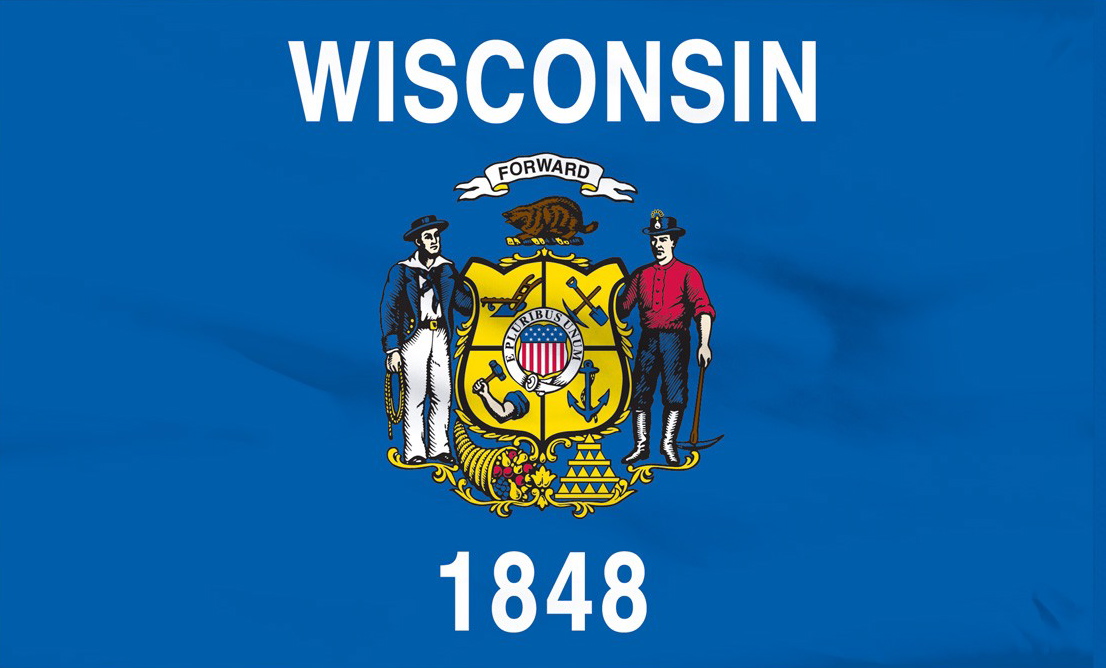
Being that it’s been a month and a half since this event, I’d better stop procrastinating and get to it before my memory is old enough to qualify for a Flashback Friday post, but I had a great time at Nutley Masonic Lodge No. 25 in New Jersey on June 20. Having been invited to speak by Worshipful Master Joel (I think I’ve appeared at Nutley as a guest speaker more often than at anywhere else) in proximity to Flag Day, I presented a review of the symbolism displayed in a number of U.S. state flags. Not all 50, but about 20 of the most interesting. Needless to say several of these flags are most conspicuous to the initiated eye.

There is no reasonable claim of Freemasonry influencing these flag designs in any way, but I hoped to illustrate how instructive images Masons use are found in major and official public symbols also. I didn’t prepare much in formal remarks, so what follows are simply some notes concerning each flag.


Bro. Dave, Master of the local Rose Croix Chapter and a member of Nutley Lodge, was instrumental in bringing me back to the lectern, so of course I was sure to begin with this flag: Louisiana.


One of the alternate names of the Rose Croix Degree is Knight of the Eagle and Pelican, and one of the key symbols of the degree shows the pelican in her piety, a metaphor for love and sacrifice. For the purposes of Louisiana, the flag’s symbolism is Roman Catholic, but if you’ve read Manly Hall’s The Secret Teachings of All Ages you probably recall the above illustration, a full-page, by Augustus Knapp, showing the full Rose Croix imagery.


Utah – The Beehive is one of my favorite Masonic symbols, and it is not uniquely Masonic. It is widely understood as a symbol of industry, but considering Freemasonry’s significance to Mormonism, which begat the State of Utah, it is an apt choice for the flag.


Alabama – St. Andrew’s Cross: St. Andrew is the patron saint of Scottish Freemasonry. This X-shape is the cross on which Andrew was crucified.


Alaska – Astronomy: the North Star and the Big Dipper.


Arizona – “As the sun rises in the East,” or sets in the West as the case may be. Thirteen rays = the original states. The colors are from the flag of Spain. The star symbolizes the copper mining industry.


Maine – We see the North Star again. “Dirigo” means “I lead.” For the Masonic eye, we have the anchor at right. The symbol of Hope.


New Jersey! – Liberty holds a staff topped with the red cap. This hat was presented to freed Roman slaves, and it appears in several state flags. The shield shows three plows to symbolize the agriculture of the Garden State. At right is the ancient goddess Ceres (grain) holding none other than the cornucopia.


New Mexico – Sometimes simple is best. What we have here is another sun symbol. There are four angles of a square. Four parts of a circle. This is a sacred symbol of the Zia tribe of Native Americans. Four is the sacred number denoting the circle of life; the four cardinal directions; four seasons; four elements.


New York – Another radiant sun. Justice stands at right with the scales—another Scottish Rite symbol. There’s that Roman slave cap again at left. The body of water is the mighty Hudson River.


Oklahoma – I included this because it has a smoking pipe. Lots of Native American symbolism built into this. That’s an olive branch.


Rhode Island – The anchor of Hope most prominently.


Virginia – Left breast bared! This is Virtus, goddess of virtue. Sic Semper Tyrannis means Thus Always to Tyrants—what John Wilkes Booth shouted after shooting President Lincoln. This was designed by George Wythe, a signer of the Declaration of Independence, but not a Freemason.


Washington, DC – Taken from the coat of arms of the Washington family–not just George Washington, but his ancestors dating to the 12th century. Benjamin Franklin said this emblem partially inspired the look of the U.S. flag. It also appears on the Purple Heart.


Magpie file photo
Washington State – Kind of speaks for itself. This Grand Lodge of New York apron is worn by RW Bro. Bill Mauer, a noted historian and trustee of DeWint House, the Washington Headquarters in Tappan.


West Virginia – The Latin motto means “Mountaineers are always free.” On top of the crossed rifles is that slave’s red cap again. To the left we see an ear of corn and also a bushel of wheat. June 20 is today: the anniversary of the state’s admission to the Union.


Wisconsin – Masonic symbols: the anchor, the cornucopia, the spade & pickaxe, as in Royal Arch Masonry.


Flag images courtesy united-states-flag.com
     

Wednesday, June 29, 2016

‘Brand new Masonic tarot deck’

     
The pollination of Masonic symbolism to tarot cards has intrigued me for a number of years. Both systems of symbols have venerable histories, coming into their own at approximately the same time (eighteenth century), and sharing in common influential personalities (Waite, Levi). When an artist marries the two traditions, the results can be noteworthy.

Before continuing, let me restate that for Magpie purposes, tarot cards are not for fortune-telling, but their symbols are useful for meditative and contemplative purposes—and not necessarily only when the cards bear Freemasonry’s symbols.

It’s certainly okay if you’re an experienced and well traveled Freemason who doesn’t know much about tarot cards. I’m no expert. But it is a quirky topic that I promise will engage you if you study it, as tarot definitely is “a peculiar system…illustrated with symbols.” Tarot decks of the traditional Rider-Waite-Smith variety, that do not even speak directly to Freemasons, nonetheless offer many images recognizable to the initiated eye.

Tarot decks that deliberately do consist of Masonic symbolism on the major arcana cards have been around for a while. Actually, you can find tarot cards with just about any theme depicted. There is a brand new Masonic deck published just this month by Lo Scarabeo in Torino, Italy.

Artist Patricio Diaz Silva of Chile has created 3x5 cards that put images from the Masonic lodge into the tarot milieu, and they’re beautiful. Seventy-eight cards, with the minor arcana cards being unillustrated. I think his concept of Masonic life is formed by what one generally might term “Continental Masonry,” meaning there are Scottish Rite and Templar images, plus women wearing aprons.

The following photos are copyright © Patricio Diaz Silva 2016, and are found on the web. The deck is available via Amazon and other on-line retailers.


Friday, December 11, 2015

‘Two interlaced deltas enclosing a protractor’

     
I searched through The Magpie photo archives hoping to find a shot of an Assistant Grand Lecturer wearing the apron of his office to illustrate this excerpt from the new issue of The Empire State Mason Magazine, and found Yves! Anyway, in the back of the book, Bro. Richard Kessler, the Right Worshipful Grand Lecturer, has a regular column titled, appropriately, “From the Grand Lecturer,” where this time he addresses three common questions. The first is: “Does the insignia on the Assistant Grand Lecturer apron have any significance in our ritual?”

Before I transcribe his answer, let me try to explain the design of the apron of the Very Worshipful brethren who wear it: No purple or gold, but a blue trim around a white background upon which lie a black equilateral triangle interlaced with a white equilateral triangle, forming a six-point star, within which is a protractor with its straight edge horizontal and its curved side above. Got it?

RW Kessler’s reply:

It does. The following is the symbology which has been used by Grand Lecturers in our jurisdiction: The Seal of Solomon or Shield of David is a hexagonal figure consisting of two interlaced triangles. The creates a six-pointed star. Upon it was inscribed one of the sacred names of God, from which inscription it was to derive its talismanic powers. These powers were reputed to be very extensive. It was called the Sacred Delta by the Ancients and was known as the symbol of the Great Architect of the Universe and also as the element of important ceremonies.


Magpie file photo
VW Bro. Yves Etienne
at Shakespeare 750
on September 2, 2010.
The interlocking triangles, or deltas, enclosing the protractor designate the Grand Lecturer or Assistant Grand Lecturer and are explained as follows: The two triangles, one white and the other black, interlacing, exemplify the mingling of opposing forces in nature: darkness and light, falsehood and truth, ignorance and wisdom, evil and good. They also are symbolic of the union of the body and soul. The protractor in the center of the two triangles is a symbol of wisdom and truth, and is emblematic of precision and perfection, which we hope for, both in our ritual and our lives. The emblem symbolizes one endowed with knowledge, who strives to overcome ignorance with wisdom, speak truth, and bring Masonic Light to the Craft.


If I’m not mistaken, this apron design and the office of Very Worshipful Assistant Grand Lecturer were devised in the 1990s with the goal of imparting to the brethren not only ritual instruction, but also the meanings of ritual elements and symbols. In 2015 the focus has been the Entered Apprentice Degree, and the results are conversations about the meaning of Masonry. Imagine that. The first time I saw one of these aprons, I assumed it was the apron of some crazy lodge at Masonic Hall that provided its brethren Masonic instruction with alchemical or other esoteric influences. You see all kinds of aprons at Masonic Hall.
     

Saturday, April 11, 2015

‘A Royal Arch and Kabbalah lecture’

     
It’s been more than four years since I have presented any kind of educational talk on the subject of Royal Arch Masonry, but I’ll try it again next month in my Chapter.


I delivered this lecture last in Pennsylvania, and I think it went well. I still have not written it, but this essentially is a discussion of how key elements of Royal Arch ceremony and symbolism are defined by Masonic ritual, by the Hebrew Bible, and by that giant body of Kabbalist literature named The Zohar.

Dinner will be served at 7:15 (only seven bucks!), and reservations are required by e-mailing the Secretary at scottchapter4nj(at)gmail.com no later than Wednesday, May 6.

Attendance, naturally, is only for Royal Arch Masons. Hope to see you there.
     

Sunday, November 9, 2014

‘Remembering the cold cheap masonry’

     
I couldn’t let today’s silver anniversary of the tearing down of the Berlin Wall pass without comment. Something I had thought wouldn’t happen in my lifetime was made real as I watched in suspicious disbelief as it occurred on this date in 1989. An amazing turning point in human history that, amazingly, is nearly forgotten already in the United States.

The lessons for Freemasonry are stark. Speculative builders who work in virtue and morality, in brotherly love and truth, “create societies out of freedom,” as one Mason (a total stranger) I met before my initiation phrased it. (“A lodge cannot deprive a brother of his civil rights…” Constitution and Laws, 29-27, Grand Lodge of New Jersey, F&AM.) What was wrought in the “Democratic Republic of Germany” in 1961 was an immoral and hateful masonry: cheap concrete that surely would have crumbled by now, leaving only the rebar and rocks that went into the cement. When masons are free, they can build temples and churches of resources gifted by nature and handcrafted into masterpieces. When they are not, they’ll throw up slabs of shitty cement to imprison a city. Freemasons should never forget the symbolic working tools found on the flag of the DDR: The hammer of industry and the compass of science should serve to remind us all of the versatility of any tool. What matters is the hand that wields it, or as German filmmaker Fritz Lang put it in his Weimar era masterpiece Metropolis: “The mediator between the head and the hands must be the heart.”

My own mementos of the Berlin Wall acquired during a visit in 1990 include
several shards of the Wall and a few East German military and political medals.
     

Friday, May 18, 2012

‘Masonry as Mystery School’

     
Aurora Grata-Day Star Lodge No. 647 cordially invites all Master Masons to hear VW Bro. Piers Vaughan present his lecture titled “Symbolism, and Freemasonry as a Mystery School” next week.

Wednesday, May 23 at 7 p.m.

American Room, 19th Floor
Masonic Hall
71 W. 23rd Street in Manhattan

Light collation to follow. RSVP to grsolberg(at)verizon.net
    

Monday, January 24, 2011

‘No. 11’

    
(I admit it. I’m trailing the Dummies blog.)

The new issue, No. 11, of The Journal of the Masonic Society is in the mail to our more than 1,200 members now.

What I’m most excited about is the appearance of the first piece by New Jersey’s own Bro. Ben Hoff, the Right Worshipful Grand Historian. Ben is a kind of forensic historian of Masonic ritual, in that he consults, compares, and contrasts the original source documents (ritual exposures, ciphers, monitors, jurisprudence, et al.) to determine the origins and changes of many ritual elements.

A favorite refrain in Masonry is “We’ve always done it that way,” but Ben’s research belies that simplistic belief, showing that no, we haven’t necessarily always done that, either that way or another way. His paper in this issue of The Journal explains the origins and evolution of how initiates are clothed, received, and conducted. There is much more to it all than you might guess.

His writings are taking the shape of a book, and we at The Masonic Society are proud to serialize his work, chapter by chapter. Believe me, no one else in Masonry is doing the kind of research that Ben does. As I write this, Ben is putting the finishing touches on his next installment, in which he explains a peculiar manuscript’s influence on the Master Mason, Past Master, and Royal Arch degrees. A must read!

Other attractions in this issue include Bro. Shai Afsai’s story about his lodge – Redwood Lodge No. 35 in Rhode Island – and a question of symbolism and conscience. Bro. Peter Knatt on an intersection of British military history and Freemasonry. And a lot more, including editorials, columns, photography, and other features.

I cannot be unbiased, but I can say accurately and respectfully that this is the finest Masonic periodical in North America. And it is only one of the benefits of joining The Masonic Society. We also offer an exclusive (as in, no bogus Mason silliness) on-line forum abuzz with thousands of conversations, discounts on books and other necessities, and tokens of membership like no other – like our stunning patent, on parchment with hand-stamped was seal. For 39 bucks a year! Click here to get involved.
    

Monday, November 9, 2009

‘Compass and Compassion’

     
For 28 years, a barrier made of cheap concrete mixed with rocks stood as a dividing line between West and East. You see, while nobody wanted to travel from West to East, everybody wanted to travel from East to West. But traveling, whether to receive wages or anything else, was not to be where stood the Berlin Wall.

All I really want to say on this 20th anniversary of the breaching of that prison fence is 1) Thank God! and 2) Let Freemasons everywhere consider the Compasses as a symbol.


The national emblem of the German Democratic Republic includes the hammer and compass, a variation of the Soviet Union’s hammer and sickle. Germany was a much more advanced society than backward Russia, so the compass of science made more sense as a national symbol than the obsolete agricultural hand tool.


Of course Freemasonry has Compasses too. Ritually they remind us to circumscribe our passions and to practice secrecy; the Senior Deacon conveys this message to the aspirant, getting to the point right away. One employs the Compasses to draw the circle wherein one stands at its center, never to materially err. As one of the Three Great Lights of Masonry, the Compasses join the Square and the VSL to illumine our world. The legs of the Compasses are elevated with each progressively heightened state of consciousness from First Degree to Third. And so, in the hands of Masonic man, the Compasses embody freedom of thought, freedom of association, morality, and our God-centered psychology with its Light to which we draw nearer.


The Short Talk Bulletin of May 1924 says:


How to use the Compasses is one of the finest of all arts, asking for the highest skill of a Master Mason. If he is properly instructed, he will rest one point in the innermost center of his being, and with the other draw a circle beyond which he will not go, until he is ready and able to go farther. Against the littleness of his knowledge he will set the depth of his desire to know, against the brevity of his earthly life the reach of his spiritual hope. Within a wise limit he will live and labor and grow, and when he reaches the outer rim of the circle he will draw another, and attain to a full-orbed life, balance, beautiful, and finely poised. No wise man dare forget the maxim “In nothing too much,” for there are situations where a word too much, a step too far, means disaster. If he has a quick tongue, a hot temper, a dark mood, he will apply the Compasses, shut his weakness within the circle of his strength, and control it.


In the hands of the communists of East Germany however, the compass represented authoritarian control, the forceful contorting of the human will to gratify the tyrant’s designs for society.


In the hands of the totalitarian commissars of East Berlin, the compass was a tool to brutally crush freedom, brotherhood, equality, truth, science, philosophy, and humanity in the name of constructing a world devoid of Faith and Hope and Charity.


In the hands of the East German Communists, the only masonry possible with their compass was that ghostly, ghastly gray concrete wall that divided Berlin.


Light shines from the West.

It was twenty years ago today that Light breached that wall. As we say in the Chapter of Rose Croix: “May we commit ourselves anew to the high task of building a nobler world of freedom and justice for God and humanity. ‘As you would that men should do unto you, do you even so unto them.’ So may the Light that never fails, the Love that never forgets, and the Life that never ends, illumine our world.”