Showing posts with label Aprons. Show all posts

Sunday, January 18, 2026

‘Texas says the apron is a place of the skull’

    
Marcus Delzell
Honorem Memento Mori by Marcus Delzell.

The Grand Lodge of Texas hosted its Grand Annual Communication this weekend at Waco, and one of the proposed amendments to the Laws approved by the voters (known as the Grand West) was Resolution No. 21.

Listen, to some of the guys, this was a really big deal: As of yesterday, it is legal to include the skull among the symbols adorning Masonic aprons.

Does Texas include the skull among the symbols revealed during their degrees? I have no idea. Most of the rest of us in the United States have the hourglass, the scythe, and the weeping virgin to remind us of mortality—to say nothing of the reading of minutes.

In coincidence, Bro. Marcus Delzell, of Parsons Lodge 222 in Austin, is an artist who painted the apron at top. On social media a week ago, he says:

My latest Masonic artwork in a series of symbolic paintings on aprons. This work was inspired by the memorial for the death of Hiram Abiff, and the symbols therein are represented in this work, abstracted to expand on different facets of symbolic meaning.
Since the monument is functionally a memento mori, I’ve included a skull from whose cranium is growing a sprig of evergreen; except this specific evergreen is that of eucalyptus, because of its property to be split in two to grow another plant with the second part. The red ribbon is representative of the weeping virgin. In many western fairy tales, a lock of hair is emblematic of innocence, and when illustrated is typically presented with a red ribbon to accentuate its carnal meaning. I’ve split Father Time into two symbols, one to highlight the invaluable time each of us have remaining, and the other to highlight his Saturnian aspects: The clock set at five seconds to midnight reminds us that our time on this mortal plane may end abruptly and soon. With this in mind, we should maintain the imperative to use our remaining seconds intentionally. The crow eating from the egg is the frontispiece of the artwork. This represents Chronos, or Saturn, who ate his children out of fear that they would overthrow him; even the Greek gods were not immune to the consumption of time. The potential for life from the creature in the egg has been stolen, and his eggy fortress of safety and vitality has been vanquished.


Marcus Delzell

The consternation evoked by this symbol should remind us to be patient, warm, and to keep the sanctity of innocence and potential in the forefront of our thoughts. In western esotericism, borrowing from Hinduism, there is a concept of the right and left hand paths. With each symbol facing towards the right, this artwork has a rightward chirality. This is a symbol for the right-hand path, which consists of a belief in the separation of mind, body, and soul; and the belief that judgment awaits us—something familiar to us as Masons.


Honorem Memento Mori
2026
16x16, acrylic on leather, cotton tassels

Not everything at the Communication was so pleasant. There is some kind of awful scandal concerning control of the board that governs the Masonic Grand Lodge Library and Museum of Texas. I may revisit this subject later, but right now I don’t know or even follow everything this entails. I anticipate knowledgeable coverage on the Dummies blog before long anyway.
     

Friday, August 9, 2024

‘The Compasses, Quadrant, and Sun’

    
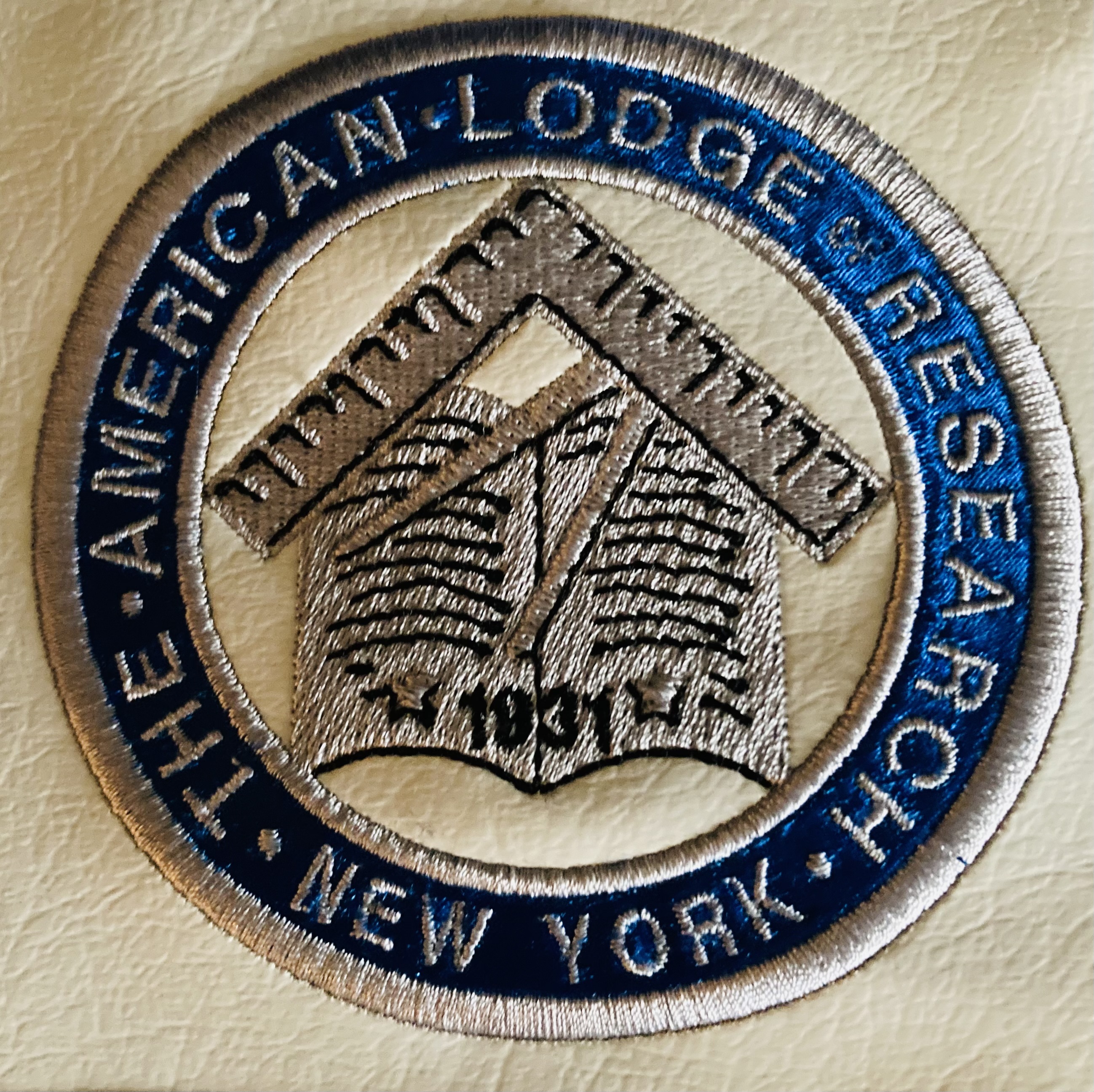
My new ALR Past Master apron from Macoy.

I rarely treat myself to material gifts, figuring I have reached the age when it’s best to stop accumulating things, but I couldn’t resist an apron to commemorate my recent ascent to the East of The American Lodge of Research. As Masonic office-holding goes, this is my last stop.

I’ve been deliberating deeply this year on what my future labors in the Craft ought to look like (i.e., what makes me happy versus what leaves me wanting), and I believe I will limit myself to my three research lodges, unless I join a fourth, while quietly easing away from other Masonic commitments. After twenty-seven years of ceaseless hyperactivity, I am burned out, and there are too many responsibilities that drain my time but bring me little pleasure.

Twenty years ago, I was out of the house seventeen nights a month for this and that meeting; this dropped off steeply long ago but, after I leave the East, it will become more like seventeen per year. The pursuit of happiness for me spells quality over quantity. So, I’m looking at three or four meetings a year of The ALR; four at New Jersey’s research lodge; and maybe one or two with Virginia’s Civil War Lodge of Research, provided it sojourns north of 38° latitude. Plus, it goes without saying, there’ll be time for the occasional lecture here, conference there, the odd symposium, etc.—not to mention table lodges and festive boards. And I want to jumpstart Knickerbocker Chapter of the Philalethes Society. Maybe I’ll stick with AMD. So, possibly, not even the seventeen experiences total each year.

Well, you have to look sharp when you’re that particular, ergo my acquisition from Macoy Masonic Supply Co. shown at top.

Member apron.
Macoy fashions The ALR’s aprons. Not only our officer aprons, but also a smart design for members in good standing. Plus, as of now, because this is the first to be produced, our Past Master apron. They worked with us as we sought to recreate The ALR’s regalia from generations ago, using Harold V.B. Voorhis’ PM apron as a starting point:

Harold V.B. Voorhis’ ALR Past Master apron.

Having this inaugural piece made required patience on both ends of the transaction because I had to be perfectly exact in describing how it must look, and they had to be able to decipher my specs. I thought it would be easy to just request the standard Grand Lodge of New York Past Master design, but rendered in the brilliant colors of the unique materials of The ALR collection—except there seems to be no standard GLNY PM design!

I mean, there are rules—this isn’t Nam—such as how purple and gold are reserved for grand rank (that combo is a bit opulent for my taste anyway), and the Compasses, Quadrant, and Sun may not be joined by the Square (as that composition represents our DDGMs), but the rest seems ambiguous.

Publicity’s PM apron.
The apron presented to our new Worshipful Masters at Publicity Lodge, for example, sport the wreath of laurels surrounding the Compasses, Quadrant, and Sun, but other lodges’ PM aprons do not have the wreath. These aprons are white, with blue trim, and the symbols in silver. Grand Lodge’s law book isn’t demanding on this subject—and that’s good—unless I’m missing it because the tome is hard to navigate.

The ALR Tiler apron.

Also, The ALR has a Tiler this year, so I had to buy him an apron too.

For myself, I prefer the cord & tassel over the elastic belt. I hardly think William Preston wore Spandex!

The process of procuring this apron got me wondering how the Compasses, Quadrant, and Sun combination came to be. Sometimes questions like this can be answered by the Book of Constitutions devised upon the uniting of England’s two grand lodges more than two centuries ago, but it’s not so easy this time. You probably know how, in the end, the English adopted the Square with the 47th Problem of Euclid as their Past Master symbol (Pennsylvania uses it too) but, before that, this C-Q-S design was used for Past Master jewels.

Leicester research lodge’s transactions, Vol. 8.

W. Bro. John T. Thorp, Secretary of Leicester Lodge of Research 2429, presented “The Jewels of the Worshipful Master and the Past Masters” at that lodge’s fortieth meeting on May 28, 1900. Delving into the various official and unofficial literature of the eighteenth and nineteenth centuries, he found how different rituals, constitutions, illustrations, and other sources document what such jewels supposedly looked like. Several select excerpts:

Here, Thorp quotes the ritual exposure Jachin and Boaz.

And the exposure Mahabone.

And Three Distinct Knocks, obviously.


About that line or string of cords: It surprises me Bro. Thorp was uncertain about this, but then, he didn’t have search engines, but a cord in geometry is “the line segment between two points on a given curve,” according to dictionary.com. Today it is spelled “chord.”

In geometry, the quadrant can give an understanding of the earth’s circumference. In architecture, it is used, for example, in medieval building to add decorative flourishes to already complex designs.

In one understanding of Masonic symbolism, a speech delivered in 1863 puts it beautifully. On November 3 of that year, at Hampden Lodge in Massachusetts, W. Bro. E.W. Clark, upon presenting a Past Master jewel and collar to W. Bro. F.T. Merrick, said, in part:


There is an old adage that “actions speak louder than words.” Accept then, my Brother, this Jewel, not for its intrinsic worth, but as a token of our esteem for you, and when you wear it, may it call to your mind many of those valuable lessons in which you have so often instructed others.

The compass extended on a quadrant will remind you that your sphere of usefulness in this life is only bounded by your ability to perform. Let the Square remind you, although not the symbol of your office, yet God has made all things square, upright, and perfect. And the Sun, in the center of that great light which God has given us to lead us through life, and when you shall have done with life, and shall have passed to your reward, then may that beautiful passage of Holy Scripture be made manifest to you, which says:

‘The sun shall be no more thy light by day, neither for brightness shall the moon give light unto thee; but the Lord shall be unto thee an everlasting light, and thy God thy glory.’


(See The Freemasons’ Monthly Magazine, Vol. XXIII, No. 3, January 1864, for the entirety of that great speech.)

Worthy of a Grand Master, yet fits beneath the driver seat. It’s a ‘half-size’ apron case. Holds an apron or two, writing supplies, cigars, flask, smallish pistol, and sundry items.

Naturally, one needs a case befitting so grand an apron, and I found the above recently via eBay. Sixty-five bucks! Fuhgettaboutit.

So, when you see me in my circumscribed Masonic travels, don’t be surprised if I show off my new regalia. (Andrew says bring your apron to the MRF for the MacBride EA°.) See you around.
     

Thursday, November 17, 2022

‘The ALR’s new clothes’

     
Just another reminder that The American Lodge of Research will be on the road in two weeks, paying a visit to West Point Lodge 877 in the Hudson Valley. That’s Thursday, December 1 at seven o’clock. The lodge is right outside the Military Academy.

All Master Masons are welcome, so please let us know you’re coming by signing up here. Attire is suit and tie business casual with apron. Feel free to bring your own regalia, but I’m sure West Point Lodge will have aprons available for you.

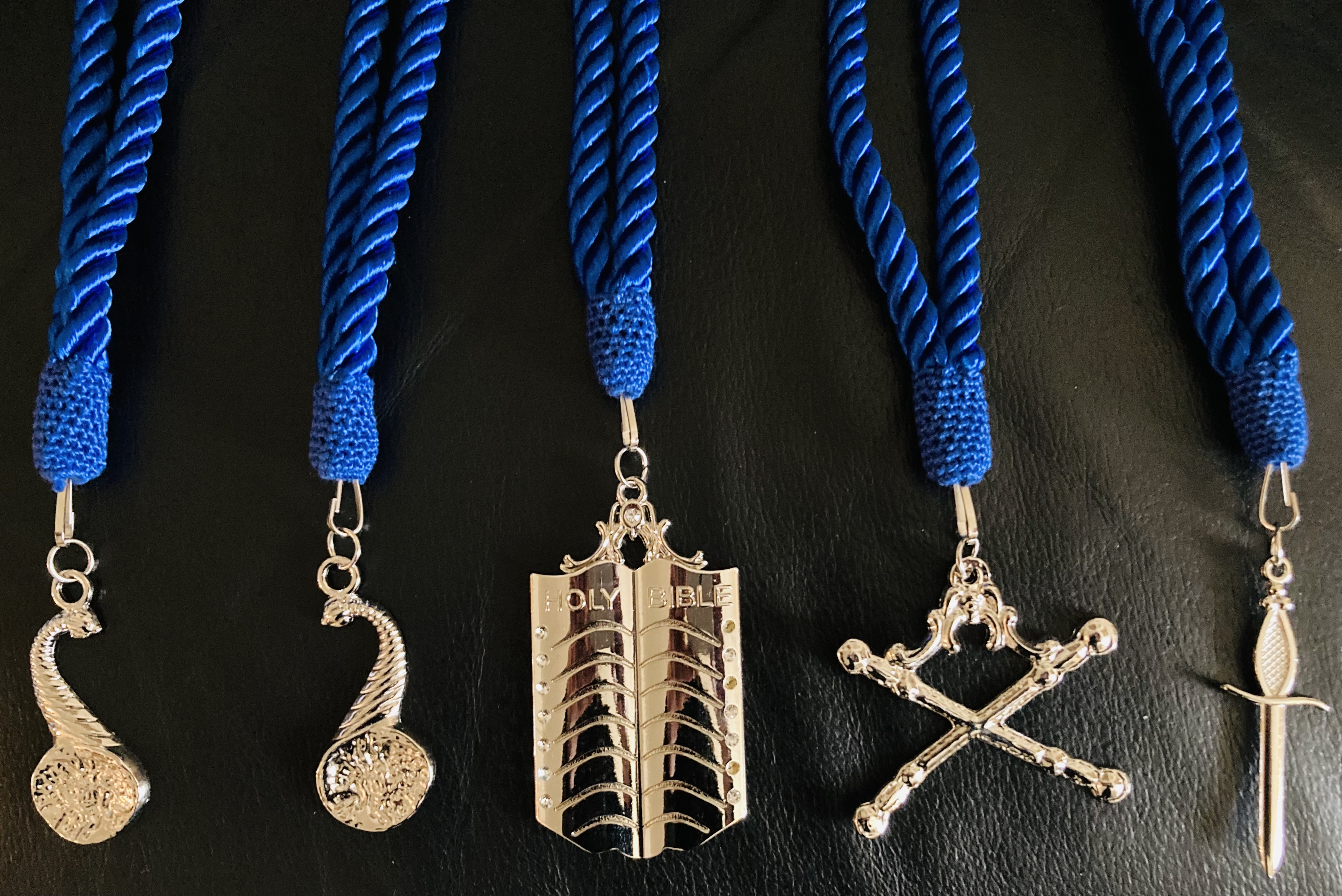
Speaking of aprons, I am tasked with bringing our officers’ regalia to this meeting so, for now, I’ve got them inside an acid-free box in my subterranean climate controlled vault. The ALR recently purchased these aprons from Macoy. Great stuff. Expensive, but the quality definitely is there. Have a look:


This piece of embroidery is located on the apron flap.


Our new jewels did not come from Macoy, which is why they’re smallish and suspended from plain ropes. (We are a lodge of Masonic research and education, so there isn’t any pomp in our activities. Even our installation of officers leans toward the perfunctory.) The photo above shows superfluous pieces that came with the set. We don’t have Stewards, a Chaplain, a Marshal, or a Tiler.

Although sometimes a Chaplain wouldn’t be a bad idea.

See you December first!
    

Friday, May 20, 2022

‘The Hero of Two Worlds’

    
I can’t remember where in Masonic Hall this hangs. Corinthian?

“Insurrection is the most sacred of rights and the most indispensable of duties.”

— Lafayette


On this date in 1834, Marie-Joseph Paul Yves Roch Gilbert du Motier Marquis de La Fayette died in Paris at age 76. His remains are interred in the city at Cimetiere de Picpus—beneath soil shipped from Bunker Hill, such was the import of his role in the American War of Independence and vice versa.

That he championed the American cause, not only to smite the enemy British Empire, but to make manifest the Americans’ philosophy of individual liberty and national freedom was extremely counterintuitive for a French nobleman, if you think about his station in life. And his fighting for the Continental Army didn’t even put him in good standing when revolution, originally in the name of republicanism, was unleashed in his homeland, although it at least saved his life. In fact he lived to see various leaders and different forms of French government rise and fall, until the July Monarchy. Government troops slaughtered a crowd of civilians in April 1834. Lafayette was dead a month later. He is remembered as “The Hero of Two Worlds.”

Outside, appropriately, Colonial on 10.

Masonic historians are frustrated by the absence of a record of his initiation into the fraternity, but when he arrived in America in 1777, his Masonic membership was a given. I would say he is France’s most celebrated Freemason, at least in the eyes of American Masons. He was a Royal Arch Companion in Jerusalem Chapter 8 in New York City, as well as a Cerneau Scottish Rite 33rd Degree Mason.

(I’m assuming it’s pure coincidence, but the New York City Parks Department chose today to power wash Union Square Park’s Lafayette statue, titled “Lafayette Arriving in America,” made by Bro. Frederic Auguste Bartholdi, of Statue of Liberty fame, and dedicated in 1873.)

His famous return to the United States in 1824 consisted of a tour of all the states in the country, with Masonic celebrations along the route. The Grand Lodge of Delaware received him in 1824 and made him an Honorary Member the following year. Also in ’24, Lafayette visited the brethren in Maine and New Jersey and Maryland (another Honorary Membership there). In 1825, he was feted in South Carolina, Louisiana, Illinois, and, with another Honorary Membership, in Tennessee. Many lodges around the United States have been named in his honor.

Lafayette Lodge 27 photo

Last month Grand Master Richard Kessler led a party to a neighboring jurisdiction where its Lafayette Lodge held a ceremony to unveil a marker on The Lafayette Trail, which denotes the path of his historic tour. The New Yorkers brought with them an apron affiliated with the French hero for display that day.

Chancellor Robert R. Livingston Library photo

Click here for more on his Masonic history.
     

Wednesday, December 1, 2021

‘Proposed ritual change’


In the First Degree of many Craft rituals, the apron investiture is narrated by a quick speech explaining the legendary history of the garment with assurance that its transcendent decency is beyond the power of omnipotent monarchs to confer. To that “king, prince, potentate” phrase I propose adding “corrupt public health bureaucrat who has been caught lying and otherwise proven wrong repeatedly.”


A little verbose? I’ll work on it, but tell the ritual committee I’m coming over.


Thursday, November 4, 2021

‘An apron that says just enough’


“Superfluous compliments and all affectation of ceremony are to be avoided, yet where due they are not to be neglected.”

Rules of Civility and Decent Behavior


Buzz on Masonic social media today doesn’t fail to remind us that George Washington was initiated into the fraternity at the lodge in Fredericksburg, Virginia on this date in 1752. Vivat! (I’m looking forward to Mark Tabbert’s book on this historical giant’s Masonic life, which is due to be published in 2022.)

And tomorrow will be the 24th anniversary of the night I was raised to the Sublime Degree in the former Menorah Lodge 249, an event not quite as consequential.

But I just wanted to post this well known image. Washington as a Freemason is a lithograph from Strobridge & Gerlach circa 1866. It was posted on Facebook today by Mount Vernon with a link to a summary of what the historic site has to say about Masonry.

I like the apron he is shown wearing. Simple, but says everything. It doesn’t resemble any of the aprons Washington is known to have owned.

For a long while I have wanted to have something very similar made for my travels, but it’ll show a subtle difference or three. I’ll get it in time for the silver anniversary of my initiation next June.
     

Tuesday, July 20, 2021

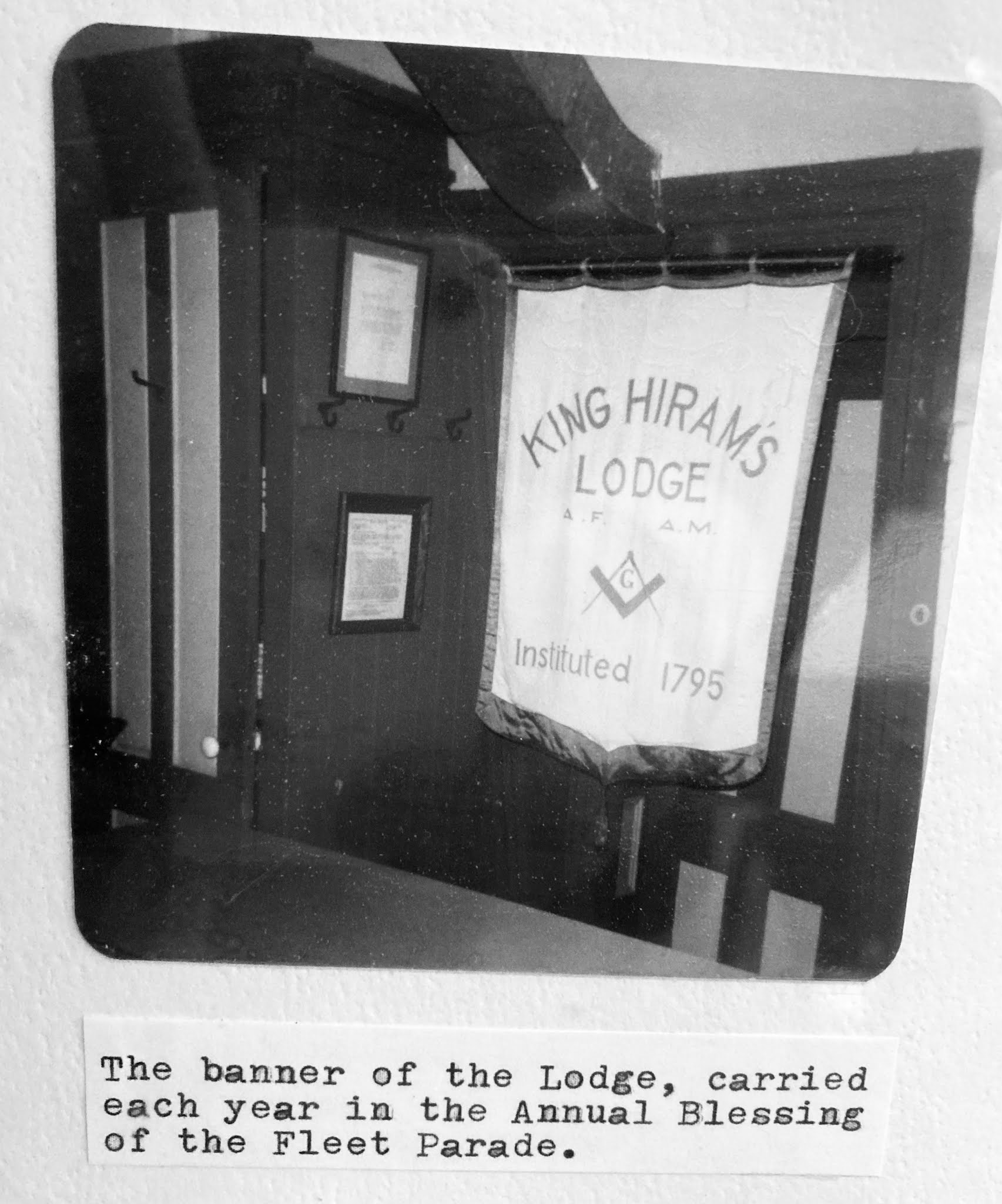
‘King Hiram’s Lodge AF&AM


To continue from last Tuesday (see post below) about a quick trip to Massachusetts in May, my stay on Cape Cod coincided with the monthly meeting of King Hiram’s Lodge.

As I recall, this was the brethren’s second lodge meeting since the end of COVIDmania. It was obvious they were very grateful for their Masonic labors!

King Hiram’s is a historic lodge. When you’re a Freemason in the eastern United States, it is easy to take for granted the existence of lodges set to labor during the eighteenth century, that even may be older than the country itself, and which have included historic personages in their memberships over the passing centuries. This is one such Craft lodge.

Warranted by Paul Revere in 1795, when he was grand master of the Grand Lodge of Masons in Massachusetts, King Hiram’s Lodge has counted among its members a number of town fathers, a proud tradition that continues today.

While greeting and meeting everybody present that night of Monday, May 3, I shook hands with several local VIPs. The proprietor of one of the historic, renowned restaurants, for one. After the meeting, a few of us grabbed a few drinks around the corner; one of those brethren is Provincetown’s new Town Crier.

This was the lodge’s 2,184th Communication. In its 226 years, King Hiram’s Lodge has not missed a meeting. During the War of 1812, one of His Majesty’s warships blasted the hell out of this tiny town. A ship’s chaplain was sent ashore to enquire about a surrender. During the discussion, it was ascertained that the ship’s captain and others were on the Square. They were invited to attend the lodge’s meeting, and they did so. Even through the COVID-19 scare, a nucleus of devotees kept the Great Lights beaming (and the bills paid).

On the agenda this evening was the reception of RW John Allen Eldredge, the District Deputy Grand Master, who was making his Fraternal Visit. (Other grand lodges term these events Official Visits, or something similarly institutional. Kudos to Massachusetts for this choice of words.) As a fraternal visitor myself, I was invited to join the DDGM’s procession into the lodge room. I tried to talk my way out of it, not knowing if it involved any floor work unfamiliar to me, but the hospitality is strong at King Hiram’s, so in I went, getting a taste of the grand rank life. My rationalization was “Well, why not? I am President of the Masonic Society after all!” Massachusetts also has District Deputy Grand Secretaries and Marshals.

It was a very enjoyable experience. I’m surprised I didn’t snap more photos, but here are the best of what I have:

Bro. Theodore Roosevelt, President of the United States, used this trowel in the cornerstone ceremony of the Pilgrim Memorial Monument, August 20, 1907.

The Pilgrim Memorial Monument.

It must be remembered that Paul Revere was a silversmith. He crafted this set of officer jewels for King Hiram’s Lodge. The set is one of eleven known to exist.

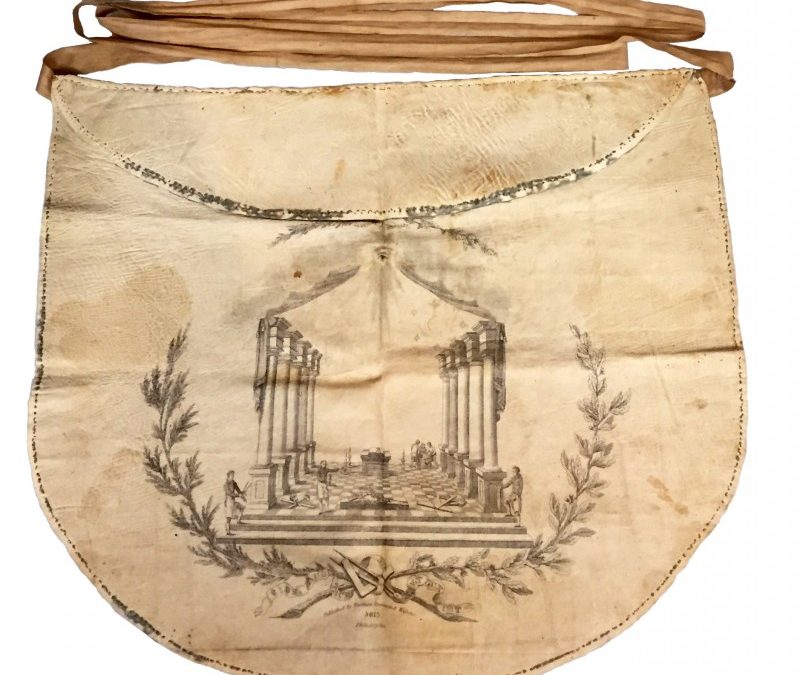
Edward Horseman (sometimes Horsman) (1775-1819) made these aprons in 1814. 

I have been hoping to have an apron almost exactly like this made for me for my travels.

Tracing board.

Altar Bible.

Murals in the lodge room.


As I get older, I appreciate these lodge officer portraits more.


Provincetown was my family’s vacation spot during the 1960s and ’70s. I was there in May to scatter my mother’s ashes. I really doubt I’ll ever get there again.
     

Wednesday, March 10, 2021

‘Wednesday arts update’

    
Six items for you in tonight’s arts update.

  • Bro. Ryan recently put the finishing touch on his greatly anticipated portrait of Bro. Prince Hall.


If you have been following his progress on this via social media, you could feel justifiably amazed by his balance of creativity and respect for his subject. There is no way to know exactly what Hall looked like, so Ryan instead rendered contextual elements to tell the story. Items depicted in the foreground and background and, of course, Hall’s regalia and gavel tell a remarkable life story with a veracity you can count on.

Prints are available for purchase now. Click here.


  • Bro. Erik LaMarca, of Kosciuszko Lodge 1085 and Shakespeare 750, is the subject of the recent Craftsmen Online, one of a number of digital magazines serving New York Freemasonry.

LaMarca’s photography will be on exhibit next month at Solas Studio in a show titled “Revelation: Sight Through Symetry.” Click here to enjoy a look at a few pieces.


  • Bro. Scott J. Watson’s latest venture into art history conducts us to a lodge in eighteenth century Vienna. Mozart’s lodge, specifically.

I’m sure we’ve all seen the painting showing the great composer seated in lodge. I’ve used it here on The Magpie Mason a number of times over the years.


Watson explains what goes on in the image, and one thing particularly zapped me. Watson has us cast our eyes to the East, where hangs a painting I somehow never before thought about.

Let Royal Ark Mariners who have ears hear. And click here. Sign up for his newsletter too.


  • There is a mural decorating downtown Mt. Vernon, Ohio that will make every Mystic Prophet smile:

Courtesy Marty Trent

Unveiled (See what I did there?) in November 2017, but brought to the Prophets’ attention a few days ago in social media, It is painted on the side of the former Masonic hall in the neighborhood, and is a tribute to the groups that contributed to the local social scene. The nearly 3,000-square-foot piece was painted by John Donnelly, an art professor at Mount Vernon Nazarene University.


  • I had intended to post something about this last year, but when I saw the Wall Street Journal had beaten me to it, I kind of forgot about it.  Rothko Chapel, the landmark ecumenical spiritual space in Houston, has reopened, following a $30 million renovation that took almost a year.

The rehabilitation was mostly structural in nature, with the building being bolstered to withstand the hurricanes the region receives. Mark Rothko’s 14 paintings arrayed throughout the chapel now benefit from a new central skylight and modern interior lighting. On the grounds without the chapel, the landscape has been stripped of all sights except for Barnett Newman’s Broken Obelisk, the crystal-shaped shaft perched atop a pyramid that arises from a reflecting pool. Dedicated to Martin Luther King, Jr. in 1971, the artwork symbolizes the chapel’s purpose as a human rights locus.

Rothko Chapel marks its fiftieth anniversary this year. Click here for photos.


  • And, finally—I can’t do this all night, you know—is the latest from Piecework magazine, which contains a brief article on aprons.

“Unfortunately for historians, makers of aprons did not sign their work,” writes Deborah Dwyer. “Newspapers of the period advertised professional embroiderers specializing in military and Masonic regalia; sign painters offered painted aprons, and stationers supplied engraved ones. Undoubtedly, family members made some aprons as gifts.”

Read all about it here.