


 Posts
Posts





























 |
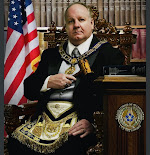
| Monitor of the Work, Lectures and Ceremonies of Ancient Craft Masonry in the Jurisdiction of the Grand Lodge of Free and Accepted Masons of the State of New York is available from Lodge Services or your lodge secretary. (Okay, maybe a graphic designer might have helped a little with the cover but, hey, it’s done.) |
Many years in the making, Grand Lodge’s Monitor is published and is available from Lodge Services. Its proper title, Monitor of the Work, Lectures and Ceremonies of Ancient Craft Masonry in the Jurisdiction of the Grand Lodge of Free and Accepted Masons of the State of New York, the book is copyrighted 2025, but I learned of its existence—again, after anticipation of years—just a week ago through a comment on Faceypage. Got my copy yesterday.
Immediately, I searched for content unknown to me, and no sooner than on Page 7 are Opening Charges.
Opening Charges?
Opening Charges!
You probably know a Closing Charge, delivered at, yes, the close of the lodge communication. I doubt it is ubiquitous throughout the country, but it is found near and far. In New York, we call it the Harris Charge (“…you are now about to quit this sacred retreat of friendship and virtue…”). It is an optional coda to the meeting, although I don’t know why a Master would opt out of it. When it was my privilege to serve in the East twenty-one years ago in New Jersey, that was possibly my favorite piece of Work. It differs slightly from New York’s version.
Who’s Harris?
 |
| Bro. Thaddeus Harris |
Where was I going with this? Yes! These Opening Charges.
They are not new to Freemasonry, but they’re news to me and they are terrific brief orations you’ll be proud to hear at the start of your lodge meetings. There are two, prefaced with this:
Performance of an Opening Charge is optional. One charge or the other, without alteration or combination, may be given in full immediately following the prayer in the Ritual of Opening, or at the commencement of any untiled Masonic event. Only The Monitor or The Chaplain’s Book are to be used if the charge is read in a tiled lodge.
The first Charge:
The ways of science are beautiful. Knowledge is attained by degrees. Wisdom dwells with contemplation. There are we to seek her. Though the passage be difficult, the farther we proceed, the easier it will become. If we are united, our society must flourish. Let all things give place to peace and good fellowship. Uniting in the grand design, let us be happy in ourselves, and endeavor to contribute to the happiness of others. Let us promote the useful arts; and by them mark our superiority and distinction. Let us cultivate the moral virtues; and improve in all that is good and amiable. Let the genius of Masonry preside over our conduct; and under its sovereign sway let us act with becoming dignity. Let our recreations be innocent, and pursued with moderation. Never let us expose our character to derision. Thus shall we act in conformity to our precepts, and support the name we have always borne, of being a respectable, a regular, and a uniform society.
The second Charge:
The ways of Virtue are beautiful. Knowledge is attained by degrees. Wisdom dwells in contemplation: there we must seek her. Let us then, Brethren, apply ourselves with becoming zeal to the practice of the excellent principles inculcated by our Order. Let us ever remember that the great objects of our association are the restraint of improper desires and passions, the cultivation of an active benevolence, and the promotion of a correct knowledge of the duties we owe to God, to our neighbor, and to ourselves. Let us be united and practice with assiduity the sacred tenets of our order. Let all private animosities, of any unhappily exist, give place to affection and brotherly love. It is useless parade to talk of the subjection of irregular passions within the walls of the Lodge, if we permit them to triumph in our daily intercourse with each other. Uniting in the grand design, let us be happy ourselves, and endeavor to promote the happiness of others. Let us cultivate the great moral virtues which are laid down on our Masonic Trestleboard, and improve in everything that is good, amiable and useful. Let the benign Genius of the Mystic Art preside over our councils, and under her sway let us act with a dignity becoming the high moral character of our venerable institution.
So, if these stirring words did not flow from RW Harris’ heart and mind, whence came they? I thought some of the phrases sounded familiar, but wasn’t sure if my memory was tricking me, so I asked Sam.
RW Samuel Kinsey, of Mariners 67, is Chairman of the Custodians of the Work, the team that preserves Grand Lodge’s Standard Work and Lectures and that publishes these books we need to learn our rituals and orations. He provided me a snippet of the Custodians’ report to Grand Lodge, which will meet next month:
The antecedents of the Opening Charges may be found in A Vindication of Masonry and its Excellency demonstrated in a Discourse at the Consecration of the Lodge of Vernon Kilwinning, on May 15, 1741 by Charles Leslie. This lengthy discourse was later incorporated into the first edition of William Preston’s Illustrations of Masonry, with increasingly revised and reorganized forms of the Vindication continuing to feature in all subsequent editions. In the early decades of the nineteenth century Thaddeus Mason Harris adapted one of Preston’s later versions into the first Opening Charge given above (the shorter of the two). The second Opening Charge originates in Charles Whitlock Moore’s The Masonic Trestle-board, which purported to contain the working from the Baltimore Convention of 1843. This is the Opening Charge that can be found in Monitors with relevancy to our jurisdiction throughout the remainder of the nineteenth century. Although the two Opening Charges reference the same source material and evoke a similar sentiment, your committee believes both are beautiful expressions that deserve to be authorized for use.
There’s a lot more marrow in the bone of this edition of The Monitor, the first published since 1989. The Installation of Officers is revised, just in time for our Installation nights. Now I have to see what The Chaplain’s Book is. Never heard of it.
From the 1740s to the 1840s to the second quarter of the twenty-first century, what we, as Free and Accepted Masons, think, say, and do in lodge remains continuous and relevant, no doubt thanks to our own consistency when we “mix again with the world.”
If you are of these households of the faithful, I wish you a Happy Passover or Happy Easter.

