


Showing posts with label Henry Price. Show all posts

Saturday, May 16, 2026

‘Meeting the Massachusetts Lodge of Research’

    
Massachusetts Lodge of Research hosted an enriching and enjoyable Zoom meeting this morning. My first experience with the brethren. I took a break from working to finish the long overdue MLMA newsletter to tune in, and am glad I did. RW Bro. Walter Hunt recounted his recent trip to England to research the activities of Henry Price who, as you know, was the Provincial Grand Master in Boston who established St. John’s Lodge and the Provincial Grand Lodge of New England in 1733. W. Frank Kautz asked and answered “What Is Esoteric Freemasonry?”

“I solved the Pennsylvania and Massachusetts problem once and for all,” said Bro. Hunt, the Grand Historian of their Grand Lodge, in conclusion to his presentation. He certainly made a solid case leading up to that. (If you don’t know, there is a “Who Came First?” rivalry between those two grand lodges.)

RW Walter Hunt
The Grand Lodge recently dispatched him to London for three days of examining eighteenth century records archived in the United Grand Lodge of England’s Museum of Freemasonry. This was prompted, in part, by the Grand Master’s reception in London three years ago at the tercentenary celebration of Anderson’s Constitutions. Massachusetts Masons’ self-image is of the third eldest grand lodge (1733) in the world, after England (1717) and Ireland (1725), but before Scotland (1736). The Most Worshipful attending that commemoration expected to be seated accordingly, but instead was—well, I’m not sure he got the Nick Cave and the Bad Seats treatment, but he wasn’t exactly in the front row either.

Grand Historian Hunt saw rare documents pertaining to Freemasonry in 1700s Massachusetts (and elsewhere), but he also discovered the absence of other papers one would have hoped contained answers to important questions. For example, Masonic correspondence between Massachusetts and England during the 1730s is scant. It seems Henry Price did not send reports to London. (In my reading over the years, I’ve seen this is not uncommon, as provincial grand lodges enjoyed much independence. I think we today might think of them as districts, like we have within our grand lodges, but that wasn’t the reality.) More problematic is there isn’t a record in England of Henry Price being appointed a Provincial Grand Master! (I hope I understood Bro. Hunt on this.)

In Anderson’s Constitutions of 1738.

Nor is he listed in James Anderson’s New Book of Constitutions of 1738. That text, in its section “Deputations Sent Beyond the Sea,” lists several dozen provincial grand masters around the world. That named for New England is Robert Tomlinson, Esq. in 1736.

Regardless, Hunt explained, he’d traced Price’s travel to London, where he paid the three guinea fee for receiving a PGM deputation. And Price executed his duties, signing the papers that established lodges down what we call the East Coast and even into the Caribbean. Speaking of the Pennsylvanians, Price issued a deputation to Benjamin Franklin, making him PGM of that colony.

Meanwhile, as you probably know, the Grand Lodge of England made Daniel Coxe its Provincial Grand Master of New York, New Jersey, and Pennsylvania in 1730, making him the first PGM in British North America, but there’s no evidence Coxe did anything with that authority.

So, in that Massachusetts vs. Pennsylvania dispute, Bro. Hunt says if you’re talking about grand lodges, then Massachusetts is first, but if you’re counting only lodges, then Pennsylvania is premier. Sounds to me like a very Solomonic solution.

W. Frank Kautz
In his “What Is Esoteric Freemasonry?” W. Bro. Frank Kautz gradually unfurled his answer to that question. He defines Freemasonry as a “system of morality, veiled in allegory” that imparts an “understanding by which man can transcend ordinary experience to be in harmony with the Great Architect of the Universe.” And the types of Masons he notes: the fun-seekers, the charitably inclined, those continuing a family tradition, and the esoteric Masons studying the meaning of Masonry.

The meaning is communicated in the “‘mysteries’ and ‘wise and serious truths’ hinted at in the lectures,” the symbolism of the working tools, the images placed about the lodge, and in the many books on Freemasonry.

What does esoteric mean? Bro. Kautz says:


Then we come to the Western Esoteric Tradition, a term Kautz attributes to MacGregor Mathers (I wasn’t aware of that), who created Golden Dawn in response to the rise of Eastern-themed movements that were growing in England and Europe.

The Western Esoteric Tradition, he continues, consists of Qabalah (he explained the spelling), Hermeticism, Gnosticism, Rosicrucianism, Paganism, Martinism, and Freemasonry.

The benefits of these are that they give us quests for gaining knowledge; they maintain wisdom from the past; and they help us develop critical thinking. Kautz also noted negative connotations of esotericism, such as suspicion of things that take place only behind closed doors, jealousy over possession of information by only the select, and even simple changes over time in the meanings of words.

In conclusion, W. Kautz defines esoteric Freemasonry:


As always, any errors or omissions discerned in the above are attributable to me, not the speakers.

With a minimum of lodge business (one new member was elected), the entire session took about ninety minutes. At The ALR, we’ve been talking for a long time about hosting online discussions, not only to augment our in person communications, which tend to be far apart, but also to reach our international membership. It’s proving hard to get that organized.

My worry about it concerns drawing too small an audience. I’d hate to invite someone, have him contort his schedule to help us reach members in, for example, Finland (seven hours ahead of New York), only to have about nine Masons present when we go live. There were, I think, twenty-one today, mostly lodge members and other Massachusetts Masons, but others, like me, from outside the Commonwealth. Not bad at all.

Massachusetts Lodge of Research will meet next on Saturday, August 8 at Tahattawan Lodge in Littleton for its Installation of Officers. That is where Senior Warden Stephen Rogg is at labor, so it will be there where he’ll be installed in the Solomonic Chair.

In the meantime, I completed the online form for joining this research lodge. You should too. Click here. I’ll let you know if they accept me.
     

Saturday, December 23, 2023

‘A look inside the Masonic Building in Boston’

    
Magpie coverage of the Boston Tea Party anniversary celebration last weekend continues belatedly with a quick tour of the Masonic Building, headquarters of the Grand Lodge of Massachusetts, in Boston. The following photos were shot both during a formal guided tour and while I was exploring on my own. Some items are permanently displayed; others were exhibited for the special weekend. Descriptions are mostly the official histories, but some also have my editorializing, which you’ll be able to discern. Enjoy.

The seal of the Grand Lodge greets you upon entering the side door. Not a typical mosaic, but each tile is a stone shaft of (I think) two inches bored into the floor by artisans from Italy who labored several years throughout the building in the early twentieth century. A shame everyone trods across, but evidently it can take it. You might recognize ‘Follow Reason,’ which also is the motto of St. John’s Lodge 1 in New York. A tour guide was unsure where the motto originates, but it may come from the coat of arms of the Duke of Montague, sixth Grand Master of the Grand Lodge of England. Those are beavers flanking the shield; a nineteenth century study by Grand Lodge said they were lizards! (Don’t tell David Icke.) The tour guide didn’t know what to make of the left side, saying the castles may have something to do with Henry Knox, but of course that comes from the arms of the first Grand Lodge of England, and is still used on the UGLE’s arms.

I was told this portrait of Bro. George Washington was painted by Gilbert Stuart, which is not impossible, I suppose, considering the artist’s Athenaeum Portrait is displayed in Boston’s Museum of Fine Arts. The brother also mentioned it had undergone very extensive restoration in recent years.

The Rev. Thaddeus Mason Harris, (1767-1842) first Grand Chaplain of the Grand Lodge of Massachusetts.

Christmastime is a good time to visit Boston.

The immortal Warren!
That such men lived is miraculous.

A sample of the Boston Tea Party tea! Said to have come out of the boots of one of the participants, and donated to the Grand Lodge by W. Bro. Paul F. Dudley of Milton Lodge.

Read the description below.

Click to enlarge.


A copy of the very rare first edition of Ahiman Rezon, Pennsylvania’s Masonic constitutions, dedicated to George Washington.
Joseph Warren’s King James Bible, printed 1614.

Until modern scholarship, which I’ll get to in the next edition of The Magpie Mason, this eyewitness account of the Boston Tea Party by George Hewes is the most reliable source. (I was told on Faceypage last week that the Tea Party was a revolt against the Stamp Act. ‘Tea tax,’ I reminded the brother. He told me to read the lodge secretary’s minutes. Ooh boy.)

Certificate of Rising States Lodge, Boston, signed by Paul Revere, September 3, 1800.

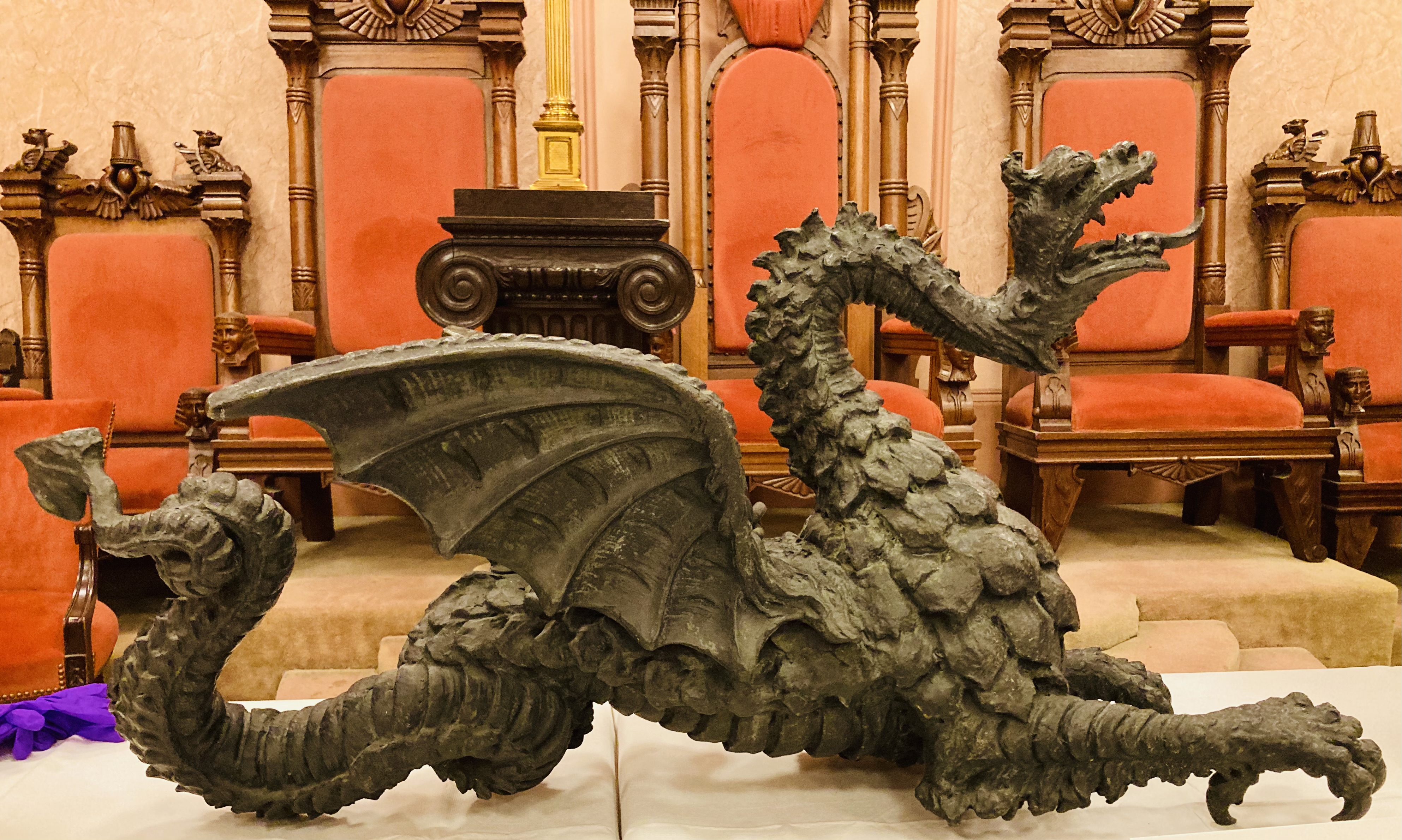
You know St. Andrew’s Lodge was the Scottish lodge that met in the Green Dragon Tavern, but you might not have known that the tavern got its name on account of the oxidized copper dragon employed as signage above the door. It turned green over time. And this is it! The actual green dragon!


Note the dragon above the entrance.

Detail.

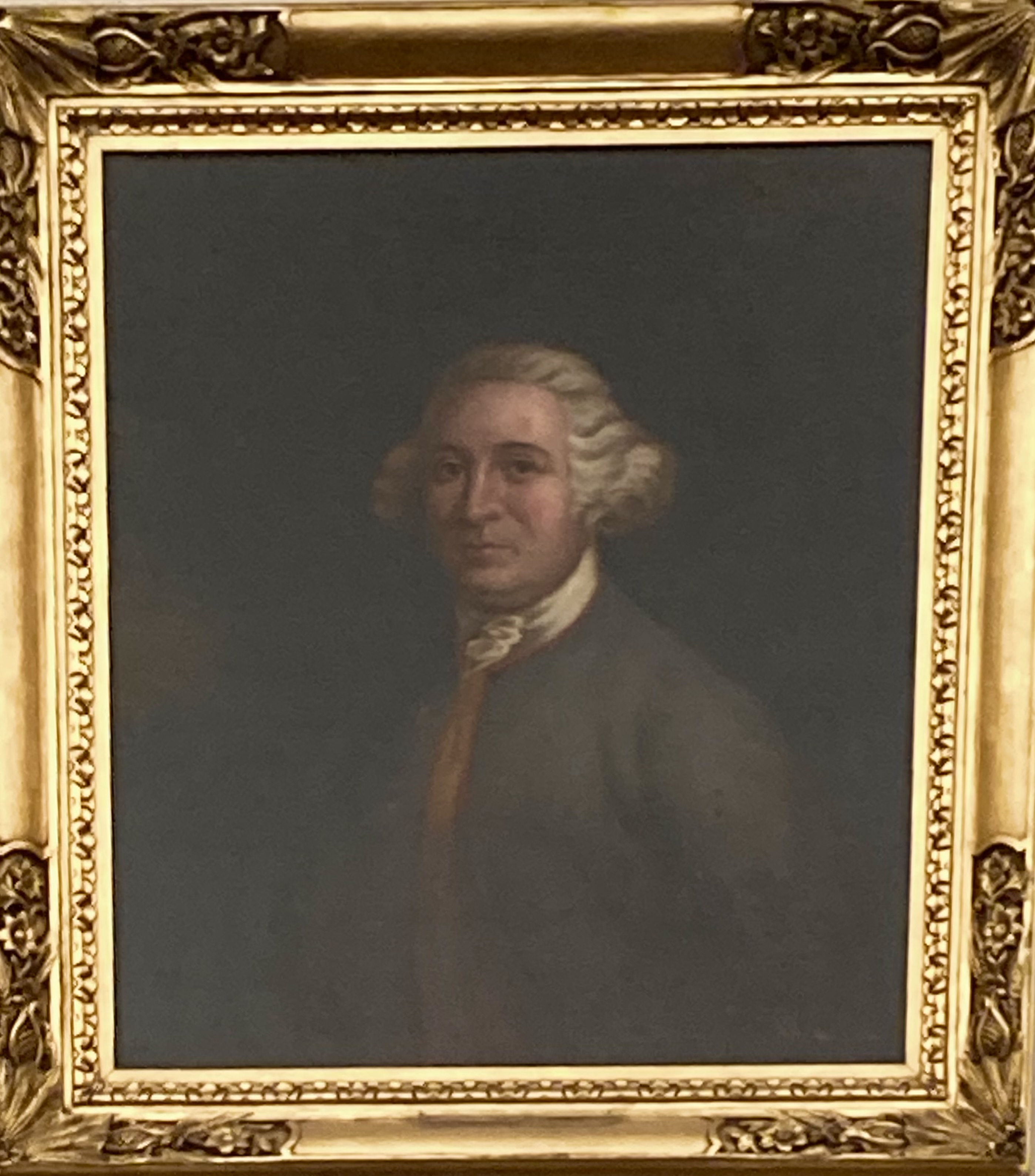
Henry Price. The reason Massachusetts claims to have the first grand lodge in the Western Hemisphere is because Provincial Grand Master Henry Price constituted the original grand lodge there. Knowledge of the original Grand Lodge of England’s way of doing things is needed, I think, because while we today might assume provincial grand lodges were akin to our current Masonic districts, the truth is the Premier Grand Lodge considered provincial grand lodges to be local sovereign authorities.

Henry Price’s headstone. At some point, the Grand Lodge of Massachusetts obtained permission from Price’s family to take possession of this headstone and move it to the Masonic Building to prevent damage caused by time and weather. It now is installed in a wall upstairs. In exchange, the brethren commissioned a massive monument for their founder.

MW John T. Heard, Grand Master 1856-58, was said to have weighed more than 400 pounds...

…consequently, this eight-legged chair was made for him.

Click to enlarge to read the card.

Franklin + Pallas Athena = Wisdom. Corinthian Hall.

And finally, a portrait of Ned Flanders. No inscription accompanies his portrait because he was not a grand master, but his picture hangs in respect for (I think) a massive donation he made to the Grand Lodge. Remind me to tell Tabbert there’s a Ned Flanders!


I shot many more photos, but these are the most interesting. Thanks for looking.
     

Friday, August 4, 2023

‘Freemasonry Night at Old North’


Saturday the 19th will be Freemasonry Night at the gloriously historic Old North Church in Boston.

A lot is going on in the Bay State, history-wise. July 30 was the 290th anniversary of Provincial Grand Master Henry Price officially introducing Freemasonry to the Province of Massachusetts Bay. Currently the Grand Lodge is establishing the position of District Historian, and providing training for those who would serve as such. The brethren are raring for the 250th anniversary of the Boston Tea Party. (God, I hope it’ll be a re-enactment!) This year is the 300th of Old North Church. At Massachusetts Freemasonry Night, the play Revolution’s Edge will be performed at the church—of “one if by land, two if by sea” fame—followed by a tour of sacred site. From the publicity:


Revolution’s Edge is a gripping historical drama set on the afternoon of April 18, 1775, hours before the signal lanterns would shine from Old North’s steeple. With war on the horizon, Old North’s Loyalist rector, the Rev. Dr. Mather Byles, Jr., is pushed to resign his post. As Byles and Cato (an African man enslaved by Byles) prepare to leave the church for the final time, they encounter Capt. John Pulling, Jr., a prominent member of the church congregation, ardent Patriot, and friend of Paul Revere. These three men share a faith, but have very different beliefs concerning the right path ahead for themselves, their families, and the colonies. Their conversation explores the intersection of faith and freedom on the edge of the American Revolution.


Pulling was a Mason at labor in Philanthropic Lodge in Marblehead. It was he who signaled to Revere by lantern.


Seating at five o’clock. Curtain at 5:20. The performance runs approximately 45 minutes. Tickets cost $20 for adults and $10 for guests under 18. Attendance is capped at 100. Click here. The play is recommended for those 12 and up.

If you can’t make it, the play will continue its run through September 19.
     

Sunday, April 23, 2023

‘The Henry Price is right’


Pleasant news from within the Grand Lodge of Massachusetts, where approval recently was granted for a name change of a Boston lodge. What had been Consolidated Lodge (they do not employ lodge numbers up there in the Commonwealth) until a month or so ago is now The Henry Price Lodge.

I’m a proponent of changing lodge names when one more descriptive and relevant is conceived. I’m guessing the name Consolidated Lodge was, at its invention in 2004, kind of a punt, something everyone in the amalgamation of several lodges could tolerate so they could focus on the other important details of merging. We had a Consolidated Lodge 31, representing a scrum of previous lodges, here in New York City. About a year ago, it changed its handle to the very apt Manhattan 31, a name resurrected from the lodge’s past.

Henry Price
Boston’s Consolidated Lodge was born as a mix of Price-Benton Lodge and Germania-Revere Lodge, themselves, seemingly, earlier mergers. You see “Price” in there; the first Henry Price Lodge received its Dispensation to meet in Charlestown on May 19, 1858. (Its charter came the following year.) Today’s The Henry Price Lodge revives the name, and in doing so, it conveys important history that links today’s brethren to the earliest Masons in British North America. I’ll let the Scottish Rite Masonic Museum and Library Blog explain:

London-born Henry Price apprenticed as a tailor. He arrived in Boston in 1723 to pursue this trade and soon met with success, opening multiple shops. He had become a Freemason in England prior to 1723. In 1733, while in England on business, he approached the Grand Lodge of England with a petition signed by 18 Boston men seeking to form a Masonic lodge. This petition was granted. Price returned home to Massachusetts, where he constituted both the Grand Lodge and St. John’s Lodge, the oldest local lodge in the state.

Congratulations to the brethren at The Henry Price Lodge AF&AM in Boston. Wishing you many years of prosperity!