


 Posts
Posts





























Born on this date in 1768:
Bro. Thaddeus Mason Harris!
Who?
 |
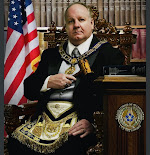
Magpie file photo Portrait of RW Thaddeus Mason Harris exhibited in the Boston Masonic Building. |
The clergyman, Harvard librarian, and first Grand Chaplain of the Grand Lodge of Masons in Massachusetts (nice resume) is the author of inspiring pieces of Craft lodge ritual familiar to—I think—most of the brethren in the United States, to wit: “You are now about to quit this sacred retreat of friendship and virtue…”
This has been embraced by grand lodges beyond the Commonwealth of Massachusetts, and its phrasing varies a little from place to place. Here in New York we call it the Harris Charge, and it is a favorite among ritualists and all who value the meaning of Masonry. But that’s not all!
First, some biography.
Thaddeus Mason Harris was born July 7, 1768 in Charlestown, Massachusetts to William and Rebekah (Mason) Harris. He would be the eldest of seven children in a family that was uprooted by the Revolutionary War, literally having to abandon their home and possessions to walk to Choxet in 1775. His family in destitution and with his father dying in the winter of ’78, he had several homes during childhood.
In his preteen years, Harris lived with different families. At ten, he resided in Templeton with the minister of that town, and it was there where he became affected with a love of books. At eleven, he relocated to Shrewsbury and lived with a minister who provided a fatherly influence. At fourteen, he left for Cambridge with the goal of enrolling in the recently organized Harvard University. It wasn’t to be, yet, due to finance, so he returned to his remarried mother, now in Malden.
Unsuccessful in finding employment, his grandfather, Register of Deeds at Cambridge, made Thaddeus one of his secretaries. There, he befriended a minster who encouraged him to enter college, and, in 1783, Harris enrolled in Harvard. Truly a kind of existence that would be popularized a century later in the stories of Horatio Alger.
Harris was eulogized by his successor as pastor of The First Church of Dorchester, Rev. Nathaniel Hall, who related this story:
...he set off to meet his mother, as by previous arrangement, in Boston; having nothing, in possession or prospect, but a few coppers which he had transferred from his trunk to his pocket as he left his room; and these—so strong were his benevolent sympathies—he gave to a poor crippled soldier that he met on his way, and who, faint and famishing, solicited his aid. As he went on, deeply depressed at his destitute condition and in despair at his seeming fate, he perceived something adhering to the end of his rude staff he had cut on the way; and found it to be a gold ring, into which his staff had struck itself as he walked, and having engraved upon it the words “God speed thee, friend,” its pecuniary worth proving sufficient for his present exigency; and its moral value, incalculable; helping to clothe him in what he felt he needed a cheerful faith and confidence in God. The whole incident, acting upon his sensitive nature, and predisposed as he was to see in everything which befell him a peculiar and sacred significance, subdued and overwhelmed him; and appears to have given to his character a stronger religious determination. “That motto,” in his own words, “has ever been the support of my faith when it was feeble, and the strength of my heart when it was faint.”
He graduated Harvard in 1787 (in the same class as John Quincy Adams, who would become an avid anti-Mason forty years later). After Harvard, Harris spent a year working at a school in Worcester, but returned to the university to pursue theological studies. Harvard appointed him its Librarian in 1791, and he served for two years before being ordained as Unitarian minister of the First Parish Church in Dorchester, from which he retired in 1836. He earned a Doctorate of Theological Studies from Harvard in 1813. He died April 3, 1842 at Dorchester, and is buried in the Old North Burying Place in Uphams Corner, Dorchester.
 |
| RW Benjamin Huntoon |
Of the many incidents in his early life; the precocious developement of talents, which gave promise of intellectual eminence the ardent thirst for knowledge, and the almost instinctive acquisition of learning, which attracted the admiration, and secured the patronage of strangers as well as friends—and those signal instances of the remarkable, if not miraculous smiles of a gracious Providence upon his orphanage—and the encouraging tokens of Divine aid in his despondency, which always kept alive a fervent glow of pious gratitude in his heart, and spread the brilliancy of hope upon every gathering cloud of after discouragement, like the bow of promise, that brightens athwart the lowering tempest, and bid “God speed” to his every literary effort and holy enterprise, of these, and the numberless vernal blossoms of that delicate constitution of mind, which ripened into so mellow a harvest of unassuming goodness of that tender sensibility, which seemed like a lid, “which God had placed over the eye of his soul to guard its holy crystal from impurity”—time will permit me to say nothing. These are details, which belong to the biographer, rather than the eulogist….The writings of Dr. Harris in the departments of Literature and Natural History, Theology, Biography, and Antiquity will form a solid and durable monument of his claims to public esteem and gratitude. They deservedly hold a conspicuous rank and occupy a large space in our National literature. His Natural History of the Bible, a work of great learning, diligent and extensive reading, has met with an honorable reception, and passed through several editions in England.... As a Scholar, a Naturalist, Antiquarian, and a Divine, the memory of Dr. Harris will go down to posterity with enduring esteem and lasting reputation. As a man, in the social relations of obliging neighbor, entertaining associate, and facetious companion for he had a vein of good humored wit and innocent pleasantry—Dr. Harris has left a pattern of amiable excellence, of which it is difficult to speak too favorably, and which will not soon be forgotten, by a large circle of acquaintances, extending from Maine to Georgia.As the kind Pastor, the religious counsellor, the sympathizing friend, in all the varying “lights and shadows” of ministerial trial and duty, he exhibited a heart full and overflowing, with the milk of human kindness and fellow-feeling. Most truly did he “rejoice with those that rejoiced, and wept with those that wept.” In his every look and deportment there was manifested a singleness of intention, a simplicity of purpose, a gentleness of spirit, a patience of love, and a meekness of charity, of rare attainment on earth. In his manners, there was an affability, frankness and child-like sincerity which won the affection and confidence of all who approached him. His very countenance seemed radiant with the pure benedictions of a generous, disinterested soul, communicating instinctively its gladness or its gloom to every beholder the faithful mirror of all the workings and emotions the cloud and sunshine of the inner man.In his study, there was an arrangement, a classification, an order, in every department of intellectual pursuit, of learning, and of business, which enabled him to avail himself of all his stores of knowledge, and of interest, with the greatest facility and the most indubitable exactness. “He had literally a place for every thing, and every thing in its place.” This, with his constant and most assiduous employment of time, enabled him to perform an amount of literary labor, and practical good works, truly astonishing, considering his many interruptions from sickness and constitutional debility….This exclusive and appropriate service cannot be deemed obtrusive or uncalled for by any who “would live respected, or die regretted” by their fellow travelers to that country “from whose bourne no traveler returns.”The elevated rank, the conspicuous station, which Dr. Harris held in the various departments and distinguished offices of the Masonic household; the many important services which he rendered by his talents and his virtues, by his active labors, and personal sacrifices, entitle him to the full meed of Masonic gratitude and love. He was an ardent, consistent, steadfast Mason. He brought the energy of his gifted mind—the patronage of his immaculate reputation and the weight of his personal character—as a willing offering to the altar of Freemasonry—for which generous oblation, he has received, and will ever receive, the respect and veneration of the Fraternity through all coming time. His first great Masonic work was the editing of a collation, revision and publication of the Constitutions of the Ancient and Honorable Fraternity of Free and Accepted Masons, a quarto volume, printed at Worcester, Mass., 1792. A work which he accomplished with the accustomed diligence, and “known fidelity” with which he performed every enterprise confided to his care. His various, occasional addresses, while Grand Chaplain of the Grand Lodge—his Masonic defenses—anonymous tracts and his volume of Masonic Discourses, published in 1801, constitute a large part, and valuable portion of the Masonic classic literature of America. They contain a faithful and dispassionate exhibition of our principles, in that chaste and captivating style, that graceful and easy diction, that forcible and earnest language which characterize all the productions, which he has given to the public. They are a rich legacy to our Fraternity from an accomplished mind, a ripe scholar, and an intelligent Mason, and they will connect his name and his memory with whatever is dear and hallowed in our recollections of his amiable virtues and personal endowments….
Front cover of RW Huntoon’s eulogy.
In the Masonic heart he will be held in undying remembrance—with the immortality of the affections. In that simple memorial, of the justly appreciated services, which he had rendered to the cause of Freemasonry, in the capacities of Grand Chaplain, and Corresponding Grand Secretary, given by the Grand Lodge of Massachusetts, A. L. 5816, this sentiment is forcibly expressed in the touching inscription: Memoria tenemus, quæ non remunerare possumus. (Memory shall retain a sense of obligation which we can never remunerate.)In the fiery ordeal, that inquisition of prejudice, that hurricane of malignity, through which our Institution has been forced to pass, Dr. Harris was firm and unshaken. From his age, his character, his profession, and high standing in Society, he was selected as a prominent mark for the shafts of anti-masonic proscription and vituperation. His extreme susceptibility to the veriest breath of censure, his shrinking delicacy of feeling at every rough accent of reproach, made this attack the more unmanly, not to say cowardly. He was frequently insulted by printed papers sent to him, containing the most scurrilous abuse of his character, as a Christian and a minister of the gospel, because he would not, with the vaunting, self-styled champions of religion, piety, and patriotism, renounce our time-hallowed Institution—whose principles he had early espoused, whose patrons he deeply revered, whose members he sincerely loved, whose generous philanthropy, and expansive charity accorded with the native feelings and instinctive promptings of his large, noble, and humane heart, his Brotherly Love, and universal good will to man. His whole character was the complete impersonation of Masonic benevolence. His only prayer, for his most abusive traducers, was “Father forgive them, for they know not what they do.”

 |
| Title page of 1819 edition printed in Philadelphia. |
To really get to know Harris, I recommend to all thinking Freemasons his book Discourses, Delivered on Public Occasions, Illustrating the Principles, Displaying the Tendency, and Vindicating the Design, of Free Masonry, first printed in 1801. There’s a lot he shares in its more than 350 pages. Chapter 1, for instance, recalls the Charges of a Freemason in Anderson’s Constitutions, but benefits from generations of hindsight and from Harris’ wise counsel. He’s simply more instructive and specific.
This book includes several items you may have memorized during your tenure as a Freemason, such as:
The Ancient Prayer,
at making or Opening.
Most holy and glorious Lord God, the great Architect of the Universe; the giver of all good gifts and graces: Thou hast promised, that where two or three are gathered together in thy name, thou wilt be in the midst of them. In thy name we assemble, most humbly beseeching thee to bless us in all our undertakings, that we may know and serve thee aright, and that all our actions may tend to thy glory, and to our advancement in knowledge and virtue.
*And we beseech thee, O Lord God, to bless this our present assembling; and grant that this our new Brother may prove true and faithful. Endue him with a competency of thy divine wisdom, that he may, with the secrets of Free Masonry, be able to unfold the mysteries of godliness. And may he and we walk in the light of thy countenance; and when the trials of our probationary state are over, be admitted into the Temple not made with hands, eternal in the heavens ! — Amen.
*This paragraph is to be omitted, except when a candidate is about to be initiated.
A prayer used at opening a Lodge.
May the favor of Heaven be upon this meeting; and as it is happily begun, may it be conducted with order, and closed with harmony. Amen.
A Prayer used at closing the Lodge.
May the blessing of Heaven rest upon us, and all regular masons! May brotherly love prevail, and every moral and social virtue cement us! — Amen.
And, of course, our Harris Charge (a longer form than what you might know):
Charge at the Closing of a Lodge
You are now to quit this sacred retreat of friendship and virtue, to mix again with the world. Amidst its concerns and employments, forget not the duties you have heard so frequently inculcated, and forcibly recommended in this Lodge. Be, therefore, diligent, prudent, temperate, discreet. Remember also, that around this altar you have solemnly and repeatedly promised to befriend and relieve, with unhesitating cordiality, so far as shall be in your power, every brother who shall need your assistance: That you have promised to remind him, in the most tender manner, of his failings, and aid his reformation. Vindicate his character when wrongfully traduced. Suggest in his behalf the most candid, favourable, and paliating circumstances, when his conduct is justly reprehended. That the world may observe how Masons love one another.
These generous principles are to extend farther. Every human being has a claim upon your kind offices. So that we enjoin it upon you “to do good unto all,” while we recommend it more “especially to the household of the faithful.”
By diligence in the duties of your respective callings, by liberal benevolence, and diffusive charity, by constancy and fidelity in your friendships, by uniformly just, amiable, and virtuous deportment, discover the beneficial and happy effects of this ancient and honorable institution.
Let it not be supposed that you have here labored in vain, and spent your strength for nought; for your work is with the Lord, and your recompense with your God.
Finally, brethren, farewell. Be ye all of one mind. Live in peace. And may the God of love and peace delight to dwell with and to bless you!
I’ll close this long edition of The Magpie Mason with what I consider an oddity:
A Prayer, said at the opening
of a Lodge,
or making a new brother used
by Jewish Free Masons.
O Lord, excellent art thou in thy truth, there is nothing great in comparison to thee; for thine is the praise, from all the works of thy hands, for evermore.
Enlighten us, we beseech thee, in the true knowledge of Masonry: by the sorrows of Adam, thy first made man; by the blood of Abel, thy holy one; by the righteousness of Seth, in whom thou art well pleased; and by thy covenant with Noah, in whose architecture thou wast pleased to save the seed of thy beloved; number us not among those that know not thy statutes, nor the divine mysteries of the secret Cabbala.
But grant, we beseech thee, that the ruler of this Lodge may be endued with knowledge and wisdom, to instruct us, and explain his secret mysteries, as our holy brother Moses did (in his Lodge) to Aaron, Eleazar and Ithamar (the sons of Aaron) and the seventy elders of Israel.
And grant that we may understand, learn, and keep all the statutes and commandments of the Lord, and this holy mystery, pure and undented unto our lives end. Amen, Lord.


No comments:
Post a Comment