


Showing posts with label Brent Morris. Show all posts

Thursday, May 21, 2026

‘Brent Morris visits The ALR!’

    
Most of the group present at The ALR March 31 for Brent Morris Night inside the Colonial Room of Masonic Hall.

Still scrambling to catch up on recent events, so let me recount The ALR’s two latest meetings.

First, March 31. We had big plans for the evening—initially. We aimed to present Fellowship diplomas to three heroes in the field of Masonic learning: Arturo de Hoyos, S. Brent Morris, and Piers A. Vaughan. You know them. No need to recapitulate their curricula vitae.

The American Lodge of Research has three tiers of membership. We all begin as Corresponding Members; after satisfying writing criteria, we may, possibly, one day, maybe, be elected to Active Membership; and those happy few, if they excel at research or other service to the cause of Masonic learning, might be considered for election, by the Actives, to become Fellows. We award that last one extremely seldomly. (There are other research lodges that bestow their honors with less diligence, but that’s their problem.)

Brent and Yves.
So, we learned early that Art wouldn’t be able to travel to New York City on that night. We learned late that Piers wouldn’t be able to attend also. But, frankly, when you have Brent Morris on the bill, you’ve got all you need. And that’s without the magic tricks. Actually, the lodge could have spent a minute preparing. In the division of ceremonial labor, when our Marshal escorted Brent to the East, where he was greeted by Worshipful Master Yves Etienne, it was Conor who introduced our guest to the lodge, and then I presented the diploma. That should have been vice versa, as Conor, himself a Fellow, designed and published the diploma, and would have spoken to what this distinction means. I, having known Brent many years, would have introduced him with an embarrassing wealth of biographical triumphs. But, it went the way it did and, for better or worse, that actually wasn’t my only snafu of the night. I know everyone’s memories of the occasion will be filled with what went right, which was Brent’s presentation to the lodge.

With Art and Piers sharing the billing, we had planned a “Stump the Band” kind of event, with everyone pitching questions to our new Fellows, as knowledgable and experienced as anyone can be, but I doubt there’d have been any stumping. With Brent solo, he instead told us about the labor that went into cracking the cipher that long concealed the Craft rituals of the Rectified Scottish Rite.

If you have read Committed to the Flames, Art’s and Brent’s book on this secret code, its author, and the rituals themselves, then you know all about it, but the brethren present were new to this subject. (And, if you know the book, you’ll recall The ALR factors into the story.)

Brent’s illustrious career has encompassed teaching mathematics, statistics, computer security, and cryptology at Duke, Johns Hopkins, and George Washington universities, as well as The National Cryptologic School. This will get the conspiracy goofballs worked up, but he also was a cryptologic mathematician at the National Security Agency for a quarter-century. So you can see why he’d want to decipher a vexing code that possibly only its creator ever knew.

I’ll try to summarize the story. Circa 1826, Robert Benjamin Folger, age 23, a physician and a new Mason at Fireman’s Lodge 368 (and later in I.R.A. 2) here in New York, filled a pocket-sized commonplace book with his own cipher of the Rectified Rite’s Craft rituals. This was not like anything you’ve seen in any Masonic ritual book, nor was it the Pigpen Cipher, or any other coded alphabet that might come to mind.

The code had been cracked twice in the twentieth century, first by W. Bro. Wil Baden in the 1950s, another New York Mason; and again by Mr. Donald H. Bennett in the ’80s. Proving it’s a small world, Bennett was inspired by the article “Fraternal Cryptography” Brent recently had published on the subject. Neither man was aware of Baden’s success.

Brent Morris sporting his UGLE regalia.
Baden cracked the code using what they call the “matched plain and cipher” technique made possible by the inclusion of some English text in Folger’s pages, which Baden compared and contrasted with symbols in the cipher. Bennett employed the “cipher text only” method involving “classical cryptanalytic techniques.” His findings are revealed in his paper “An Unsolved Puzzle Solved” in Cryptologia magazine.

Honestly, it’s a bit much for me to comprehend, but some basics were discovered: Folger’s code masked English words; it is read from left to right, top to bottom; the same encryption style is employed throughout, and twenty-six symbols stand for English characters; words are represented by clusters of symbols; and identical repeats of many words are seen. Get Committed to the Flames for the full story.

The book also contains the amazing (to me, at least) biographical details of Folger’s medical career and Masonic activities. Not your typical lodge sideliner!

The Q&A was fruitful and continued into the dinner hour. I was serving as Acting Secretary for the meeting, and it was my pleasure to bring to the lodge’s attention one petition for membership submitted by an aspiring brother from Indiana. Maybe you’ve heard of him: Chris Hodapp! I emailed my congratulations to Chris within minutes of the lodge closing. (I mean we voted him in!)

The next evening with The ALR came a month later when we hosted our annual table lodge on April 29. Worshipful Master Yves provided the ritual (in my twenty-nine years, I don’t think I’ve seen the same table lodge ritual twice), and we heartily toasted seven times in the company of Grand Master Steve Rubin, then in his final week in office. Always a great time.

At The ALR annual table lodge on April 29.

In lieu of an after dinner speaker, the Grand Master used his traditional time for remarks to have us all rise and share a little about ourselves, which is an important exercise, especially in a research lodge where practically everyone hails from a different Craft lodge.

As reported elsewhere on The Magpie Mason, we will gather again next Saturday—the 30th—at Ulster Lodge 193 in Saugerties. Then we’ll conclude the year on Tuesday, June 30 at Masonic Hall for our Annual Meeting, with elections and installation. Hope to see you around.
     

Saturday, March 7, 2026

‘An Evening with Brent Morris and Piers Vaughan’

    
This month’s meeting of The American Lodge of Research will land on Tuesday the 31st, and a special event is planned.


S. Brent Morris and Piers A. Vaughan are two of our recently elected Fellows, and on this night they will receive their Fellowship diplomas. Not content with an awards presentation, the pair will anchor a “stump the band” kind of discussion forum. Bring your most pressing, most probing, most personally vexing questions to the panel.

(Grand Lodge disclaimer: Neither Brent Morris nor Piers Vaughan is an attorney. Please restrict your questions to Masonic topics.)

In my own opinion, Brent and Piers will make an odd couple of Fellows, as Brent is best known as a historian who brings to light lost facts and their significance to the Craft, and Piers specializes in the unseen intuitive meanings of Masonry and its kindred sciences. This will be a memorable night at The ALR.

We’ll be in Masonic Hall, inside the Colonial Room at 7 p.m. Collation will follow in the French Ionic Room.
     

Saturday, November 22, 2025

‘Recap of the researchers conference’


I’m still catching up on What I Did on My Summer Vacation blogging and, since it’s been two months already, let me report on William O. Ware Lodge of Research’s long anticipated “Exploring the Role of Masonic Research Lodges in the 21st Century” conference in Lexington, Kentucky nine Saturdays ago. Produced with the assistance of Lexington Lodge 1, the Rubicon Masonic Society, the Philalethes Society, and others, this day of panel discussions addressed six topics that mostly were for consideration of the future of these peculiar lodges we love so much.


New Jersey Lodge of Masonic Research and Education 1786 was represented by Bro. Sal Corelli and myself. (He and I had been bumping into each other all summer, first at the Masonic Restoration Foundation in Ontario, then the John Skene Conference, and again in Kentucky.) I guess I was representing The American Lodge of Research and Civil War Lodge of Research also.

The banquet room.

The night before the conference, we gathered at Spindletop Hall for Rubicon’s Thirteenth Annual Festive Board. We guests were sad to hear how keynote speaker John L. Cooper, Past Grand Master of California, wouldn’t be joining us, but our hosts adroitly surrogated MW David Cameron of Ontario. He presented a most encouraging talk—a true story of his lodge’s efforts to prove the provenance of a cherished gavel gifted by Rudyard Kipling. I am kicking myself now because I didn’t take notes. Seating was crowded in the banquet room and I wasn’t planning on continuing all this blogging, so I ruled against pressing my notebook into my salad and elbowing my unlucky neighbor to the right while jotting down details. Nor did I shoot photos.

MW David Cameron
From what I can recall, Bro. David’s lodge possesses a gavel that, according to lore, was presented by the eminent author during the 1930s. It’s not that there were skeptics rejecting the tale, but the story was so lacking in details that current lodge brothers wondered about its accuracy. Fortunately, the lodge archives its books of minutes, correspondence, and other records that excite research Masons, so into the vault the seekers went. These records were not organized systematically, so finding the meeting minutes that noted receipt of the gift took time. Also, not a lot of information in that but, equipped with a date, the researchers dived into the lodge’s ancient mail to hunt for a letter that might explain what happened. In the end, notes to Kipling and, later, from his widow provided the facts behind how our historic brother sent the gavel to this lodge. (This is blogging malpractice. The story related that night was pregnant with particulars and was revealed with building suspense. I apologize for not having more to share, but the memory fails.)


The Festive Board was enthralling. Not everyone knows how to do this but, believe me, if every lodge hosted a monthly Festive Board of this excellence, any worries of membership retention would dissolve. Great food, the toasts, the Good Fire ritual, the songs, the fellowship, prayer, the chain of union are ingredients of a cheerful time together that only can inspire more time together.

Rubicon Masonic Society

The following morning, back at Spindletop Hall, was the conference. To ease everybody into the forward-leaning subjects, Bro. S. Brent Morris led the first talk, “The Historical Role of Research Lodges & Societies: Lessons from the Past.” It was a comprehensive review. Since you are reading this, I trust you have some knowledge of the history and purposes of research lodges—how Quatuor Coronati 2076 in London was the first and was devoted to debunking the myths and legends that long had passed for Craft history, followed by a few others in England and Ireland, and then several in the United States in the 1930s. The newest, I assume, is Virginia’s Blue Ridge Lodge of Research 1738, set to labor several months ago. I’ll omit all that chronology and instead highlight something he said about some of our earliest literature being expressions of historiography. We’ve all read Rev. James Anderson’s take on Masonic history in his 1723 book The Constitutions of the Free-Masons, and probably all scratched our heads wondering how anyone could begin Freemasonry’s story with Adam, the first man, but that, after all, is one understanding of our history, demonstrating a desire for insights into our past at the start of the grand lodge era.

Session Two brought Bro. David L. Daugherty to the lectern to discuss “Bridging the Gap: Connecting Research Lodges with Regular Lodges.” Daugherty, of Ohio Lodge of Research, wanted us to understand how research is not necessarily education. The former, he says, concerns gaining understanding, and the latter is about sharing. (New Jersey’s lodge is named Lodge of Masonic Research and Education.) Do research lodges have a responsibility to build fundamental understandings for all Masons? He noted how some research lodges have warrants that allow them to travel about their jurisdictions. Audience member Bro. James Buckhorn of Indiana said his grand lodge gives new Master Masons a year’s free membership in their lodge of research. (Something other research lodges should emulate?) “We need to become better educators,” Daugherty said in encouragement. Perhaps that will guarantee the future of research lodges and grand lodges.

MW David Cameron of Ontario.

Bro. David Cameron, Past Grand Master of the Grand Lodge of Canada in the Province of Ontario, moderated the next discussion on “Modernizing Masonic Research: Embracing Technology and Digital Tools.” Tech is not my thing, to put it simply, so I was relieved to hear the talk was in language I understood. Cameron urged us all to spend the necessary funds to digitize our research and make it available on the web. Bro. Buckhorn reminded us that digital data are not the ultimate answer some may think, because data can be saved with technologies that inevitably will become obsolete, therefore inventorying physical documents is a must. The platform TeamReach was praised. Bro. Adam Kendall, the new Senior Warden at QC2076, summarized Artificial Intelligence thusly: “A.I. is a shrimp trawler. It scoops from the bottom of the ocean.” Take heed.

For Session Four, Bro. Rich Hanson led us in conversation of “Relevance in the 21st Century: Addressing Contemporary Issues Through Masonic Research.” This was one I dreaded somewhat, having seen “researchers” cherry-pick Masonic historical notes to vindicate their personal politics. (By contrast, when I delve into our past, I’m not above smoking a clay pipe while wearing a yellow jacket and blue breeches.) But my fear was unfounded. Hanson spoke of research lodges as places for sociology where our work might find alignment with today’s issues outside the temple. The goal would be to gain understanding of young people so that Freemasonry might serve the next generation, rather than allow a demographic fate run its course.

Rubicon Masonic Society
Bro. Adam Kendall of QC2076, Philalethes, SRRS, etc. fame.

Next, Bro. Kendall had his own subject to moderate: “The Art of Masonic Research: Developing and Sharing High Quality Work.” Adam should know. As editor of Heredom, a Blue Friar, an author of masterpiece papers, president of Philalethes, and an Honorary Member of Rubicon, he spoke firmly of best practices in conducting research and in writing and presenting research. Objective quality-control, passion, and the “Five C’s of Historical Thinking”—Causality, Change Over Time, Complexity, Context, and Contingency—are secrets to good work, square work.

Bro. Andrew Hammer
Closing the day was Bro. Andrew Hammer, certainly best known as president of the Masonic Restoration Foundation, who presented “The Future of Masonic Research Lodges: A Call to Action.” This was less a group discussion and more of Andrew exploring a tangent to his Observant model of lodge life. He urged everyone to bring our talents and works back to the Craft lodge, that birthplace and nexus of everything Masonic. “Our ritual and the learning that goes along with it—if you break them apart, you break Masonry apart,” he said, recalling to our minds how William Preston authored the text in the 1770s that shaped Masonic thinking as we have it today.

After the conference, the Magpie Mason was invited to dine at the Lexington Club. Feeling like a pair of wet Chuck Taylors at a white tie affair, I nevertheless enjoyed an outstanding meal and conversation with the principals of the Rubicon Society and stars of the conference.

My deep thanks to Bro. John Bizzack, Master of W.O.W.; to Bro. Dan Kemble, the lodge’s Chaplain; to Rubicon Chairman Brian Evans; and to all who made the amazing weekend possible.

Finally, for more on the conference from its participants, just click the image at top. Also, a census of Masonic research lodge Masons is available for your consideration. I’m one of the team that’ll crunch the data, so please participate here.

Our hotel was across from The Square, a city block
of retail, dining, entertainment and more.


Saturday, August 10, 2024

‘Rubicon conference: Shapers of Our Ritual’

    
The Rubicon Masonic Society will be back next month for its twelfth annual festive board and conference, this time rallying around the theme “The Shapers of Our Ritual.” Four Masonic educators will take turns discussing the four historical figures who, indisputably, have the most to say about the degrees and other ceremonies in our lodges today.

This will be the weekend of September 27 at Lexington, Kentucky. From the publicity:


➤ William Preston, presented by RW Andrew Hammer
➤ Thomas Smith Webb, presented by RW Timothy L. Culhane
➤ Jeremy Ladd Cross, presented by RW S. Brent Morris
➤ Rob Morris, presented by W. John W. Bizzack

MW Terry L. Tilton, Past Grand Master of the Grand Lodge of Minnesota, will deliver the keynote address at the Festive Board, presenting “The Use of Scriptures in Our Ritual.”

Brethren, it is through ritual that Freemasonry connects us and communicates with us harmoniously through the hourglass of time to teach us its aim and purpose. Come and greet old friends, make new ones, and engage in an in-depth exploration of our ritual and the men who shaped it.


The festive board and conference are separate events; for tickets, hotel, and the rest, click here.
     

Sunday, May 5, 2024

‘Brent Morris receives UGLE Grand Rank’

    
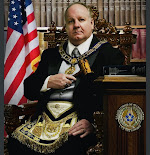
Brent Morris shared this on social media, and says ‘Here is a photograph from Wednesday, April 24 of one of the newest Past Junior Grand Deacons of the United Grand Lodge of Antient Free and Accepted Masons of England. We were particularly honored that HRH the Duke of Kent, KG, Most Worshipful Grand Master, was present to preside over the advancement of the honorees.’

Congratulations to Bro. Brent Morris, who was elevated recently to Grand Rank in the United Grand Lodge of England! Brent is among the newest Past Grand Junior Deacons, having been invested at Freemasons’ Hall in London April 24.

If I understand the UGLE’s Constitutions, Brent now is merely sixty-one heartbeats away from the Grand Mastership. Of course you remember he served as Worshipful Master of Quatuor Coronati Lodge 2076—the first lodge of research, etc.—for the 2007-08 term, and was the first American Mason to preside over the lodge.

The UGLE’s rules are a little too complicated for me, but there are ninety Grand Rank positions in the UGLE system. The appointment to Past Grand Rank, such as Junior Deacon, is in grateful recognition of good and faithful service to the Craft. Bravo!

You’ll observe the dove on the regalia. A different idea than the moon within the Square and Compasses most of us in America know. “A symbol of purity and innocence; also peace,” says Kenneth R. H. Mackenzie of the bird in his The Royal Masonic Cyclopaedia.
     

Sunday, February 4, 2024

‘The return of Macoy’s Masonic Monitor’

    
Front cover, I assume, of the book.

Macoy Masonic Supply Co. of Virginia (formerly of New York City) will publish a seminal work by its founder soon in commemoration of the business’ 175 years, and thoughtfully invites us to purchase the painstakingly reproduced historic volume. This is Robert Macoy’s Monitor from 1867. From the publicity:


Macoy Publishing & Masonic Supply is celebrating 175 years of serving the Craft this year. It all starts with a collector’s limited edition of one of Robert Macoy’s first books: Macoy’s Masonic Monitor.

Our team has gone to great lengths to honor this book and Robert Macoy, by meticulously retyping each word and restoring the more than 300 images to their original beauty.

This is not just a photocopied reproduction found on the internet. On top of that, we have had a special die made so each copy of this book will be hand gold stamped by Macoy craftspeople.

Why should I buy this book?

▶︎ Limited Edition — We will print only a select number of this book. Once they’re gone, they’re gone.

▶︎ Each cover will be hand stamped in gold leaf.

▶︎ Own Masonic history — This monitor is like the monitor, manual, or presentation manual you use today. You’ll be shocked by how the words you say today are so similar to what Masons said 175 years ago.

▶︎ Learn about the York Rite — All degrees are covered in the book.

Brief history and explanation of Masonic Monitors:


According to Coil’s Encyclopedia, “A monitor is a book of esoteric ritualistic matter. Virtually all…of the moral and ethical instructions of Freemasonry is contained in the published…monitors and manuals issued by various Masonic authorities. Such publications (are not) the secret parts of the ritual. The most prominent of the monitors were Preston’s of 1772; Webb’s of 1797: Cross’ of 1819: Tannehill’s of 1824; Mackey’s of 1852; and Macoy’s of 1867.

Brent Morris writes: “So what’s the difference between a monitor and a ritual book? It might help to start with an analogy. One can think of Masonic degree ritual as a sort of morality play, in which the candidate is the main protagonist and other members of the lodge take on other dramatic roles in the cast. Ritual books contain the scripts to these ‘plays,’ and contain material that is considered either secret or not intended for non-members. Monitors, on the other hand, contain the non-secret excerpts of rituals, lectures, and other ceremonies. In other words, monitors include extracts of parts of Masonic ritual that, when read, may give the reader a general sense of the ritual while including neither the text of the ritual itself, nor the passwords, signs, grips, etc. that are a part of what Masons pledge not to reveal to non-Masons.

“Monitors exist for the Craft degrees (i.e. the first three degrees), Scottish Rite, York Rite, and various other degrees. Monitors…often include descriptions of how the lodge room or stage is decorated and often contain an outline of the narrative story of the degree. Monitors of the Craft degrees usually contain excerpts from the various ‘lectures’ in which the metaphorical meaning of various Masonic symbols is explained.”


Click here to place your order. Receive a 10 percent discount if you’re fast. (I just ordered mine!) Books will ship in April.
     

Monday, October 9, 2023

‘Emulation Ritual’s bicentenary’

    
emulationloi.org

I wanted to get to this last Monday, which was the actual 200th anniversary, but anyway I’ll note the landmark occasion of the start of Emulation Lodge of Improvement on October 2, 1823 thusly.

Emulation is a Masonic ritual under the English Constitution of Freemasonry. The United Grand Lodge of England has no official ritual; there are, if I understand correctly, approximately eighty rituals found in UGLE lodges around the world, but I’m told practically all of them are variations of Emulation.

What is Emulation?

Seal of the Ancients.
I would say Emulation was the ritual component of bringing together the Grand Lodge of England (the “Moderns” of 1717) and the Grand Lodge According to the Old Institutions (the “Ancients” of 1751). There was a lot more that went into the amalgamation of the grand lodges in 1813 than merely who was going to be in charge. Matters of ritual and regalia and a lot more required a meeting of the minds. To discuss the ritual department, I will defer to Brent Morris and Art de Hoyos, who co-wrote the Introduction to The Perfect Ceremonies of Craft Masonry and The Holy Royal Arch, published by the Masonic Book Club in 2021.


The two former rivals had ritual variances and, for the next two years, a Lodge of Reconciliation met to create a new form of ritual acceptable to all. They did not create an ‘authorized ritual’ which was to be enforced throughout the English Constitution, but rather created a satisfactory form of ritual. Lodges would be free to include variations so long as the essentials were included…

In 1823 the Emulation Lodge of Improvement was founded for Master Masons only. Several of its members had belonged to the Burlington and the Perseverance Lodges of Instruction. Burlington began working in 1810 under the Moderns Grand Lodge, while Perseverance started in 1818 under the United Grand Lodge. As Colin Dyer noted, ‘Among the Founders [of Emulation Lodge] were some who were very able ritualists and who had a great deal of experience and expertise in the working of the new forms according to the Grand Stewards’ Lodge system.’ The founders were almost equally split in membership among the former rival grand lodges.

Peter W. Gilkes
Peter William Gilkes (1765-1833) joined Emulation Lodge of Improvement in 1825. He was initiated at age twenty-one in British Lodge No. 4, a Moderns lodge, in 1786, and became a preeminent instructor of Masonic ritual. Although not a member of the Lodge of Reconciliation, he visited it about ten times. He was known for his strict adherence to verbal accuracy, which is still a characteristic of lodges using Emulation working. It is not known precisely when the lodge adopted its particular working, beyond the lectures, but we can narrow it down to a five-year period. In 1830 the lodge sent a petition, or “Memorial,” to the Grand Master, the Duke of Sussex, requesting a special warrant to continue its practice, and sometime between then [and] about 1835, it formalized its ritual working. The earliest notice of the Emulation working appeared in an article in The Freemasons Quarterly Review (1836):


About the year, 1823, several Brethren considered that the Masonic lectures were not worked in the Lodges upon a sufficiently regulated system, and that if those whose attainments as working Masons placed them as a prominent authority, were to meet together and to work efficiently, they might be the means of effecting much improvement. They accordingly met, we believe in Wardour Street, pursuant to a general notice in the public papers, which advertisement created a considerable sensation in the Craft. Some members of the Grand Stewards’ Lodge, hitherto the only authority for a recognized system, felt that it was necessary to watch the proceedings. Some Grand Officers, with Brother E. Harper, the Grand Secretary, also attended. The several chairs from the Master to the Outer Guard were all filled with the most practical and experienced Masons of the day; and we have the authority of a Grand Officer for stating,  that never was there so perfect an illustration of the ceremonies and lectures ever before manifested. The visitors separated, highly delighted; and among them, the lamented Peter Gilkes, who so highly approved of the proceedings, that, in about twelve months afterwards, he joined the Lodge, and supported it until the time of his death.


It was likely in 1836 that the first version of an “Emulation ritual” was printed, appearing under the title, The Whole of the Lodge Ceremonies, and Lectures in Craft Masonry; as taught by the late P. Gilkes. Although an imprint was absent from the publication, the printer may have been George Claret (1783-1850), a well-known ritualist and acquaintance of Gilkes. This work was the first post-Union plain text English ritual, printed as a fraternal aide-mรฉmoire rather than as a public exposรฉ.


I’m starting to ramble, but let me close with a few words from my copy of Emulation, a well used second edition from 1970 that I bought ages ago from Yasha.


The Emulation ritual MM tracing board from Lewis Masonic’s 1970 edition.

Emulation Working takes its name from the Emulation Lodge of Improvement whose committee are the custodians of this particular ritual.... The Emulation Lodge of Improvement for Master Masons first met on 2nd October 1823. The Lodge was formed for Master Masons only, and worked, in its earliest years, only the Masonic lectures. However by about 1830 in accordance with general practice the ceremonies were also being rehearsed—always with considerable attention to accuracy, so that no alteration might inadvertently become practice. The Lodge of Improvement has met uninterruptedly since those days, so soon after the settling of the ceremonies by Grand Lodge in 1816, for the purpose of demonstrating unchanged, so far as has been humanly possible, the Emulation Ritual in accordance with the original method. Since June 1965 the variations permitted by the Grand Lodge Resolution of December 1964, with consequential amendments, have also been periodically demonstrated.


None of this has anything to do with ritual in lodges in the United States. Our practices commenced in the 1700s and evolved on their own paths into what we have today, with all their differences from state to state. Emulation is perfectly comprehensible to the American eye and ear; the biggest difference, I’d say, is the absence of our Enlightenment-era Prestonian lectures. And they have Working Tools that we do not.


If I’m not mistaken, Emulation can be found in America, in certain lodges that adhere to either the Observant or European Concept models. I think Vitruvian 767 in Indianapolis works it. Many years ago, when Marco became Master of St. John’s 1 in Manhattan, he was installed by a Board of Installed Masters of the Emulation style. Needed dispensation for that.

One of many Emulation books.
Emulation Lodge of Improvement
still exists and, in fact, hosted an anniversary celebration Friday night. (I tried to join its private Facebook group last week, but couldn’t pass the test questions!) If you are interested, you can purchase ritual books from Lewis Masonic here.
     

Wednesday, July 6, 2022

‘Masonry disrupted’

    
MBC photo
Frontispiece and title page, autographed by Arturo de Hoyos and S. Brent Morris, are ready to go. That’s Harry Carr, as rendered by Travis Simpkins, at left. Carr edited the MBC’s first imprint of Masonry Dissected in the 1970s, and his commentary is updated for this edition.

Masonry Dissected
, the 1730 English ritual exposure to be published anew this month by the Masonic Book Club, is delayed, according to an email sent today to us subscribers.

Shortages of both white paper and colored binding materials are disruptive enough, but a ransomware attack on the printing company delayed the job. If you’ve been waiting with anticipation, you may remember yesterday would have been the shipping date but, as Brent Morris explained in today’s email newsletter, the printer now says July 19 sometime in August.

“We haven’t yet decided on the 2023 volume because we want to see the costs of paper, ink, and other materials,” he also said. “As a point of reference, the manufacturing costs today for [last year’s book] are about 70 percent higher than they were in 2021!”

And so it goes.

Click here for some background.
      

Wednesday, April 13, 2022

‘The ALR’s new Fellows’

    
The vote took place during our meeting two weeks ago, but it was announced yesterday that The American Lodge of Research’s newest Fellows are…Arturo de Hoyos and S. Brent Morris!

If you read this website regularly you have an understanding of how important and treasured these brethren are. Both are titans in Masonic research, Masonic education, Masonic publishing, Masonic leadership. This fraternity would look very different if we didn’t have the benefits of Art’s and Brent’s industry.

As I always say (and possibly at some cost), the politicians come and go, usually unaccomplished, but the scholars provide consistent guidance and inspiration, as well as legacies after they’re gone.

Congratulations, brethren! Hopefully a meeting celebrating you both and showcasing your expertise can be hatched soon.
     

Monday, July 5, 2021

‘Research society to honor Brent Morris’

     
The flier explains it all:

Click to enlarge.

Thursday, March 11, 2021

‘Brent Morris to retire’

     
S. Brent Morris
I wouldn’t want you to be caught unawares, thinking it’s some April Fools prank, so with his blessing I share the news that S. Brent Morris is retiring from his employment situation at the Scottish Rite at the end of the month. The details will be discussed in Issue 52 (Spring 2021) of The Journal of the Masonic Society, which is at the printer now and will reach our members next month.

Don’t panic. Brent will remain active in the Masonic fraternity! He’s your Brother Mason. He just won’t be in the official management and the de facto spokesman of the Ancient and Accepted Scottish Rite, Southern Jurisdiction. He has served as editor of The Scottish Rite Journal and as strategic communications director for the Jurisdiction for many years.

Let’s be honest: the grand masters and other politicians come and go, but it is the steadying hand of experience, governed by wisdom and knowledge, that leads us for the long term.

His successor, Bro. Mark Dreisonstok, has been in place already. I’m told part of the institutional knowledge Brent has imparted is a reminder to consult both this blog and the other one each morning to see what’s going on in this fraternity. Mark holds a Ph.D. from Georgetown University, where he specialized in medieval languages and literature, and has taught at many universities in the DC area. You may have read him in a number of Masonic periodicals and area newspapers.

Bro. Brent says he will take with him a portfolio of responsibilities—things he loves doing, such as editing the Scottish Rite Research Society’s annual Heredom, and the offerings of the recently revived Masonic Book Club. (The first of which, come to think of it, will reach us members in a couple of weeks.)

Brent is in his fiftieth year as a Freemason, and it wouldn’t be easy to enumerate the many stations and places in our fraternity where he has been an inspiring exemplar. Of course, he is a Founding Fellow of the Masonic Society. And a Past Master of Quatuor Coronati Lodge 2076–the first American to be such. Grand Abbott of the Blue Friars. Naturally, a 33rd Degree Mason and holder of the Grand Cross in the real Scottish Rite.

He was made a Fellow of the Philalethes Society in 1980. Get it? Brent was made a Mason in 1971, and was elected to join the forty Philalethes Fellows nine years later.

The Masonic credentials and accolades go on almost endlessly. (Oh, and he wrote and co-wrote a bunch of books, including Committed to the Flames and this handy book.) Outside the apartments of the Temple, Brent holds a Mathematics Ph.D. from Duke. He labored as the Executive of the Cryptologic Mathematician Program of the National Security Agency, and has taught mathematics and computer science at Duke and Johns Hopkins. His affiliations in the math world are as impressive and numerous as his Masonic ties.

If you know him, you know of his expertise with card tricks—in essence, another manifestation of mathematics. He even wrote a book on that.

(None of the other tributes to Brent Morris you’ll see will include this obscure trivia, but way back in the first decade of the century, when Masonic cyberspace was primitive and small, one of the little rascals who constantly made a spectacle of himself with his various frauds called Brent names in such a bizarre outburst, I laughed so hard, the bowl of my Peterson 302 popped off its stem and tumbled down my shirt, the burning tobacco ruining everything in its path.)

I have pleasant memories of meeting him for the first time at a nearby Masonic dinner in 2007, and other “experiences” too.

Best wishes to you, Bro. Brent! Thank you for what you have given Freemasonry. (The retirement bash better look like something Leo Taxil would throw.) I hope to shake your hand again soon.
     

Tuesday, March 3, 2020

‘Morris receives Washington Award’

     
Courtesy Mark Tabbert
Jeff Webb, left, president of the George Washington Masonic
National Memorial Association, presents Morris with the award.

On Saturday, February 22, Bro. S. Brent Morris was presented with another top honor for excellence in Masonic scholarship when he received the George Washington Memorial Award.

It was the 110th anniversary of the George Washington Masonic National Memorial Association, and part of the festivities included Morris presenting his “In Praise of Punctuation: The Case of the Missing Semicolon,” which explains how small mistakes can cause misunderstandings in historical research. This award, I gather, is more in recognition of a lifetime of labor.

Congratulations, Brent! They’ll need a wing in the House of the Temple for all your trophies one day.

(I don’t know if he still reads The Magpie Mason, but Brent was an encouraging voice back when this blog was more informative.)
     

Sunday, November 17, 2019

‘Great day planned for MMRS’

     
It’s that time of year for elections and installations of officers, and Maryland Masonic Research Society will meet for its annual meeting on Saturday, December 7 for a nicely well rounded gathering.

9:15 a.m. – a light breakfast will be served ($12 per person).

10:15 – the meeting, with a presentation by S. Brent Morris on “A Timeline of High Degree Masonry,” and the “very quickly done” elections/installations.

Then a tour of Freemasons Hall, the headquarters of the Grand Lodge of Maryland.

The group asks for a $5 entrance fee to defray the costs of renting the Gothic Room.

Kindly book your seat for breakfast no later than Tuesday, December 3 by writing the secretary here.

All Masons and their guests are welcome to attend.


From the publicity:


“A Timeline of High Degree Masonry” focuses on the remarkably complex and interconnected group of Masonic organizations. We will begin our exploration from the base, where the Craft Degrees are controlled by Grand Lodges, and grafted onto these are “High Degrees” that expand and amplify the basic Craft ceremonies. This talk traces the first appearance and growth of High Degrees from the formation of the Premier Grand Lodge to the creation of the first Supreme Council in 1801.

Courtesy Dummkopf Blog
S. Brent Morris is a Past President of Maryland Masonic Research Society, Past Master of both Patmos Lodge 70 in Maryland and Quatuor Coronati Lodge 2076 in London. He is managing editor of The Scottish Rite Journal, a Past Grand Abbot of the Society of Blue Friars, and the author and editor of numerous books and articles on Freemasonry. He is a Founding Fellow of the Masonic Society, a Fellow of the Philalethes Society, and an Honorary Fellow of the Phylaxis Society. A 33° Mason in the Ancient and Accepted Scottish Rite for the Southern Jurisdiction, he also is a recipient of the Grand Cross of the Court of Honor. He is a mathematician by training and a magician by inclination.

The tour will follow Brent’s lecture and will be led by Stephen J. Ponzillo and Edward Heimiller.

Freemasons Hall is located at 304 International Circle in Cockeysville, Maryland. Free parking is available.
      

Saturday, June 30, 2018

‘Masonic researchers festive board’

     
I screwed up by not posting this a month ago, when I should have, but fortunately the secretary says there still are seats available—including for non-members—even though the RSVP deadline passed, so check it out.


Maryland Masonic Research Society
15th Festive Board
Monday, August 6
Social hour at 6:30
Dinner at seven o’clock
$50 per person

S. Brent Morris will present
“The Evolution of the Mason Word”

10150 Shaker Drive
Columbia, Maryland

Freemasons are notorious for their “secrets”—real or imagined, benign or sinister. The year 1637 saw the first known mention of the “Mason Word,” the Freemasons’ method of identifying (and commanding?) each other. This paper looks at the known references to the Mason Word during the eighteenth century and follows the evolution of public understanding of this central piece of Masons’ identity.

Bro. Morris, 33ยบ is a Past President of the Maryland Masonic Research Society, and a Past Master of both Patmos Lodge 70 in Ellicott City, and of Quatuor Coronati Lodge 2076 in London. He is the managing editor of The Scottish Rite Journal, is Grand Abbot of the Society of Blue Friars, and is the author and editor of numerous books and articles on Freemasonry. He is a mathematician by training and a magician by inclination.

RSVP here.
     

Thursday, August 10, 2017

‘Throwback Thursday: A new Morals and Dogma’

     
When Brent Morris assigns you a book to review, you review the book. This Throwback Thursday edition of The Magpie Mason reaches back five years, when The Scottish Rite Journal published my take on the then newly revised Morals and Dogma produced by Arturo de Hoyos. This was published in the September-October 2012 issue, and my submission was trimmed by about 400 words in my recollection.


Morals And Dogma

In his Prestonian Lecture of 1997, Bro. R. A. Gilbert mentions how since the 1720s more than 10,000 books, journals, articles, periodicals, papers, pamphlets, and other output devoted to Freemasonry have been published, and although this reviewer has made barely a scratch into that tonnage of material, he cannot name another book that has been so passionately embraced and widely neglected; as studied and scrutinized, yet frequently misunderstood; and hailed as both epochal accomplishment and anti-Masonic favorite than Morals and Dogma of the Ancient & Accepted Scottish Rite of Freemasonry by Albert Pike. Making it even more remarkable is that it was published in 1871 and was intended for the education of a small minority of Freemasons, those of the A&ASR, Southern Jurisdiction.

There simply are no other books on Freemasonry from 140 years ago—even Pike’s other works—that are as widely known today, let alone deserving of a brand new edition, revised and annotated by Ill. Arturo de Hoyos, 33°, GC, one of the most knowledgeable and prolific scholars in Freemasonry in the United States. The work assigned to this laborer is to rate de Hoyos’s success in conveying Pike’s largest legacy to “the other” Scottish Rite Masons in America—those of us within the Northern Masonic Jurisdiction.

First, it is necessary to explain what Morals and Dogma is and is not. Written in the late 1860s, it perhaps is the inevitable product of the fraternity that made brothers out of men from myriad diverse backgrounds in that grim time shaped by industrialization and urbanization, and by Civil War and Reconstruction. Simultaneously the country also underwent a period of religious revolution marked by the birth of Reform Judaism, Christian Science, Pentecostalism, Jehovah’s Witnesses, the Salvation Army, and other movements. Elsewhere in the world, Masonry had begun admitting men of the major Eastern religious faiths, as empires emanating from the British Isles and Europe created lodges across Asia, Africa, and the Holy Land.

Fittingly, if not exactly intentionally, Pike responded, authoring a work of comparative religion in Masonry’s name, one that not only traverses the world’s borders and cultural barriers, but also reaches back through time to codify for the Scottish Rite Freemason mankind’s numerous efforts to find communion with deity. Despite how its title sounds to the modern ear, the book never was the sectarian bible authored for a supposed Masonic religion by its purported father, as is alleged even today by certain Christian fundamentalist anti-Masons.

As de Hoyos reveals in his preface to the text, Grand Commander Ronald A. Seale, 33°, had charged him with the huge job of revising this book, which went out of print in 1969. “We either need to republish Morals and Dogma or stop talking about Albert Pike,” Seale told de Hoyos. The result: A new Morals and Dogma consisting of Pike’s original writings in their entirety, augmented with de Hoyos’s notes and commentary.

Morals and Dogma was tailored for the comprehension of Freemasons who had received the new A&ASR degrees that had been penned by Pike. The previous rituals of the Rite were deficient due to problems varying from absent passages of text to confounding messages and more. Pike converted a pastiche of inadequately defined European ceremonies into a single cohesive Masonic rite consisting of degrees in a progressive structure for gradual enlightenment. Morals and Dogma contains the lectures for those degrees. The Southern Jurisdiction works variations of the Pike degrees to this day, while its sister jurisdiction in the northeast of the United States works hard not to modernize Pike rituals, but to replace them with melodramas that are not rituals of any kind, and that are bereft of any form of symbolism. It is here where the new Morals and Dogma can connect Masons to the transformational teachings of traditional Scottish Rite Masonry, “the College of Freemasonry.”

In the NMJ, 30°, Knight Kadosh, was eliminated in 2004, resulting in 31°, Grand Inspector Inquisitor Commander, becoming the new 30°, and 32°, Sublime Prince of the Royal Secret, being divided into two degrees, 31° and 32°. To conserve that which had been lost, the reader of Albert Pike’s Morals and Dogma, Annotated Edition may look inside this Templar degree to see its virtues, albeit anachronistic, laid bare and contextualized by 60 footnotes. Other rituals eliminated by the NMJ in recent years include: 4°, Secret Master; 12°, Master Architect; 19°, Grand Pontiff; 28°, Knight of the Sun; and more. (It also is true that the brethren of the NMJ are free to exemplify these now defunct rituals, but rituals rendered defunct tend not to get the attention paid to official degrees, where the labor and talent is expected to go first.) These degrees’ lectures, too, are available in the pages of this weighty text, communicating their meanings in textured prose made clearer by de Hoyos’s notes and commentaries.

There is no substitute for receiving meaningful degrees laden with lessons and symbols as conferred by knowing ritualists, but where that is unavailable, this resource text can fill in the blanks and keep concerned Masons in touch with their heritage and history. And this need not be confined to the United States, as brethren in the Ancient and Accepted Rite of England and Wales, where rituals are hardly worked at all and degrees are conferred largely in name only, can profit from this book as well.

Absent from the new book is the “Digest of Morals and Dogma,” the 218-page concordance compiled by Ill. Trevanion W. Hugo, 33°, that was added in 1909. In its stead are five appendices: “Textual Corrections” rectifies and standardizes the various errors in spelling and usage in the original (e.g. Cabala, Kabala, and Kabalah correctly become Kabbalah.) “A Glossary to Morals and Dogma” by Ill. Rex R. Hutchens, 33°, GC, is 82 pages of A-to-Z definitions of mostly difficult terms. The bibliography lists the several hundred published source materials that made de Hoyos’s work possible. “The Point Within a Circle: More Than Just an Allusion?” by Bro. William “Steve” Burkle, 32°, shows how that important symbol from the Entered Apprentice Degree also offers an apt method for inscribing a right angle within a circle. That leads nicely into Appendix 5: “The Hidden Secrets of a Master Mason: A Speculation on Unrecognized Operative Secrets in Modern Masonic Ritual” by Ill. S. Brent Morris, 33°, GC—and editor of this periodical—that brings Morals and Dogma, Annotated Edition full circle by showing how operative builders lay out foundations using the Pythagorean Theorem, the very same geometrical device Pike cites to conclude his 32°, Sublime Prince of the Royal Secret, chapter, explaining how the Triangle of Perfection symbolizes the ideal equilibrium by bringing into harmony the spiritual and the material.

This text is a gift to all thinking Masons, but especially to those in the NMJ where there are no educational publications or programs to reflect the Light of Scottish Rite Masonry, which probably is what leads to the elimination of our traditional rituals. Until this can be rectified, de Hoyos’s amazing feat is a handy tool to assist us in our daily labors at self-improvement.


The writer is a Past Most Wise Master of Northern New Jersey Chapter of Rose Croix and is the Treasurer of the four Scottish Rite bodies of Northern New Jersey. He is in the process of establishing Architects Lodge of Perfection, the first lodge of philosophical research in the Northern Masonic Jurisdiction. His blog, The Magpie Mason, is very widely read and seemingly enjoyed by Masons around the globe.