


 Posts
Posts
























 |
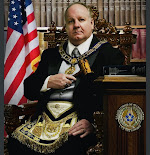
| New from Lewis Masonic. |
Yesterday I received in the mail a copy of Ric Berman’s new book The Genesis of American Freemasonry. A review is forthcoming, but let me quote a little of what he says about the Ancients:
The Grand Lodge of England According to the Old Institutions, or Antients Freemasonry, as it was later called, was established by London’s emigre Irish community in the 1750s as an alternative to the Freemasonry of the Grand Lodge of England. Irish lodges had been active in London from at least the mid 1730s, but the creation of the new grand lodge in 1751 formalized their operation and lead to a considerable expansion. From the start, however, the Antients attracted members from outside the Irish diaspora, particularly the aspirational, lower middling and working class. And this is key. Unlike the Grand Lodge of England and most of the lodges that worked within its orbit in England and America, Antients Freemasonry did not restrict itself to the social elites, but welcomed a wider membership. This is not to say that everyone could join—it was still relatively expensive—but it was far less class conscious...The key figure behind Antients Freemasonry and its success was Laurence Dermott, Its grand secretary from 1752-70 and deputy grand master from 1771-77 and again from 1783-7. Virtually from its inception, Dermott took administrative control and guided the internal and public perception of the organization, positioning the Antients as a society with a long established tradition of “keeping the ancient landmarks of the Order in view.“ He effectively coined and popularized the term Moderns to describe the rival Grand Lodge of England, a dismissive label that was, and was intended to be, pejorative. And the epithet stuck.
You must read Ahiman Rezon, the book of constitutions of this new grand lodge published in 1756. It is largely based on James Anderson’s Constitutions of 1723, not as a copy in homage, but as a launching point to document the different thinking of these Ancients. It came from Dermott’s quill and is spiced with his sardonic wit.
Berman continues:
In Ahiman Rezon, Dermott joked that the rival Moderns had:[considered it] expedient to abolish the old custom of studying geometry in the lodge and some of the young brethren made it appear that a good knife and fork in the hands of a dextrous brother (over the right materials) would give greater satisfaction and add more to the rotundity of the lodge… from this improvement proceeded the laudable custom of charging to a public health to every third sentence that is spoke in the lodge.
The Ancients’ Masonic history, Charges of a Freemason, and General Regulations differ from the first grand lodge’s, and sometimes contradict. And then there’s the Royal Arch.
In America, the rivalry between the two grand lodges was resolved decades before the Moderns and Ancients amalgamated to form the United Grand Lodge of England in 1813, but that’s a whole other story. Suffice to say, without the Ancients, I don’t know where we’d be today.
I’m in Pennsylvania with Civil War Lodge of Research, a Virginia lodge (and the grand lodges of both states dub their respective constitutions Ahiman Rezon), but before retiring I wanted to make sure I raised my glass to this 275th anniversary. Vivat!

