Tuesday, November 10, 2020
‘Cryptic Festival next May’
Monday, November 9, 2020
‘Kirk MacNulty, R.I.P.’
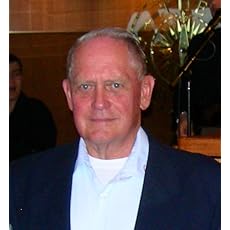
W. Kirk MacNulty, the renowned Masonic author, died Sunday, according to Shawn Eyer, who disclosed the sad news on Facebook. He was 88.
To read his books is to cherish them: The Way of the Craftsman (1988), Freemasonry: A Journey Through Ritual and Symbol (1991), and Freemasonry: Symbols, Secrets, Significance (2006).
MacNulty was made a Mason in 1961 in Carson Valley Lodge in Nevada, and subsequently affiliated with lodges in England, Hawaii, Tennessee, Virginia, and Washington, DC. He served in the East of Lodge of Living Stones 4957 in England three times, and was the Charter Master of Lodge of Nine Muses 1776 in DC in 1997.
“Few brothers have done more for the speculative mission of the Craft in recent times,” Eyer writes. “When he wrote The Way of the Craftsman in the 1980s, he helped midwife the renaissance in Masonic philosophy that we are all now enjoying.”
Alas, my brother.
Sunday, November 8, 2020
‘The jewel of the Master’
Friday, October 30, 2020
‘Live from New York, it’s Craftsmen Online!’
An online magazine devoted to Freemasons in New York went live Wednesday night. Craftsmen Online is an independent labor coordinated by Bro. Steven Rubin (he is the Right Worshipful Grand Treasurer of the Grand Lodge as well). Rubin says:
I am extremely excited to introduce Craftsmen Online, a website started by New York Brothers for New York Brothers. This is not an official Grand Lodge site, but simply a means to connect Brothers, and to champion everything that is special about Freemasonry in New York.
For those wishing to locate my “Buildings and Lodges 101” series, those recordings and material for each program will be posted on this site.
We also will post other lectures and blogs of interest to members of the Craft. Within the site, we will highlight New York Brothers who are Craftsmen—Craftsmen who are craftsmen—in our monthly spotlight on operative Brothers, their businesses, crafts and Masonic connections.
We will further explore the many historic Masonic locations and places within the State of New York.
Within our segment titled Masonic Ink, every month we will profile a new Brother to learn how Masonic symbols become works of modern art.
This is only the beginning, and I am asking for your help. If you want to be involved in this new venture, we are looking for storytellers, connectors within our Lodges, and Brothers with talents from photography to graphic design. Or if you simply know a Brother, person, place, or event whose story should be told, we value that contribution as well.
Under Masonic Education, the first issue gives us W. Bro. Galen Kaback, Master of Service Mizpah Lodge 586, who discusses special meanings embedded in the lodge opening and closing rituals. The Masonic History page offers insight into how the Utica Temple’s museum came about.
The Craftsmen feature tells the story of W. Bro. Nathan Davis of Cobleskill 394, who makes briar pipes for our smoking pleasure, and he also is a distributor of Kaywoodies.
Masonic Ink introduces us to W. Bro. Jason Chaplin of Mount Zion Lodge 311 in Troy, who sports a variety of tattoos you’ll want to see. He truly is the illustrated Mason!
This well written and designed website has a lot more thus far. Check it out. It is dedicated to “Connecting New York Freemasons,” as it reads on the homepage. New York is a huge, bustling, and growing Masonic jurisdiction, and I think we all benefit from having a variety of media sources—and the more independent, the better—to find each other. The Editor-in-Chief is Bro. Michael. Bro. Anthony Dicarro is another editor. I congratulate them and whoever else is on the team. Keep up the great work, and thank you!
Wednesday, October 21, 2020
‘Grand Lodge interested in former Buffalo seminary land’
New York Freemasonry was among the parties interested in real estate previously used as a Roman Catholic seminary, before the diocese withdrew the property from the market while it works on its bankruptcy filing, according to a story published this morning in The Buffalo News.
Specifically, it’s the Masonic Hall and Asylum Fund, the Grand Lodge of New York’s corporation that owns and operates the fraternity’s real properties, including the Masonic Care Community of New York, the 320-bed health care residence in Utica.
Masonic representatives expressed interest in the 117-acre Christ the King Seminary property, located in Aurora, in August.
It was last November when the Masonic Hall and Asylum Fund, purchased the 16 acres of the former College of New Rochelle, at a cost of $32 million, to expand the health care services provided at the Utica campus to the New York City area.
Friday, October 9, 2020
‘Masonic Week 2021 to be canceled’
Monday, September 28, 2020
‘Stream The Magic Flute on Thursday’
Sunday, September 27, 2020
‘Freemasonry as a Way of Awakening’
Wednesday, September 16, 2020
'A point within a city'
I don’t know how we’re supposed to have a New York City without Nat Sherman.
Nor have I any idea whether anyone in the Sherman family (they sold the business to Altria about four years ago) ever had any connection to the Masonic fraternity, but I personally drew something of a parallel.
On the night of my first admission into the worshipful lodge, on a steamy June evening in 1997, a symbol was revealed to me that, in my irreverence, instantly reminded me of the Nat Sherman logo.
'Masonic Book Club is back!'
Art de Hoyos just shared this on Faceybook:

Monday, September 14, 2020
‘Freemasonry and self-actualization’
The Chancellor Robert R. Livingston Masonic Library of the Grand Lodge of New York continues its lecture series on Zoom. On Tuesday night, W. Bro. Michael LaRocco, Master of Lynbrook-Massapequa Lodge 822, will present “Freemasonry: The Craft of Self-Actualization, A Western Path to Enlightenment.” From the publicity:
W. Michael LaRocco will attempt to challenge us to perceive how the esoteric and exoteric symbols of Freemasonry lead us to self-actualization, and also to how our toleration for religions, traditions, and cultures aids us in dissolving prejudice, which removes obstacles to enlightenment.
![]() |
| Michael LaRocco |
Michael’s goal is to discover the essence of Masonry and its connection to mysticism, magic, and personal development, thereby inspiring his brethren to create the best versions of themselves.
Monday, September 7, 2020
‘The First Hermetic International Film Festival’
The what?
The First Hermetic International Film Festival.
What?
The. First. Herm.Etic. Inter.Nation.Al. Film. Festi.Val.
Really?
I guess so. Click here. “First” doesn’t mean premier. It’s actually in its third year. The “first” refers to it being the original film festival of its kind.
The festival is available on Occultrama. It began last Thursday, and continues through Wednesday. Twenty euros admission.
I don’t know anything about any of these movies, but look at this list of festival awards:
Best Picture – Mercure Award
Best Feature Film – Caduceus Award
Best Short Film – Sulphur Award
Best Feature Documentary – Paracelsus Award
Best Documentary (Short) – Pelican Award
Best Foreign Documentary – Rosenkreuz Award
Best Animation Film – Apuleio Award
Best Web Serie – Black Lion Award
Best Experimental Film – Vitriol Award
Best Music Video – Kenneth Award
Best Director – Agrippa Award
Best Editing – Ficino Award
Best Cinematography – Fludd Award
Best Music – Atalanta Award
Best Storytelling – Cagliostro Award
Best Topic – Jodorowsky Award
Best Research – Eco Award
Best Sound Design – Theremin Award
Best Performance – Sabbath Award
Best Protagonist – Wormwood Star Award
Best Production Design – Ritual Room Award
New York Film Academy is among the official partners.
Sunday, September 6, 2020
‘The new Royal Arch learning center’
Okay, so maybe the General Grand Chapter of Royal Arch Masonry can be of useful service to the Masonic world.
The GGCRAMI disclosed last week that it has a website in development—a “computer website,” as it charmingly calls it—that will be an “interactive site, which provides educational opportunities supporting advanced knowledge and training in various aspects of Capitular Masonry.”
The announcement continues:
You have to start somewhere. (Next, if they could stop infantilizing with phrases like “King’s Komments,” “Scribe’s Scribbles,” and God knows what else, that would be really great.) (Really great.)
The General Grand Chapter presents this in the present tense because there also happens to be a beta test version of this website up now. Click here.
Meanwhile, closer to home, yours truly will be speaking at Scott Chapter 4 in North Brunswick, New Jersey this Friday night. The chapter will open at eight o’clock. I’ll lead a discussion on “The Habits of Successful Chapters.”
Royal Arch Masonry in these parts is in dreadful decline—and there’s no reason for it. I’ll explain on Friday.
Wednesday, September 2, 2020
‘Weird Fact Wednesday: A different kind of Masonic home’
![]() |
| Courtesy Freemason to Mansion |
I remember reading about this several years ago in a news story, and recently I found a website chronicling the progress made in restoring this former Masonic temple in Indiana. A family from California relocated for the purpose of buying and renovating this building to make it a residence. A different kind of Masonic home, if you will.
Looking at the façade, I recognize similarities to the Trenton Masonic Temple in New Jersey, and I don’t doubt there are many others with the resemblance. This one dates to 1926, during the boom when the fraternity exploded in size. Through World War I and the decade thereafter, hundreds of thousands of men flooded into Freemasonry nationwide, so there was need for who-knows-how-many new buildings for lodges, chapters, Scottish Rite, Shrine, and the rest. That need has waned, to say the least, and consequently these properties are sold, but also sometimes abandoned for want of a buyer.
![]() |
| Courtesy Freemason to Mansion |
“It’s going to take us at least a year to get it the way we want it,” Theresa Cannizzaro told a local newspaper then. They’re still at it.
I’m not a big fan of Masonic lodges and other bodies putting all their energy and time into stubbornly trying to continue life in their hundred-year-old buildings. The roof, the elevator, the plumbing, the electric, the boiler, the everything cost too much to upgrade because there are too few Masons to shoulder the expenses. The Cannizzaros seem to know what they’re doing, and I wish them “profit and pleasure,” as we say.
Check out the steady updates of their progress on their blog. Actually, it’s not only the rehab; there are photos of the Masonic sights in the building, plus items they found here and there. Look them up on social media too.
![]() |
Courtesy Freemason to Mansion
The stuff you find laying around. |
Tuesday, September 1, 2020
‘Archetypes in Masonic Initiation’
I don’t know what they’re having for breakfast at Ocean Lodge—not pancakes, apparently—but their lecture series continues to kick ass. Next week. From the publicity:
![]() |
| Click to enlarge. |
Sunday, August 30, 2020
‘33° congratulations’
![]() |
Magpie file photo
Bro. Greg Knott |
Bro. Greg is Second Vice President of the Masonic Society, and he wears many hats in Freemasonry, including eMasonry, where you can find him at the Midnight Freemasons blog, the Meet, Act, Part podcast, and seemingly many more places.
And check out his photography in every issue of The Journal of the Masonic Society.
That’s all the info I’ve seen on who has been elected to receive the 33° next year. Feel free to leave a comment below if you know something more.
Saturday, August 29, 2020
‘Bicentenary of Grand Master Henry Clay’
On this date 200 years ago, Bro. Henry Clay was elected Grand Master of the Grand Lodge of Kentucky. To make a point about “Famous Freemasons,” here comes a list of fun facts about The Great Compromiser.
(With apologies to David Letterman.)
From the home office in Lexington, Kentucky: Top Ten Fun Facts About MW Henry Clay!
![]() |
| Courtesy Holt’s |
9. At a national Masonic conference in 1822, he introduced a resolution to establish a “General Grand Lodge” of the United States—which was adopted.
8. He was a hero to a young Abraham Lincoln—until Lincoln actually met him.
7. According to legend, he famously exclaimed he “would rather be right than President,” and he was right! He sought the nation’s highest office multiple times and in several parties, but did not win.
6. With occasional interruptions, he served in the U.S. Congress, in both houses, from 1805 to his death in 1852.
5. He was made a Mason in Lexington Lodge 1, where he served as Worshipful Master in 1820—the same year he became Grand Master.
4. In death, he was given a Masonic obsequy by his Grand Lodge, which considered him still a member despite his not having been active in the fraternity for several decades. Upon the coffin was laid an apron given to him by Lafayette.
3. In 1821, he became the first lawyer to file a Friend of the Court brief with the U.S. Supreme Court. He also is said to have invented the “temporary insanity” plea.
2. The hate triangle among Clay, Andrew Jackson, and John Quincy Adams shaped presidential politics for much of the early 19th century. The 1824 election was decided by the House of Representatives; Clay was Speaker, but did not have enough support to win the White House, so he agreed to back Adams, who was selected. Adams, who would become an outspoken anti-Mason, then made Clay Secretary of State, which then was considered the obvious office for a future president. In 1832, the election was between Jackson (Past Grand Master of Tennessee) and Clay. Jackson crushed him.
And the Number 1 Fun Fact About MW Henry Clay:
1. During the “Morgan excitement,” he disavowed ever having had anything to do with Freemasonry!
![]() |
| From Coil’s Masonic Encyclopedia. |
Wednesday, August 26, 2020
‘Weird Fact Wednesday: The oldest Masonic Bible?’
Something in a 1921 issue of The Builder magazine caught my attention a few weeks ago. It’s just a blurb shoehorned into the corner of a page:
Setting aside the glaring blunder of where America’s most famous Freemason had been initiated, this reads like a perfectly acceptable bite of Masonic trivia. It seems Blair Lodge is no longer extant, so I don’t know where this 1615 KJV is kept today. (I have an inquiry into Illinois Lodge of Research, and will update this post if I receive the info.)
Of course Washington was initiated in 1752 in the Masonic lodge at Fredericksburg, Virginia. The Bible used is owned to this day by Fredericksburg Lodge 4. It is a King James Version printed in 1668 (so The Builder erred also in its age, since it is 53 years younger than Blair Lodge’s KJV).
And you surely know of the other “Washington Bible,” that on which Washington took his first presidential oath of office in 1789 in New York City. That is a 1767 KJV, printed in London.
Reaching back in time to 1899, but coming closer to home, the Grand Lodge of New Jersey reported in its Book of Proceedings for that year that a Bible of even greater longevity was in Masonic use.
When this grand lodge held its 112th Annual Communication in Trenton on January 25-26 of that year, there was open upon the Masonic altar a very unusual Volume of Sacred Law. I don’t have that New Jersey Book of Proceedings, but thanks to the works of the Correspondence Committee of the Grand Lodge of Kentucky, the story from Trenton is told in that Book of Proceedings of 1899:
You’re probably thinking it’s a Gutenberg, but it is not. This Bible is a product of Germany, but its printer was one Anthony Koberger (sometimes Koburger or Coberger), born circa 1445 and died 1513, of Nuremberg.
It was on this Bible that my hands rested while being sworn during my installation as Worshipful Master of Peninsula Lodge 99 one chilly night in December 2004. The Bible is owned by this lodge. Bro. George Edwards was a member of one of Peninsula’s ancestor lodges, but I do not know which. A number of lodges from in and around Hudson County, New Jersey came and went since the mid nineteenth century before Peninsula was formed in 2003—to be the last one of that family tree.
Perhaps he had no heirs, but for whatever reason, Edwards had arranged for this fifteenth century Bible to be safeguarded by the grand lodge, which had it tucked away in storage for about all of the twentieth century. A past grand master, who was a member of Peninsula, nudged the lodge to take possession of it, possibly in advance of my installation, but maybe a little earlier—I just don’t recall—and so we did. Peninsula does not display this VSL on regular meeting nights, but I’m sure the brethren still use it for the annual installation of officers.
It’s a strange Bible, as compared to what we all are used to. It is bilingual: Latin and the German of that period, and it does not contain all the books of the Holy Bible. It’s been so long, I just don’t remember which books were included. Unlike Koberger Bibles you’ll see on the web, this edition has no art in its pages, so, throughout, the pages are all text in two columns. The lettering is Gothic, making it tough on the eyes. The impressive color woodcuts were added to printings of later years.
But the age is legit. While I do not recall seeing this specific date November 10, 1478 printed in this Bible, I do remember the 1478. Before Columbus. Before Luther. Before King James. Amazing.
One can’t help but wonder at the possible dollar value of such a piece, and I remember seeing an advertisement in the Sunday New York Times Books section, somewhere around 2005, that listed a Koberger at $40,000, but I don’t know the year or condition of that item.
I’m no longer a member of mighty Peninsula (I became a New York Mason in 2015), but I was its Master in 2005. A pretty rough ride, frankly. I still keep in touch with a bunch of the brethren; they are very kind to remember me because I ceased being active there practically the minute the Master’s collar was lowered onto my successor’s shoulders on another cold December night in 2005. By that time, I was enjoying myself in various lodges in Manhattan—a visitor not attached to any problems that may have been fermenting behind the scenes.
![]() |
Courtesy Travis Simpkins
MW Gregory Scott |
Catholic Encyclopedia offers a useful write-up on the printer and his various Bibles. Koberger made Bibles into the sixteenth century. This Masonic lodge Bible is an early specimen of his, and later editions would improve in design and beauty over the years.
Tuesday, August 25, 2020
‘Midwest Conference on Masonic Education’
Evidently we have to look into 2021 for a resumption of larger-scale Masonic events in the United States. While this one is far outside my usual orbit, maybe you can attend. From the publicity:
Tentative Schedule:
Friday, April 23: Open session
Saturday, April 24: Main session with dinner and featured speaker
Sunday the 25th: “No host” breakfast and travel day
The 2021 session will be packed with presentations, and we also will have plenty of MCME business items to handle. Our Illinois Brothers are hard at work setting up a great schedule of events. Please mark your calendars now. Details will be posted to the MCME website when they are available.
Call for Papers!
The purpose of the Conference is to share best practices in spreading Masonic education and light in our jurisdictions. If you have something that you would like to share at the 2021 meeting, please send us an e-mail with a short summary of your presentation. Even if we don’t have time to put it in the schedule, we can still share it on the website after the conference.
Since 1949 we have endeavored to:
- Provide a communications and support network for our member jurisdictions.
- Conduct an annual forum for Masons who have a vital interest in Masonic Education.
- Offer the opportunity to share Masonic experiences, knowledge, and insights.
- Publish occasional newsletters, communications, and the proceedings of its annual meetings.
All Master Masons from recognized Masonic jurisdictions in the United States, Canada, and worldwide are encouraged to contact us and become part of our Conference on Masonic Education.
We also encourage recognized Masonic jurisdictions to inquire on how to become a member jurisdiction of MCME.
MCME on YouTube here.
Monday, August 24, 2020
’10 weeks of Philosophy Works for free’
Who says nothing in this life comes for free? The School of Practical Philosophy offers its 10-week introductory Fall semester, via Zoom, free of charge. (It looks like Monday nights are sold out already.) From the publicity:
Our 10-week introductory course offers time-tested principles that lead to freedom and sustainable happiness. Gain tools for living life more consciously and fully develop the power of attention to realize your potential.
For the Fall term, starting the week of September 14, the fee for Philosophy Works Introductory Course is waived as a gift to the community.
Classes are live and online with Zoom.
Register here.
It is not an academic survey of great philosophical ideas as one might find in a university. Rather it is an introduction to a series of proven principles that enable students to attain self-knowledge and better their lives through reasonable, compassionate living. The proof of Practical Philosophy’s effectiveness is found in personal experience.
The curriculum is inspired by the philosophy of Advaita (“not two”), and embraces a wide range of philosophical ideas, tapping into the wisdom of the great minds of East and West, including Plato, Socrates, the Buddha, Shakespeare, Emerson, and Shri Shantananda Saraswati.
Much of the learning that students experience comes from their fellow students and their own innate wisdom. The tutors, who direct the classes, are ongoing students in the School who have been practicing Practical Philosophy for many years and generously offer their own insights.
Sunday, August 23, 2020
‘Esoteric Wisdom in a Time of Crisis’
Next Saturday will be the 30th anniversary of the death of Manly Palmer Hall. The Philosophical Research Society will present an on-line lecture made for these times. From the publicity:
![]() |
| Courtesy PRS |
Join us for the premiere of this recently recorded lecture from Dr. Stephan Hoeller on “meeting the current health crisis and cultural turmoil with the aid of Manly P. Hall’s spiritual legacy.” Hoeller was Mr. Hall’s principal lecturing associate at PRS for more than 20 years. He is a noted scholar and lecturer on Gnosticism and the message of C.G. Jung. He is the author of five books and is president of Besant Lodge of the Theosophical Society on Beachwood Drive in Hollywood.
The mission of the Philosophical Research Society is the same as it was at its founding in 1934: to provide resources for seekers to find meaning and wisdom. To do this we seek out wisdom wherever it can be found, from any area of the world, any era in history, any way of knowing that has shown itself to be worthy by praxis. As a non-profit, on-campus, and on-line society dedicated to the pursuit of wisdom, our vision is of a community of seekers who are continually discovering, applying, cultivating, and rediscovering practical and profound wisdom in the 21st century. Guiding us as we guide seekers are the following values that we apply daily:
- Inclusiveness: PRS looks to include wisdom from its every source and to make it accessible to all who value it.
- Objectivity: PRS transcends any particular tradition, philosophy or personality.
- Freedom: PRS supports free and open inquiry into ways of knowing and being that are at the same time open to critique and dialogue.
- Community: PRS fosters a learning community characterized by stimulating and good-faith interaction.