


 Posts
Posts











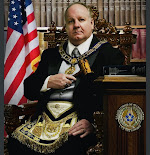












In addition to Cameron Bailey of Emeth and several others, I enjoy a Substack written by another Freemason who goes by Bro. Rob. Square Thoughts is an often updated column (nine posts this month so far) on, yes, Masonic ideas and opinions. I think you will have pleasure and profit by reading him too. Click here.
In his profile, he identifies as:
Retired Coast Guard Master Chief. Twenty-plus years of service. Antarctica twice (yes, it’s as cold as you think). Chief Engineer on multiple tours before teaching at our Senior NCO/ Chief’s Academy, thousands of students from DHS, DOD, local law enforcement, reserves, other government agencies, and partner nations worldwide. These days: Past Master and Lodge Secretary. Executive coach who’s worked with everyone from C-suite executives at major banks and software companies to stay-at-home moms launching their dreams. Credentialed coach, QHHT Level 2 practitioner, homeschool dad who takes college classes for fun…I’m a universalist-oneness-wisdom-Christian. Yeah, it’s a mouthful. Basically means I see truth everywhere and God in everything. I believe ancient wisdom keeps getting repackaged because truth doesn’t change, only the wrapper. The Hermetic principles pop up everywhere, Masonry, military leadership, quantum physics, usually without people realizing how old these ideas are. My life philosophy: Be Love, Teach Love, Have Fun. Sounds simple. It’s not. My approach: Curiosity over judgment. Love over fear. “Sure I can help” (much to my wife’s dismay).

But read all about it here.
Excerpted from recent essays:
Many of us are coming to believe that honesty about our origins might actually strengthen rather than weaken our institution. The historical record suggests that speculative Freemasonry emerged in the late 16th and early 17th centuries, probably in Scotland, when operative stone lodges began admitting gentlemen members who had no intention of cutting actual stone. These “accepted” Masons found something valuable in the lodge structure, the ritual framework, the symbolic vocabulary. They adapted what they found to serve philosophical and social purposes the original craftsmen never imagined. The story here isn’t one of unbroken ancient lineage. Something more interesting emerges. A story of creative adaptation. Of men finding useful forms and filling them with new meaning. Of institutions evolving to meet emerging needs. Isn’t that exactly what we need now?“The Stories We Tell Ourselves:Masonic Origins and the Danger of Myth Over Mission”January 21If your lodge has fallen into the Rotary Trap, the path out isn’t complicated. It’s just uncomfortable. The hardest part is saying no to a brother with a good idea. He’s standing in front of the lodge, enthusiastic, volunteering his time. The idea isn’t bad. It might even be good. But good for what? Good for whom? Before the vote, ask yourself a few questions. Does this require the lodge, or just a few brothers? Sometimes a brother has a passion project that doesn’t need the lodge’s name or treasury behind it. He can do it himself, with whoever wants to join him. The lodge doesn’t have to own everything its members care about. Could he do this at Rotary? If yes, why are we doing it? What makes this distinctively ours? If the answer is nothing, that’s worth noticing. What are we not doing if we do this? Every yes has an opportunity cost. The calendar only holds so much. The same brothers who’ll execute this are probably the same brothers doing everything else. What gets crowded out? Does this serve the men in the room, or the men we wish were here? A lot of visibility projects are really recruitment fantasies. We imagine the community event will attract new petitions. Maybe. But are we taking care of the brothers we already have? Is this transformation work, or is it activity? Busyness feels like progress. It isn’t always. Some of the most important lodge nights look like nothing from the outside. Men sitting together. Real conversation. No agenda except presence.“Charity as Overflow”January 13Your brother-in-law just told you he watched something about Freemasons controlling the government. Your nephew texted you a TikTok. Your father-in-law thinks you’re in a cult. Here’s what to remember: You are not defending an institution. You are being witnessed as a man. The strongest argument against the conspiracy isn’t a counterargument. It’s you. It’s every interaction they’ve ever had with you. It’s the fact that you’ve been the same person before and after you joined lodge, maybe a little better, maybe a little more patient, maybe a little more likely to volunteer. When they look at you and think about what they watched, they have to reconcile those two realities. Your life is the refutation. You can’t logic someone out of a belief they didn’t logic themselves into. If your relative has built their worldview around hidden powers and secret conspiracies, Freemasonry is just a prop in a larger drama. You’re not going to dismantle that worldview over pie. Set the boundary. Protect the relationship. Let time do its work.“When Your Brother-in-Law Watched That Podcast:Navigating the New Anti-Masonry”January 4There are still men who need a private room with trustworthy Brothers. Men who can’t speak freely at work or church or in their communities because they carry questions that would mark them as troublemakers. The world keeps producing them. So is Masonry still functioning as that sanctuary? Or have we domesticated ourselves so thoroughly, focused on fish fries and degree mills and memorization without understanding, that we’ve forgotten what the Lodge was for? When a Brother raises a difficult question in Lodge, is he met with engagement or embarrassment? When a man of genuine intellectual curiosity petitions, does he find thinking men around the altar, or does he find another organization that wants his dues but not his questions?“The Lodge as Sanctuary (For the Thinking Man)”December 15I’ve sat through more than my share of Masonic “lectures.” Some were fine, some were good, and some… well, let’s just say they were indistinguishable from a college term paper being read aloud. You know the look your dog gives you when you say “bath?” That’s the look half the lodge has when someone cracks open a 30-page dissertation on the deeper meaning of the beehive. The problem isn’t the scholarship. We need brothers who dig deep, who pour through old texts and pull out gems. The problem is that most men in lodge don’t have time, or frankly, interest, in wading through academic papers on a Tuesday night after work. They came for light, not a lecture hall.Why This Matters to MeI’ve been a curriculum designer. I’ve worked as an adult educator. And that is a slightly different ball game than teaching children. Adults bring a lifetime of experience, responsibility, and distractions into any learning space, including lodge. If you don’t frame information in a way that’s relatable, practical, and immediately meaningful, you’ll lose them before you ever get to the good stuff. Adult learning is simple at its core: People learn best when the material is relevant to their lives They need to connect it to something they already know They need it presented in a way that is clear, practical, and digestible.The Mistake We Keep MakingThis is where Masonic education often stumbles. Too often, we assume the average brother is on the same level as those of us who live for Masonic education. That assumption is flat-out wrong. The truth? The average Mason doesn’t need a Ph.D. thesis on symbolism in a 1,000-word essay. He needs a foundation: the ABCs of Masonic education, taught with clarity and patience. We’re too quick to serve steak tartare when the brother still needs scrambled eggs. And it’s not disrespectful to teach at that level; it’s responsible. It’s the same way you’d teach someone new to any craft: you start with fundamentals.“Scrambled Eggs Before Steak Tartare”September 10
Speaking of Masonic lectures, I do not know if Bro. Rob makes himself available for speaking engagements, podcast interviews, etc., but he’d be great at all the events you and I attend (if not plan).


No comments:
Post a Comment