

to: masonicrsvp@gmail.com
Tuesday, November 24, 2015
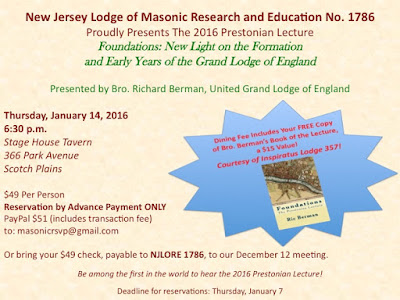
‘2016 Prestonian Lecture in New Jersey’
New Jersey Lodge of Masonic
Research and Education No. 1786
Proudly Presents
The 2016 Prestonian Lecture
Foundations:
New Light on the Formation and
Early Years of the Grand Lodge
of England
Presented by Bro. Richard Berman
United Grand Lodge of England
Thursday, January 14, 2016
Stage House Tavern
366 Park Avenue
Scotch Plains
$49 Per Person
Reservation
by Advance Payment
ONLY
PayPal $51 (includes transaction fee)
to: masonicrsvp@gmail.com
Or bring your $49 check, payable to NJLORE 1786,
to our December 12 meeting.
Be among the first in the world
to hear the 2016 Prestonian Lecture!
Labels:
Inspiratus Lodge 357,
NJLORE,
Prestonian Lecture,
Richard Berman,
UGLE
Saturday, November 21, 2015
‘18th Century Freemasonry and the Arts’
The coming year will feature yet another entity outside the Masonic fraternity—see here and here—that will show its considerable interest in the Masonic fraternity.
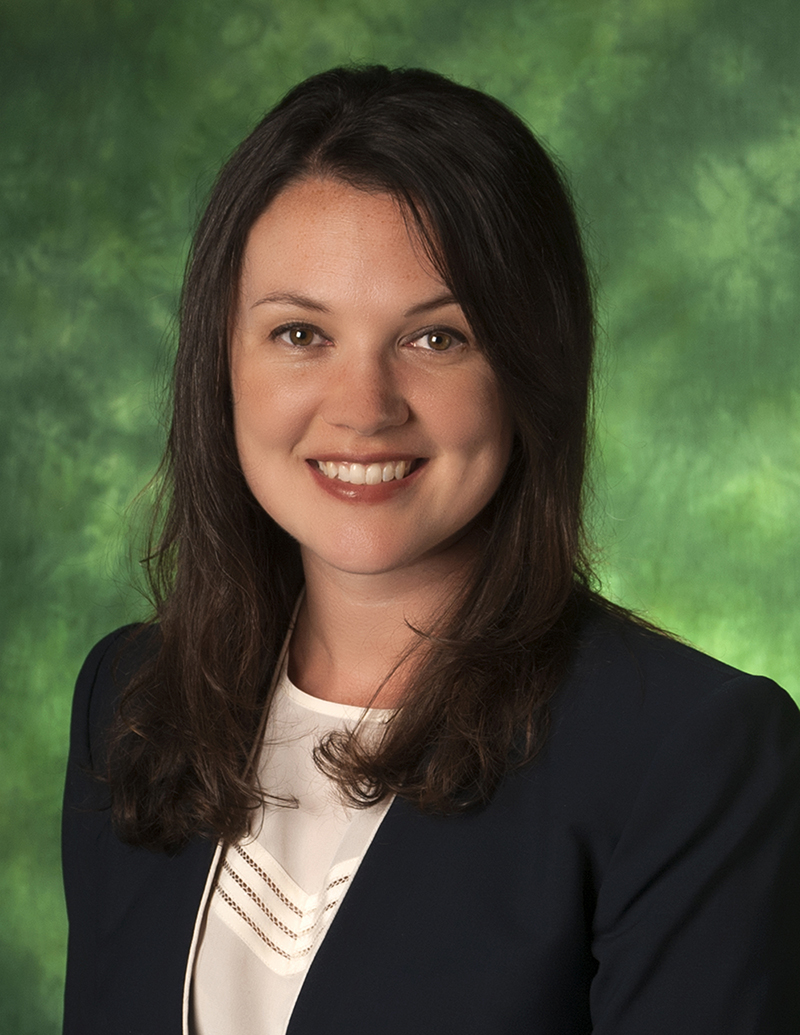
The 47th Annual Meeting of the American Society for Eighteenth Century Studies will be hosted in Pittsburgh, Pennsylvania March 31 through April 3, 2016. Among the subjects to be taken up is “Eighteenth Century Freemasonry and the Arts,” chaired by Rebecca Dowd Geoffroy-Schwinden of the University of North Texas.
From the publicity:
Freemasonry represented a new social and cultural institution during the eighteenth century. The ideologies of Freemasonry opened new frontiers to the application of Enlightenment philosophy to lived experience, to the creation of new spaces of socialization, and to the integration of new forms of spirituality with Newtonianism and sensationism. The practices and ideologies of Freemasonry called for humans to rethink their relationships: with themselves and their peers, with authority figures, and toward the natural and supernatural realms.
Artists across the visual, performing, and literary arts came to occupy a crucial role in the development, expansion, and sociality of Masonic lodges. This panel seeks to explore the significance of the relationship that Freemasonry, from its rituals to its social structure to its values, shared with the arts. Recent scholarship has begun to reveal the rapport between Freemasonry and the visual, performing, and literary arts. This panel aims to bring scholars of the arts into conversation to pursue a holistic theoretical and methodological framework through which to understand the mutual influence of Freemasonry and the arts during the eighteenth century.
![]() |
| Rebecca Dowd Geoffroy-Schwinden |
Tuesday, November 17, 2015
‘Sympathie, Égalité, Fraternité’
In the aftermath of the terror attacks in Paris last Friday, in which 130 victims perished, the Grand Lodge of New York issued a communiqué to the National Grand Lodge of France.
RW Brother Claude Legrand
Grand Secretary
Grande Loge Nationale Française
12 Rue Christine de Pisan
75017 Paris
Subject: Expression of Sympathy & Sorrow
Dear Right Worshipful Grand Secretary,
|
The Helmsley Building on Park Avenue in midtown Manhattan. |
![]() |
|
A statement to the public is delivered at the Consulate
General
of France on Fifth Avenue Saturday night.
|
When you are finally in a position to do so, we would very much appreciate it if you would provide us with the names and contact information of any Masons who were directly affected by this unspeakable horror. Thank you.
With tears of sorrow and with fraternal love and affection,
Paul M. Rosen
Grand Secretary
Grand Lodge of Free and Accepted Masons of the State of New York
Monday, November 16, 2015
‘Calvi and P2 Lodge topics next month’
Bro. Michael Kearsley, who served the United Grand Lodge of England as its Prestonian Lecturer in 2014, will return to New Jersey next month for another speaking engagement. On the first Saturday of December every year, the Grand Lodge of Free and Accepted Masons of New Jersey hosts its Feast of St. John, which is highlighted by a keynote speaker. Rarely is there a Masonic topic—if I’m not mistaken, 2007 was the last such talk, delivered by Chris Hodapp, which was the only of these events that I’ve attended—but Bro. Kearsley is slated to break with form and present something of important and odd Masonic history.
Feast of St. John
Saturday, December 5
Social Hour at 5:30
Dinner at 6:45
Program at Eight
Fellowship Center
1114 Oxmead Road
Burlington, New Jersey
$45 per person
RSVP no later than Friday. Tables for eight or ten guests can be booked. Phone 609.239.3950, and have your credit card ready.
![]() |
| RW Michael Kearsley |
Roberto Calvi, nicknamed “God’s Banker,” was murdered in outlandish circumstances in 1982 after being at the center of the billion dollar mafia-Vatican bank collapse that is said to have involved a Masonic lodge named Propaganda Due, or P2 for short.
Don’t Google it. Let Bro. Kearsley’s telling of the story stimulate you and leave you with much to talk about.
Wednesday, November 11, 2015
‘Presenting the 2016 Prestonian Lecture’
New Jersey Lodge of Masonic Research and Education No. 1786 is immensely proud—we can hardly sit still!—to present Bro. Richard Berman, the 2016 Prestonian Lecturer, who will deliver his lecture titled Foundations, on Thursday, January 14, 2016.
The location, dining fee, and other necessary details are not worked out yet, but they will be publicized here and throughout social media soon. For now, please save the date.
From the publicity:
The 2016 Prestonian Lecture
Foundations: New Light on the Formation
and Early Years of the Grand Lodge of England
Ric Berman outlines the connections between Freemasonry and the British establishment in the eighteenth century, and how and why its leaders positioned Grand Lodge as a bastion of support for the government. He also touches on how Freemasonry was used to advance Britain’s diplomatic objectives and for espionage.
The Lecture marks the upcoming 300th anniversary of the formation of the first Grand Lodge, and sets a context for 2017’s celebration.
The Prestonian Lecturer is appointed by the United Grand Lodge of England. This year’s lecturer, Ric Berman, is the author of Foundations of Modern Freemasonry, first published in 2011 and now in its second edition; Schism (2013), which discusses the conflict between Moderns and Antients Freemasonry; and Loyalists & Malcontents (2015), a history of colonial and post-colonial Freemasonry in the American South.
![]() |
| Richard Berman |
An extended version of the lecture is available for purchase via Amazon. The proceeds are donated to charity. Ric Berman’s Amazon page is here.
TAKE NOTE: Bro. Ric will NOT have copies of his lecture available for sale at this event. Please make your purchase from Amazon, and bring the book with you for inscribing.
Bro. Ric’s tour of the United States includes:
January 7 to 9 – American Historical Association, Atlanta,
Georgia: Chairing the session “Freemasonry – The First Global Society,” and
giving the paper “Antients or Moderns? Reflections on the Genesis of
American Freemasonry.”
Prestonian Lecture presentations:
January 9 to 10 – Greensboro, North Carolina
January 11 to 12 – Chapel Hill, North Carolina
January 13 – Des Moines, Iowa
January 14 – New Jersey (location TBD)
January 15 – Washington, DC
Of course January is early in the year, and it is not impossible Bro. Ric could return to the United States later in 2016 for more appearances.
Tuesday, November 10, 2015
‘Mindfulness and the Arts’
MindfulNYU offers another public event next week, which I publicize here (and will attend) largely for Parabola’s Tracy Cochran’s involvement. From the publicity:
Mindfulness and the Arts
Hosted by MindfulNYU
Wednesday, November 18
7 to 8:30 p.m.
238 Thompson Street, Room 461
New York City
Free tickets here.
What do a cast member of Star Trek, a pioneering social justice filmmaker, and a highly accomplished journalist have in common? Mindfulness!
Join MindfulNYU’s Generation Meditation, Stressbusters and three mindful artists for a night of interactive activities and stimulating discussion as we explore how mindfulness can enhance our creative lives.
Labels:
meditation,
Mindful NYU,
New York University,
Parabola,
Tracy Cochran
‘Journal 29 is out’
The Journal of the Masonic Society No. 29 has been reaching Society members these past weeks. Dubbed “The Review Issue,” this Journal offers opinions on a variety of goods marketed to Freemasons—from books to clothing to regalia, and beyond—in addition to feature articles, Masonic studies, analysis of the state of the Craft, plus the Journal’s regular features.
The Journal is the primary, but not only, benefit to members of The Masonic Society—the best $39 you’ll spend in Freemasonry. Membership is open to regular Freemasons from recognized grand lodges. Click here for more membership information.
Patrick C. Carr, the Right Worshipful Grand Senior Warden of the Grand Lodge of Arkansas, treats us to his “In Search of the Genuine Æthelstan,” in which he reviews the known history and biography of the early English king who figures so prominently in Freemasonry’s embryonic literature. Carr reasons “While we cannot ever know exactly what impact King Athelstan and his rule did directly for the Craft, we can agree that King Athelstan and his actions provided the world with a laudable set of values in which we should meet, act, and part. Whether or not it directly impacted the creation of the fraternity is irrelevant. What it did manage to do was place the beliefs of the king strictly into the rituals and the belief systems that Freemasonry still teaches today.”
Always a popular topic of conversation is Albert Pike’s Morals and Dogma, the dense collection of lectures the early Sovereign Grand Commander of the Ancient and Accepted Scottish Rite (Southern Jurisdiction) intended to accompany the 32 degrees, as worked by A&ASR bodies for many decades. Giovanni A. Villegas, of Jacobo Zobel Memorial Lodge 202 in the Philippines, bravely offers his “Unabashed Literary Book Review” outlining the problems he perceives in the text. “The true test of understanding Morals and Dogma is finding the honesty to first admit that one does not fully understand it,” he says, “or at least not immediately.” He continues, explaining how factors such as the period style of the writing, Pike’s lifting of text from earlier sources, and Pike’s personal interpretations of mystical subjects conspire to leave readers in 2015 vexed. He concedes M&D is “essential reading” for the Scottish Rite Mason who can weather it, but also recommends the casual reader seek out more recent texts, including Rex Hutchens’ A Bridge to Light, and, of course, Arturo de Hoyos’ Annotated Edition, which provides tons of clarifications, corrections, references, and other useful guides to those who want the full Morals and Dogma experience.
Yasha Berensiner’s regular feature “Masonic Collectibles” treats us to a look at William Hogarth, the eighteenth century (today is his 318th birthday) English artist and satirist—and brother Mason—whose “comic histories” paintings chronicled London life, and didn’t spare the Masonic fraternity his lampooning. Perhaps you are acquainted with his Times of the Day prints but, if not, seek it out, and get an eyeful of the one titled “Night.”
Under “Thoughts on the Craft,” Stephen J. Ponzillo, III, a Past Grand Master of Maryland, visits the touchy topic of lodge dues and other expenses in his “The Cost of Belonging: Is it Enough?” In the early years of this century, when the Knights of the North and the Masonic Restoration Foundation were advancing the simple view that lodges must collect in dues the revenue they need to function properly and survive into the future, it was so inflammatory to the establishment that a mere whisper of responsibly addressing lodge financing would prompt anger and panic. Today, younger and wiser heads are prevailing in lodges all over the country, and appreciation for the cost of living these days affects how forward-thinking lodges plan their financial futures. In his article, inspired by a recent discussion on the Masonic Society’s Facebook page, he scores several points structured around his comparing and contrasting cost of living figures of 1957 and 2014. It’s actually not simply a matter of inflation; Ponzillo illustrates the more significant facts of what Freemasonry asked men to pay for initiation and dues during those two periods. It’s about the percentage of a man’s annual income. In 1957, for example, a lodge that collected a $75 initiation fee from a man who earned $5,000 for that year was taking 1.5 percent of that income. In 2014, a man making just less than $70,000, and paying a $250 initiation fee, gave about a third of 1 percent of his annual pay to join a lodge. Is it enough? Indeed.
In his President’s Message, Jim Dillman humorously bemoans his efforts to meet his deadline, but in all seriousness, he writes on “Uncovering Freemasonry’s History,” urging us to look at what is right in front of us—as in lodge records, ephemera, books, etc. stored away in lodge closets and corners. “I’m going to challenge each of you to take a day, a week, or a month off from social media or your time-waster of choice, and devote the time you would have spent to some sort of Masonic research. Go back and read the minutes of your lodge from 50 or 100 years ago,” he says. “Dig through some of those old boxes lying around.” I know we all want to uncover the mysteries of Masonic secrets, but a curious and diligent brother can do his lodge great good simply by bringing to life local Masonic history for his own lodge.
There is a lot more to Issue 29: “The Masonic Baseball Game,” current news from around the globe, the detailed calendar of Masonic events through next May, and a great “Guide to Masonic Encyclopedias” by Tyler Anderson of New Mexico, among other attractions.
In other Masonic Society news, the Board of Directors and Officers gathered in St. Louis over the weekend to give shape to some serious plans for the Society’s future. We’ll meet again at Masonic Week to finalize some of these designs upon the trestleboard, and when you find out about them, your eyes will pop. Stay tuned to The Magpie Mind in February for those details.
|
The Masonic Society Board of Directors’ marathon planning
session over the weekend at the St. Louis Airport Hilton just happened to
coincide with the annual meeting of something named St. Matthew’s Grand Lodge.
In fact, when I arrived at the hotel Friday afternoon, I found the lobby
crowded with their members and Eastern Star ladies having a grand time. This photo partially shows the schedule of Saturday events posted in the lobby. Unfortunately, I couldn’t undertake my usual membership development efforts, as
St. Matthew’s exists outside the mainstream of the Masonic fraternity. (Click here for membership guidelines.) I wonder what they thought of us!
|
And speaking of Masonic Week 2016, the registration information should be posted this week, I’m told, and you’ll see the Masonic Society’s banquet has been moved from the Friday night to Saturday, making us the only official dining choice for that evening. President Dillman will announce the choice of keynote speaker shortly, and I hope those of you who will attend Masonic Week will elect to be with us that night. We will have a number of big announcements.
See you there.
‘Introduction to Martinism Saturday’
The Traditional Martinist Order will host an Introduction to Martinism Saturday afternoon in New York City. In January, the Order will undertake a new cycle of classes, and I gather this meeting will provide answers about the Order and its teachings. Julian Johnson will lead the discussion. From the publicity:
Introduction to Martinism
Saturday, November 14
1 p.m.
Rosicrucian Cultural Center
2303 Adam Clayton Powell, Jr. Blvd.
New York City
Focusing on the works of Louis-Claude de Saint-Martin, we will explore the foundations of Martinism, a mystical movement deeply rooted in the Western Esoteric Tradition.
We anticipate people will ask about how and when they can receive the Associate Degree Initiation, as well as other questions pertaining to membership in New York Heptad.
On the following Saturday, November 21, the local heptad will confer the Associate Degree. (New York Heptad now meets at the Theosophical Society/Quest Bookshop at 240 East 53rd Street in Manhattan.)
Wednesday, November 4, 2015
‘Book sale’
![]() |
| Courtesy Kristine Mann Library |
28 East 39th Street (between Madison and Park avenues). Open Mondays from 10 a.m. to 8 p.m. Tuesdays and Thursdays from 10 a.m. to 7 p.m. And Wednesdays from 10 a.m. to 5 p.m.
A word to the wise: don’t delay. The library is not a bookstore, so while it offers many great titles for sale, it does not replenish inventory.
Labels:
C.G. Jung Foundation,
Jung,
Kristine Mann Library
Thursday, October 29, 2015
‘Manhattan displays of Masonic material culture’
Eve M. Kahn’s antiques column in today’s New York Times discusses “Art from Fraternal Societies” (wasting no space before plugging Aimee Newell’s recent book), and reveals how two art venues in New York City will feature Masonic and other fraternal material culture in January.
From January 20 through May 8, 2016, Masonic and Odd Fellows pieces—gifts from collectors Allan and Kendra Daniel—will be shown at American Folk Art Museum.
![]() |
| Courtesy Folk Art Museum |
![]() |
| Courtesy Folk Art Museum |
![]() |
| Courtesy Folk Art Museum |
Bruce Lee Webb, author of As Above, So Below: Art of the American Fraternal Society, 1850-1930, will bring certain pieces to sell at Outsider Art Fair, January 21-24 at Metropolitan Pavilion, just around the corner from Masonic Hall.
![]() |
| Courtesy Webb Gallery |
Wednesday, October 28, 2015
‘Masonic miscellany’
This edition of The Magpie Mind admittedly is a mess, but here are announcements of some great local events, so be sure to scroll all the way through.
Last weekend, I had the chance to enjoy some time in my alma mater’s main research library and, instead of doing something useful, I poked through a tiny bit of the thousands of unusual texts pertaining to Freemasonry. Here are just a few images:
- Tomorrow night, The American Lodge of Research will meet to hear Worshipful Master Michael Chaplin present his paper “Patron Saints of the Operatives.” Eight o’clock in the Colonial Room on 10 at Masonic Hall (71 West 23rd Street in Manhattan).
- Monday, November 9 is the deadline for booking your seat at the Scottish Rite Valley of Central Jersey’s Rose Croix celebration featuring Billy Koon:
![]() |
| Click to enlarge. |
- Next Wednesday, Bro. Mohamad will speak at Livingston Masonic Lodge in New Jersey:
![]() |
| Click to enlarge. |
- Congratulations to the new officers of the Masonic Library and Museum Association: President Aimee Newell, Vice President Brian Rountree, Secretary Cathy Giaimo, and, returning for another term, Treasurer Eric Trosdahl.
- The MLMA’s 2016 annual meeting is planned tentatively for October at the Lee Lockwood Scottish Rite Library and Museum in Waco, Texas.
- Speaking of Masonic libraries, the Grand Lodge of Nebraska dedicated its library and museum last month at the grand lodge headquarters in Lincoln.
- On Sunday, November 8, Cincinnati Masonic Lodge No. 3 in Morristown, New Jersey (39 Maple Avenue) will unveil the Morristown Masonic Center Museum and Library with an opening reception. Dignitaries to include the chairman of the New Jersey Historical Commission, the chairman of the Morristown Historic Preservation Commission, and RW Bro. Glenn Visscher of the Museum of Masonic Culture in Trenton (and a Past Master of the lodge).
- Looking around the interwebs, I recently found the finest source of Masonic news: The Past Bastard. Click here and be amazed!
- Madison Masonic Lodge No. 93 in New Jersey has undertaken the project of replacing the headstone of Jepthah B. Munn, who was Grand Master of Masons for the State of New Jersey in the 1820s. Donations are welcome here.
I shot these photos Monday in the Presbyterian cemetery across the street from the lodge and, as you can see, this stone has seen better times.
Munn deserves the overdue attention. He was grand master during the age when grand masters were graaaand! A quick history:
In 1837, the Grand Lodge of New York expelled a number of Masons and closed a few lodges that were at labor in New York City. (I haven’t yet learned why they were expelled.) These brethren regrouped and called themselves St. John’s Grand Lodge. At that time, the Grand Lodge of New Jersey adopted a resolution voicing its support of New York’s authority to expel these Masons. This resolution was passed to make it clear from the start that all New Jersey lodges were prohibited from having communication with this clandestine grand lodge.
However, St. John’s Lodge No. 2 in Newark (it became No. 1 later) ignored the prohibition and other, less formal, requests from individual grand officers, and had Masonic intercourse with these New York guys, hosting them in their lodge, etc. For their role in this, Jepthah Munn and John Darcy, both past grand masters, were punished by Grand Lodge of New Jersey for defying grand lodge’s order to not interact with those expelled Masons.
During all of this, some New York lodges, in retaliation for the New Jersey past grand masters’ meddling in this episode, refused to allow New Jersey Masons to visit their lodges. This feuding continued for a number of years, even into the 1850s. What has to be remembered during all of this is that this period is the tail end of the anti-Masonic era that came in the wake of the “Morgan scandal” that nearly saw the fraternity in New York and New Jersey wiped out. For example, in 1842 New Jersey Freemasonry consisted of 162 Masons in eight lodges. So this bickering is kind of like rearranging the deck chairs on the Titanic.
Also, this episode is not all that unusual in the 19th century history of New York Masonry. In the early years of the 1800s, a split between the “country lodges” and the “city lodges” took place that really caused problems. Two very real grand lodges coexisted until 1827, when they united.
Anyway, the clandestine grand lodge Munn aided is not unknown to New York scholars (there actually is a New York lodge named after Munn). He was an interesting man: Born in East Orange in 1780, where there is a Munn Avenue; a renowned medical doctor, who served as president of the Medical Society of New Jersey in 1828, and a co-founder and eventual president of the Morris District Medical Society; a respected member of the New Jersey General Assembly.
He was made a Mason in 1804 in Paterson Orange Lodge 13; affiliated with Cincinnati No. 3 in Morristown, serving as Master from 1809 to 1814; was warrant master of Chatham Lodge 33 (now Madison 93) from 1814 to 1819; and affiliated with St. John’s No. 1 in 1850. Was elected Senior Grand Warden of Grand Lodge in 1817, and served as Grand Master from 1820 to 1824.
Because of his activity in the New York episode, Munn—and this is why I’ve been crazy about him from the minute I learned of him about seven years ago—was subjected to charges of unmasonic conduct in 1842. Charges dropped the next year. Censure was imposed by Grand Lodge in 1850, but withdrawn in 1852. He continued to attend grand lodge communications through 1860, until ill health slowed him down. He died in 1863 in Chatham.
Subscribe to:
Comments (Atom)